True Crime Books by Jason Lucky Morrow

Welcome to HistoricalCrimeDetective.com [Est. 2013], where you will discover forgotten crimes and forgotten criminals lost to history. You will not find high profile cases that have been rehashed and retold ad infinitum to ad nauseam. This blog is the official website for true crime writer Jason Lucky Morrow, author of four books including the popular series: Famous Crimes the World Forgot, Volume I and Volume II. If you would like to send me a comment, Contact Me Here. - Please follow this historical true crime blog on FACEBOOK.

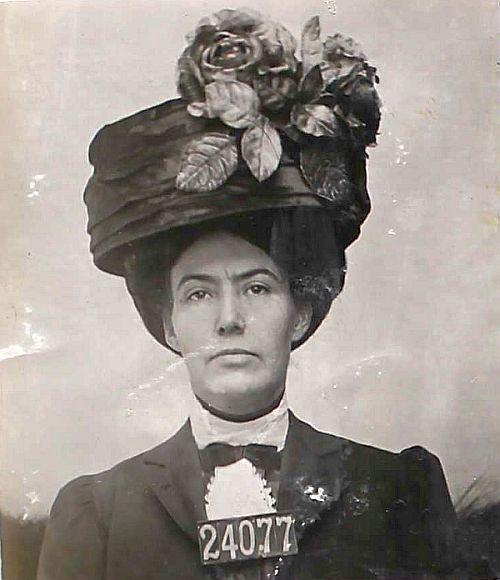
Mug Shot Monday! Emma LeDoux, Housewife, Prostitute, Bigamist, Murderer

Home | Mug Shot Monday | Mug Shot Monday! Emma LeDoux, Housewife, Prostitute, Bigamist, Murderer


Emma LeDouxEmma Head was born near Jackson, Amador County, California, where her parents were in comfortable circumstances.

While quite young, she married a man named Barrett, but after living with him a short time in Fresno, Cal., a divorce was granted, and she then married a man named Williams, with whom she went to Arizona.

The woman had his life heavily insured and shortly afterward he died under peculiar circumstances.

In September 1902, she was married to Albert N. McVicar in Bisbee, Arizona, by Rev. H. W. Studley.

They soon separated and she finally became an inmate of a brothel.

Without being legally separated from McVicar, she married one Eugene LeDoux in Woodland, Cal., on August 12, 1905, and the couple resided at her mother’s home near Jackson.

Click Here to Read the Rest of Emma’s Story


Serial Killers Anonymous: Stanley Everett Rice, 1963-1968

Home | Serial Killers Anonymous | Serial Killers Anonymous: Stanley Everett Rice, 1963-1968


Serial Killers Anonymous is a new series by HistoricalCrimeDetective that will present information and photographs of lesser known American serial killers.


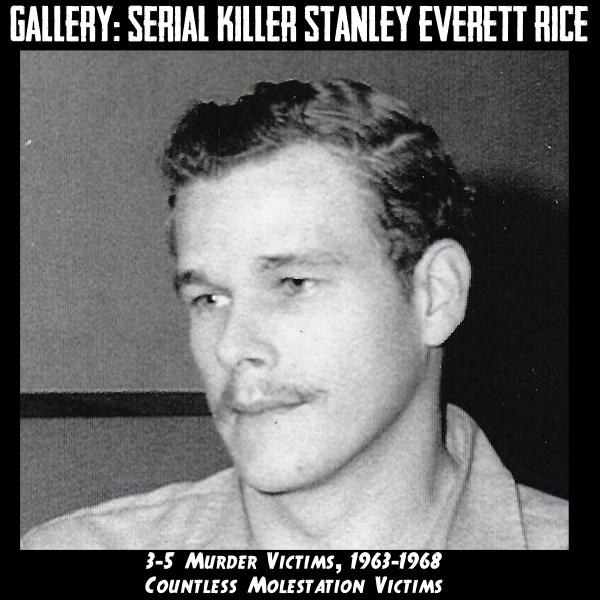
Serial Killer Stanley Everett Rice Photo Gallery - HistoricalCrimeDetective.com
Keith Henry, murder victim, 1963
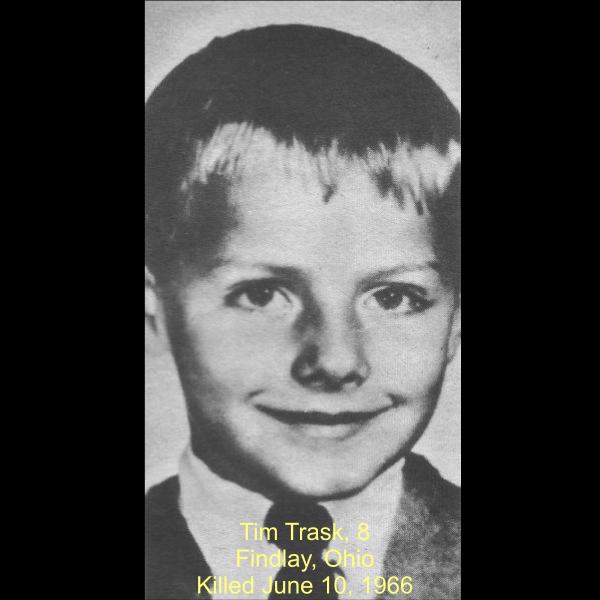
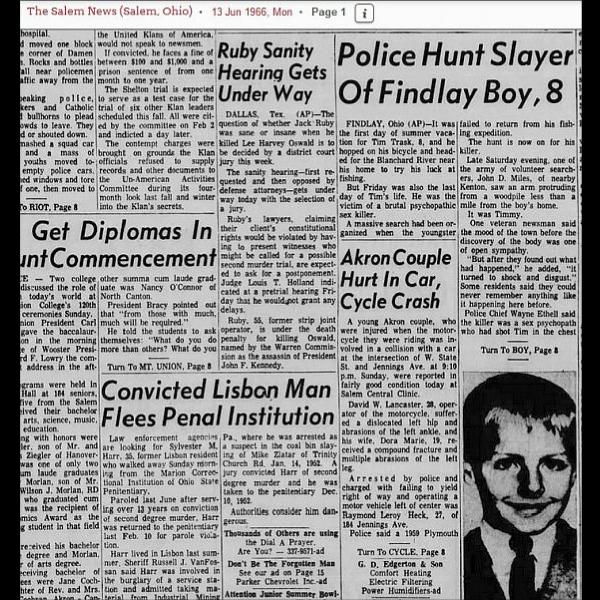
Tim Trask, Findlay Ohio, murdered June 10, 1966
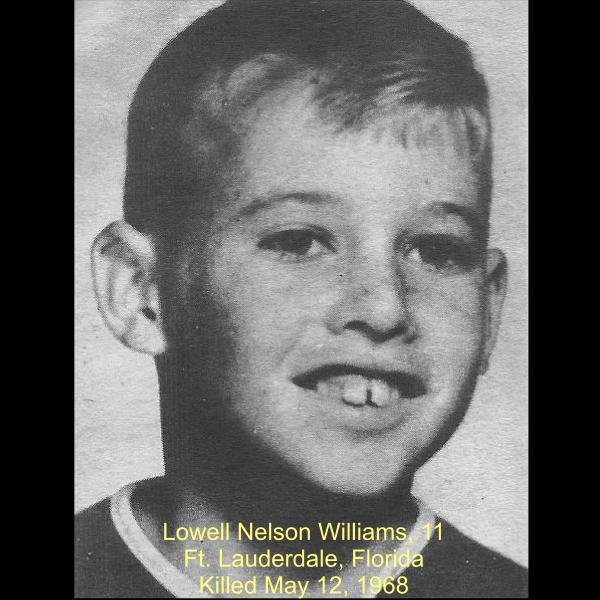
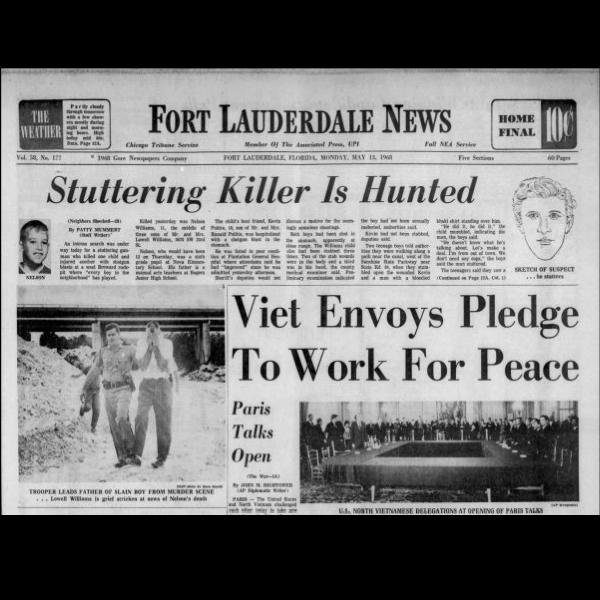
Nelson Williams, 11, killed May 12, 1968, Florida
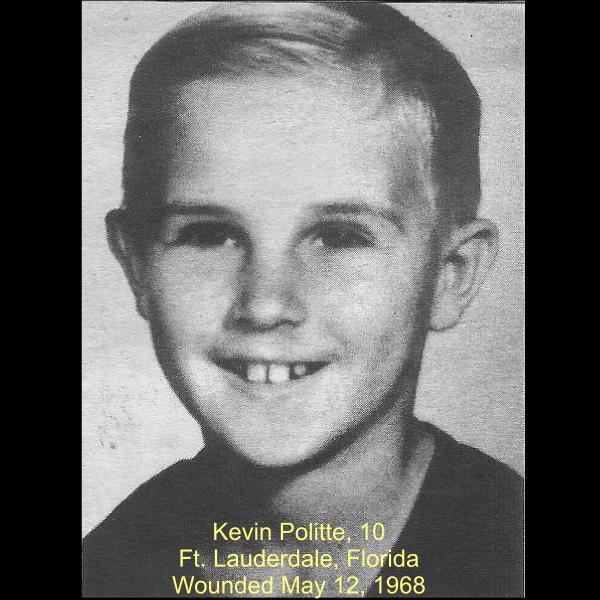
Victim Kevin Politte, shot & wounded May 12, 1968, Florida.
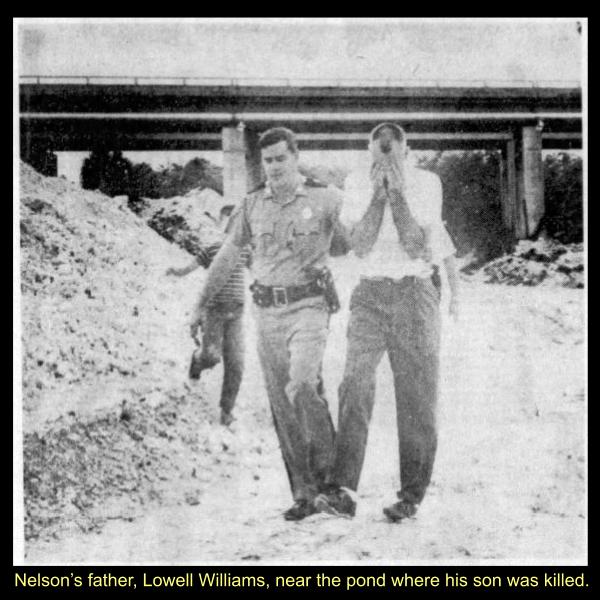
Lowell Williams, father of murder victim Nelson Williams
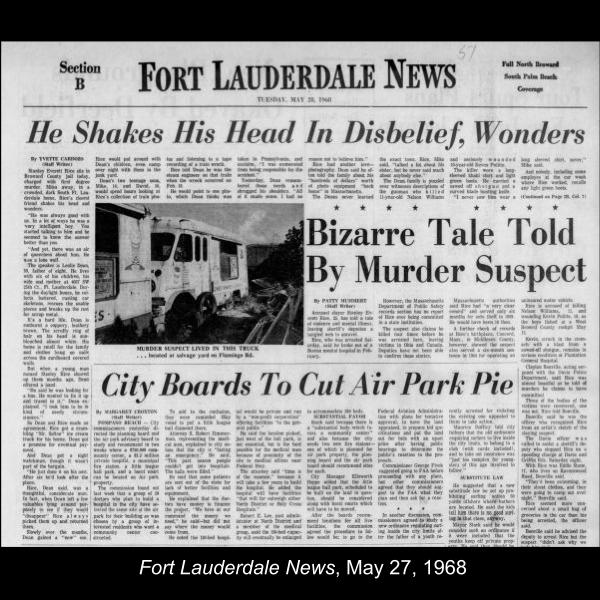
Fort Lauderdale News, May 13, 1968
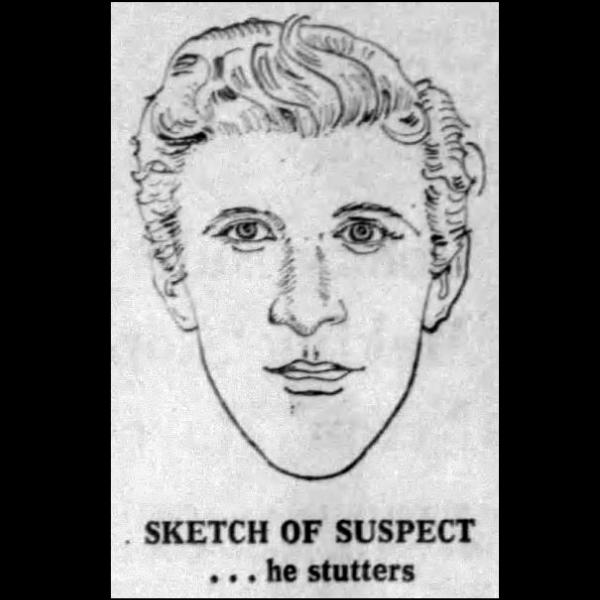
Police artist sketch of Stanley Everett Rice
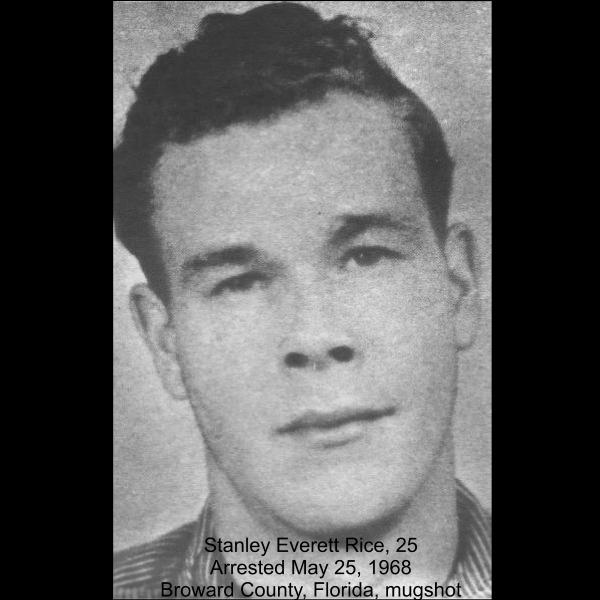
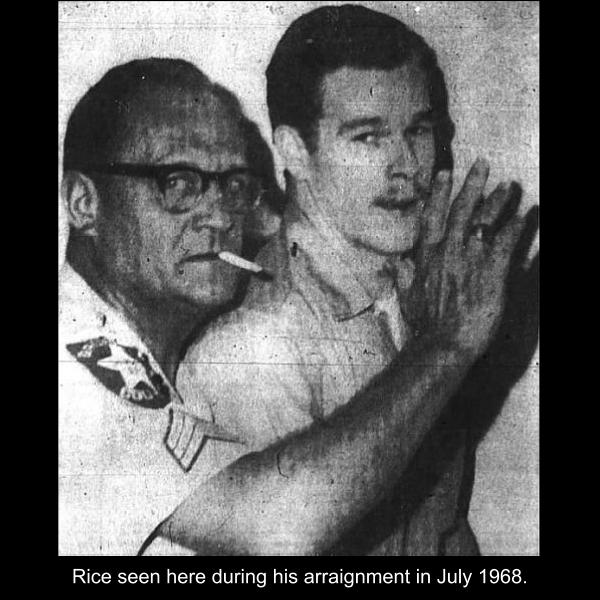
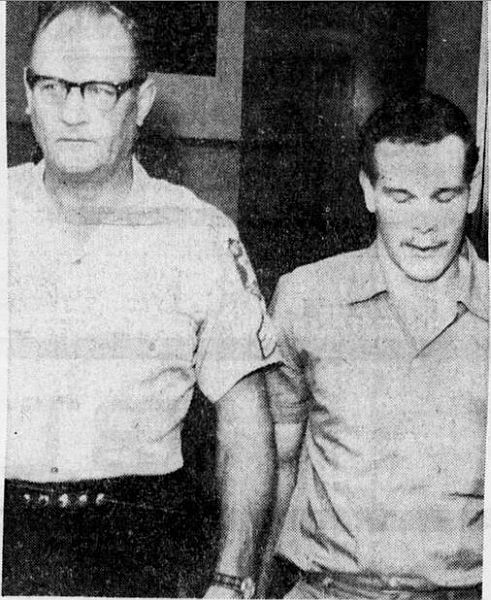
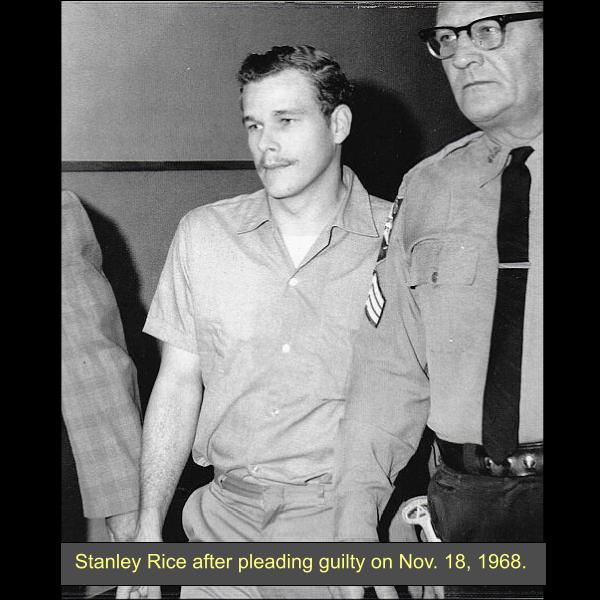
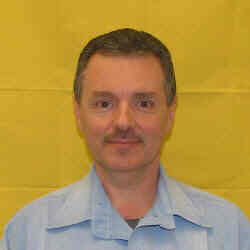
Serial Killer Stanley Rice mugshot, 1968
Serial Killer Stanley Everett Rice, 1968


Stanley Everett Rice, 1942-2007 

Summary

Known as the “stuttering drifter,” Stanley Everett Rice was a pedophile and serial killer who murdered three to five young boys between 1963 and 1968. He is also known to have photographed and molested countless others.

On Mother’s Day, May 12, 1968, Rice used a sawed-off shotgun and curved knife to murder an eleven-year-old boy and wound the boy’s friend near a pond adjacent to a canal in Fort Lauderdale, Florida. Rice was arrested thirteen days later for traffic violations by Broward County deputies. Deputies noted his stutter and similarity to a police artist sketch of the shooter in the Mother’s Day killing. After he was brought in for questioning, Rice eventually told police he had killed four other boys in Ohio and Ontario, Canada.

Despite his confession, and recovery of a diary in which he recorded his crimes, authorities could only connect Rice to one murder in Ohio, one in Ontario, and the Mother’s Day killing in Florida. The other two victims have gone unconfirmed.

Rice’s confession also led police in his hometown of Concord, Massachusetts to a secret cache of weapons, photographs of naked boys dating back to 1961, as well as his diary in which he recorded his crimes with sadistic pleasure that caused some authorities to question his mental health.

Rice’s modus operandi was to scout area swimming and fishing holes (riverbanks, canals, ponds, and lakes), where he would seek out young boys, engage them in conversation, isolate them under false pretense, and then use a firearm to force them to strip naked, pose for photographs, and perform sexual acts. Along with a concealed firearm, Rice always carried a camera to document his twisted fantasies.

Background

Born on August 7, 1942, Rice was raised in a dysfunctional and abusive home in Concord, Massachusetts. Rice had a sister with whom he was close. He was described by many as quiet, polite, shy, and nervous. In 1959, at the age of sixteen, Rice served six-months in a juvenile facility for car theft.

In normal situations, Rice did not stutter. It was only when he nervous, or when his adrenaline was flowing, that others noticed Rice stammered when he spoke.

Victims

Early victims

According to Rice’s diary discovered after his 1968 arrest, Rice began molesting boys in 1961 when he was just nineteen years old. That year, he wrote, “…managed to get a ‘small boy type’ to do some action for a small price of course.” The source that quotes this diary entry does not name the place or exact date to which this crime refers to, nor does it list any other recorded crimes by Rice during 1961.

In 1962, Rice moved with his parents to Ontario, Canada where acting on his fantasies elevated from producing child pornography and molestation to murder. A disturbing entry recorded in his diary that year reveals that he was working up to it. “Tried to kill a different Nichol boy, this one also 12, conned him into the woods and got him to perform (sexual acts)…I was cooking up for the kill.”

Nichol is a sparsely populated township (township, not town) in Wellington County, not far from the Kitchener-Waterloo area where Rice murdered his first victim one year later. The names of these early victims are unknown.

Keith Henry

On the afternoon of July 12, 1963, Rice found nine-year-old[1] Keith Henry fishing along the bank of the Grand River near Kitchener, Ontario. According to his diary, and 1968 confession in Florida, Rice said he stabbed the boy to death and buried him in an overgrown area along the riverbank. Afterward, Rice wrote: “I used a hunting knife on Keith. Wow was that sexy! Blood everywhere.”

Keith Henry was reported missing when he did not return home that evening. Following Rice’s confession in 1968, authorities from Kitchener and Waterloo searched the area with bulldozers but were unable to locate Henry’s body. His remains are still missing. Rice was one of many suspects questioned by Ontario police at the time.

In 1998, Rice was interviewed by Anthony Reinhart, a reporter for The Waterloo Region Record (Ontario, Canada) for a four-part series that was to coincide with Henry’s disappearance.

“It had been the largest missing-child case in the history of Kitchener-Waterloo, and to anyone’s knowledge, the only local murder involving a serial killer,” Reinhart wrote in a 2015 post on Quora.com. “When I asked him to describe the sequence of events on the day he killed Keith Henry in July of 1963, his answers shrank progressively to fewer and fewer words the closer he got to the actual moment he took the boy’s life. During this time, Rice went silent for a brief spell as a tear formed in his eye and trickled down his cheek. Then, as my questions moved on to what happened afterward, his answers broadened out again and became more lengthy.

“Rice showed what I (definitely not a trained psychologist) thought was a remarkable amount of insight into his mental state in the hours after he killed Keith Henry and buried him next to the Grand River. He told me he had been feeling terribly about what he’d done for the first couple of hours after the killing, but after the burial, he went home to his bedroom in the basement of his parents’ house, and his remorse simply vanished. ‘It was like a fuse burned out,’ he told me, and he no longer felt guilty.”

Rice’s life from 1963-1966

During the thirty-five months between the murder of Keith Henry and that of his second confirmed homicide victim, Rice was twice incarcerated. He served time in an Ontario prison for burglary, and six-months in a Massachusetts jail for operating an uninsured motor vehicle. The dates of his incarceration are unclear.

Tim Trask

Following his release from prison, Rice moved to Sandusky, Ohio, where he found work in an amusement park.

On June 10, 1966, while scouting for victims along the banks of Blanchard River near Findlay, Ohio, Rice came upon eight-year-old Tim Trask who was fishing alone on the first day of his summer vacation. When Trask failed to return home that evening, his parents notified police and a search party was organized for the following the day.

Twenty-four hours after he was murdered, a member of the search party spotted Trask’s arm protruding from a woodpile, one mile from his home. His red and white bicycle, fishing rod, and a glass jar of minnows were found nearby.

Although it would take two more years before Trask’s killer identified himself, Rice described the boy’s murder in his diary in gruesome detail.

“Scores again as I met a 8 year old boy fishing…finally conned him into trying a new fishing spot. I was there about an hour but failed to con him into the usual style pose. Had to settle for a shirtless photo, but got more interesting poses after a .32 in the back put him in a more suggestive mood.”

The “usual style pose” was Rice’s term to describe his preference to photograph boys while they were defecating. Although Rice wrote that he killed Trask with a .32 caliber bullet, Coroner Byron F. Voorhees told the press that Trask was killed by a shotgun and two knife wounds. Two years later, Rice killed another boy in exactly the same manner.

This discrepancy by Rice has not been explained. However, one possibility seems to indicate that he was aware that his journal might one-day be found and his entry was a poor attempt to misdirect authorities as to the actual murder weapon.

Not long after murdering Trask, Rice tried and failed to photograph two other boys, 9 and 14, who “lived to make me regret not finishing them off.”

His regret was realized one month later when police searched his home.

“…Police all come for me…They searched my room for secular photos but failed to find the news clippings and personal photos from the June 10 deal (Trask) and also missed the murder weapon in my car along with the death bullets hidden behind my curtain . . . they’ll be sorry as now I can strike again and again showing all the world what a fantastic life that can be lead (sic) if one is careful…”

This search and police suspicion of Stanley Rice never made it into the newspapers. It appears, however, that Ohio became too hot for Rice and he left the state in 1966 or 1967.

1967-1968

In January 1968, Rice was arrested in his hometown of Concordia, Massachusetts, where he had resumed his quest to force boys to pose for photographs. These boys reported him to police and told how they had been lured by Rice to another location, forced to strip at gunpoint, photographed, and in some instances, photographed while defecating.

Authorities there were so disturbed by these multiple allegations that it was decided that before any criminal legal proceedings could begin, Rice should be committed to the Metropolitan State Mental Hospital in Waltham “for thirty-five days of mental observation on morals charges.”

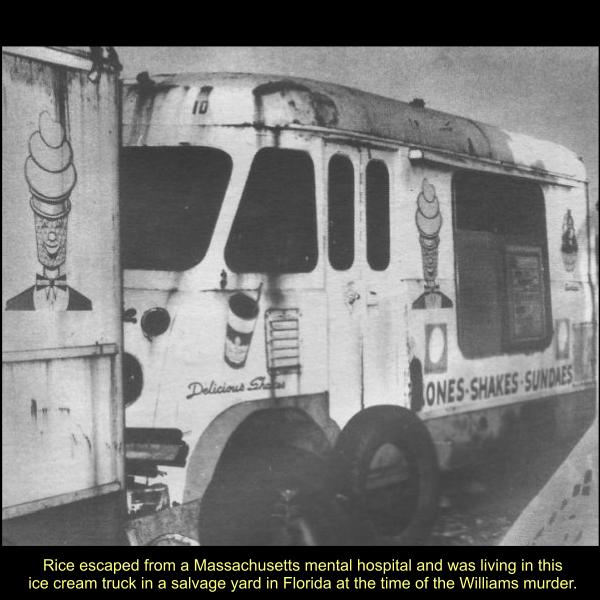
Rice escaped from that institution on February 16 and made his way to Hollywood, Florida, where he was befriended by Leslie Dean, father of eight and the owner of an automobile salvage yard. In exchange for being the night watchman, Rice was allowed to sleep on the property in one of the vehicles. He then found employment at a car wash.

Dean had nothing but good things to say about Rice, and described him as quiet, intelligent, honest, and considerate. “He never argues and never loses his temper.”

Rice slept inside Mr. Softee ice cream truck that was coated in rust and petroleum stains. He lived on milk and peanut butter sandwiches, according to a story in Official Detective Stories magazine, October 1968.

Lowell ‘Nelson’ Williams & Kevin Politte

On Sunday, May 12, Mother’s Day, 1968, Rice worked at the carwash until it closed at 1:00 p.m. At 3:30 that afternoon, he made his way to a pond, adjacent to the Dania Cut-Off Canal in Broward County, halfway between Fort Lauderdale and Hollywood. Rice knew the pond was popular with local boys and on that day, he found eleven-year-old Lowell Nelson Williams and Kevin Politte, 10, fishing.

The details of exactly what happened are unclear, but Rice engaged the boys in friendly small talk, and then attempted to lure them to another location. The boys refused, and one or both of them may have made a remark that infuriated Rice.

Rice got angry, pulled a sawed-off shotgun out of one of his knee-high rubber boots, and shot Williams in the chest. He then turned and fired his remaining shell at Politte.

Wounded but not dead, Rice bent over Williams and stabbed him three times with a curved knife. At that exact moment, two teenage boys walking along a path near the canal stumbled upon the wounded Kevin, and Rice standing over him holding a bloody knife.

When Politte saw them, he pointed at his attacker and mumbled, “He did it! He did it!”

“I didn’t do it,” Rice stuttered back. “He doesn’t know what he’s talking about. Let’s make a deal. I’m from out of town. We don’t need the cops.”

Instead of answering him, the two teen-age boys walked over to the body of Nelson Williams. Seeing they weren’t interested in anything he had to say, Rice put the sawed-off shotgun back in his boot and walked away.

He returned to the salvage yard where he “talked a lot about [the murder]” to Leslie Dean’s teenage sons.

“I don’t see why anybody would want to do that—just kill a little boy and walk-away. Maybe they were teasing him,” Rice was quoted as saying.

Being teased, according to the Deans, was Rice’s weak spot. He did not like it. “He’d get the funniest look on his face.”

He was captured on May 25 after he was pulled over for speeding by a Broward County deputy. Another officer, who assisted the deputy, noticed Rice’s stutter, and remembered a sketch and description of the Mother’s Day killer. After Rice was arrested, they found the sawed-off shotgun and a camera in his car. Rice’s photograph was one of thirty shown to Keith Henry, who confirmed his identity. Other witnesses shown the same photograph also confirmed Rice was the one seen at the pond. Later that day, Rice confessed to shooting the boys, and said he had killed four people in Ohio and Ontario, including Keith Henry and Tim Trask.

Rice also told them about a cache of photos, guns, and other weapons inside an old barn near Concord, Massachusetts. There, police found the pornographic photographs described as “a large amount of photos of young boys in numerous unclothed positions who were apparently enticed into posing with various weapons aimed at their bodies.”

Trial and Sentence

Rice was charged with murder in all three jurisdictions, with Florida taking the first shot at him. A few days before his trial began, Rice and his public defender lost a motion to have him declared mentally incompetent. Their motion was backed by two reports from defense psychiatrists that Rice suffered from schizophrenia, and that his condition would only continue to deteriorate.

Motion denied. He was sane enough, the judge said.

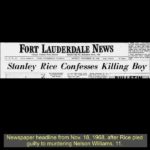
With their only chance gone, Rice pleaded guilty to first-degree murder on Monday, November 18, the day his trial was to start. On Friday, the judge sentenced him to life in prison with the recommendation that he never be paroled.

He was never tried with murdering Trask or Henry.

Unknown Victims

On May 28, 1968, the third day after Rice was arrested, Fort Lauderdale News writer Patty Mummert reported that Broward County deputies said Rice spoke of murdering four people in Ohio and Ontario.

“The suspect also claims he killed four times before he was arrested here, leaving victims in Ohio and Canada. Deputies have not been able to confirm these stories.” Mummert wrote. “Clayton Bonville, acting sergeant…said Rice was almost boastful of the murders he claimed to have committed. Three bodies of the victims were recovered, one was not, Rice told Bonville.”

The unrecovered victim Rice is speaking of, presumably, is Keith Henry who was killed in 1963. Out of the three bodies that were recovered, the only other victim attributed to Rice was Tim Trask, killed on June 10, 1966. This leaves two victims, apparently recovered, that have not been directly attributed to Rice.

Although authorities recovered his diary, only small excerpts of it were released to the public in a 2013 issue of the journal, Aggression and Violent Behavior. Those short excerpts were placed in a narrow context that is unclear as to body count. However, in a June 1966 entry that appears before the murder of Tim Trask (June 10, 1966), the authors quoted Rice who wrote:

“I couldn’t help myself and pumped a .32 into the better of the two’s back … The bullet got him beautifully in the heart area from behind, right in the spinal cord. You could see that sexy bullet-hole…”

It should be noted that in her May 28, 1968 article, Mummert wrote “victims,” not boys, making it more difficult to match Rice to any unsolved murders in Ohio or Ontario. In 1966, Trask was the only unsolved murder case in Ohio with a victim that matched Rice’s modus operandi. Most of the unsolved homicides in Ohio that year were women.

It is unclear who the victim is in this journal entry, and the authors of the journal article shed no further light on any other of Rice’s murder victims besides Keith Henry and Tim Trask.

Mummert should not be blamed for any ambiguity regarding Rice’s body count. She covered the case from the day it began to the day Rice was sent to prison. In her reports, the Broward County Sheriff was antagonist, uncooperative, and unwilling to provide her with any more information than he had to, according to his interpretation of the law at that time. Furthermore, her articles reveal that the Broward County Sheriff’s Department had no interest in any of Rice’s crimes other than his May 12 killing of Lowell Nelson Williams, and the attempted murder of Kevin Politte.

Death

Rice died in prison on November 3, 2007. He was sixty-five years-old.

Until his diary and/or investigative file is released to the public, it will remain unclear who Rice’s fourth and fifth victims were, if they existed.

Endnotes

Rice was questioned and cleared in regards to the murders of Canadians, Scott Leishman, 16, and Frank Jensen, 9, both killed in early 1968. Those cases remain unsolved to this day.

[1] Another source reports Keith Henry was ten years old at the time.


—###—


Donald Harvey, ‘Angel of Death’ Serial Killer, Killed in Prison

Home | Recent News | Donald Harvey, ‘Angel of Death’ Serial Killer, Killed in Prison


From People Magazine online, March 30, 2017

A former hospital orderly dubbed the “Angel of Death,” who said he killed more than 50 people while insisting he only meant to end their suffering, died Thursday after an attack in an Ohio prison, PEOPLE confirms.

Donald Harvey, 64, was found Tuesday beaten in his cell at the Toledo Correctional Institution in Toledo, Ohio, where he had been serving four life sentences, authorities say.

Harvey was sentenced in 1987 for the murders of 25 people, most of them at Cincinnati’s Drake Hospital, according to a previous TIME report. He avoided the electric chair with a plea-bargain confession and said he carried out his killings using cyanide, arsenic, rat poison or petroleum distillate.

He claimed he began acting out of compassion for terminally ill patients, WCPO reports.

His spree was uncovered during an autopsy on one of his Drake Hospital victims, after a doctor detected a whiff of cyanide and traced the death back to the hospital orderly.

“Donald Harvey decided as the ‘Angel of Death’ he had the right to decide who lives and who dies, and it was wrong, and he knew it, and he was a murderer,” Hamilton County, Ohio, Recorder Norbert Nadel, a judge at the time of Harvey’s case, told Fox19.

Read More: NYDailyNews.com


New Book: Famous Crimes the World Forgot Volume II

Home | New Books | New Book: Famous Crimes the World Forgot Volume II


My new book, Famous Crimes the World Forgot Volume II: More Vintage True Crime Stories Rescued from Obscurity, is now available for download to your Amazon Kindle. The book will be available for free for five days (the maximum they allow) from Tuesday, March 21, to Saturday, March 25, 2017. The paperback version will be released on Friday, March 24.

When the free download period is over, the book will be available for the special price of .99 cents until March 30, 2017.

Book Description:

Tired of Reading About the Same Crimes and Criminals Over and Over?
Are You Looking for Something Completely New and Different?
Ten Extraordinary True Crimes You Never Knew About With 41 Images
 
Famous Crimes the World Forgot Volume II by Jason Lucky MorrowFamous Crimes the World Forgot Volume II uncovers more amazing true crimes that exploded into the national news, shocking Americans from coast to coast—crimes that were eventually forgotten—until now. Each one of these stories transports you back to the time they happened, propels you through all the suspense-filled developments, and explores each one with an in-depth look into the actions of humans so evil, it’s hard to believe they were real.

They include: a serial poisoner who laughed when thought he got away with murdering a brother and sister, but cried when he was arrested; a woman with a history of being robbed by two men until the third time it happened when they killed her husband, or so she said; a mail-order bride lured to her death 3,000 miles away by a man with a wife and five children; a serial-rapist and possible serial-killer who murdered two sisters on their way to church; a five-time loser turned drifter who gunned down four men for $40 inside a hermit’s shack; an escaped convict turned serial-killer with a taste for red-heads; the mysterious car bomb murder of a wealthy Texas socialite which churned up a cast of sordid characters who captivated an audience for what was America’s first live-televised murder trial; and Milwaukee’s first serial-killer who stabbed young girls with a seven-inch stiletto.

These astonishing true crimes will leave you wondering how they could have been ignored for so long.

 
If you enjoyed this book, please write a review on Amazon.com. I don’t have a literary agent, big corporate publisher, manager, or marketing team. Word of mouth and the opinions of readers like you is the only marketing I have. Please tell your friends and family, and help spread the word by writing a review on Amazon or GoodReads.com
 
—###—

Here’s a Sneak Peak at the Cover for My Soon to be Published Book, Famous Crimes the World Forgot, Volume II

Home | New Books | Here’s a Sneak Peak at the Cover for My Soon to be Published Book, Famous Crimes the World Forgot, Volume II


Twenty-months after I started writing this book, I am happy to announce it will be released in the next 30-40 days. TBA.


Mug Shot Monday! Joseph MacAvoy, 1943

Home | Mug Shot Monday, Short Feature Story | Mug Shot Monday! Joseph MacAvoy, 1943


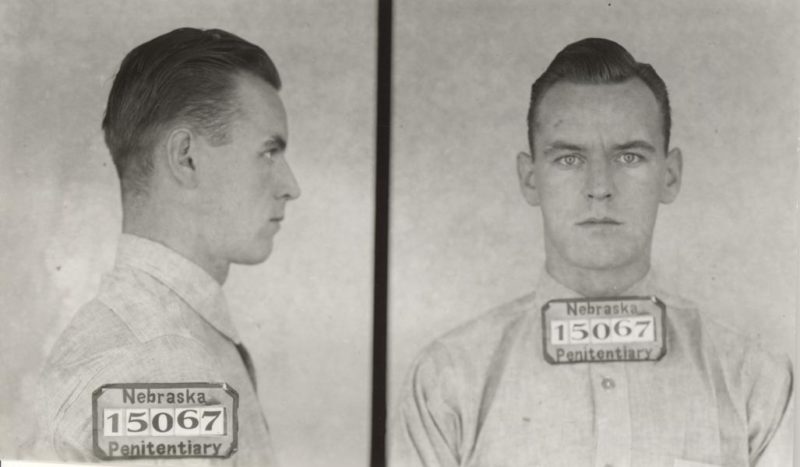
sig_15067_macavoy


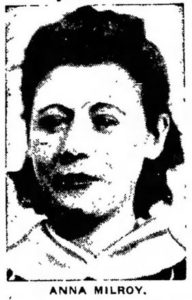
During the summer of 1943, sixteen-year-old Anna Milroy, lived and worked on a farm outside her hometown of Sutton, Nebraska, a small city of just 1,400 people. She was a junior in high school and the oldest of eight children. She worked during the week and on the weekend, she was free to do as she pleased.

Anna Milroy, victim

Anna Milroy, victim

On Saturday evening, August 7, she was brought into town by her employer who dropped her off near a movie theater where she met up with her sister, Wilma, and their close friend Barbara Carl. The three spent the day together and prior to going home, their last stop was at Yost’s Service Station in Sutton. Anna, who was tired and wanted to go home, told her friends she was going to use the station’s restroom. After waiting for several minutes for her to return, Wilma and Barbara assumed she had gone home on her own.

The next day, the family realized Anna had not returned and notified the Clay County Sheriff. At two o’clock in the afternoon Sunday, Sutton officials blew the fire whistle to call for searchers. Despite their efforts, night came and there was still no sign of Anna.

On Monday, a farmer found Anna’s nude and battered body while mowing weeds along a gravel road one mile south of Sutton.

An autopsy performed later that day showed she had been raped. Besides having her skull bashed, there were holes in her head which appeared to have been made by a chisel.

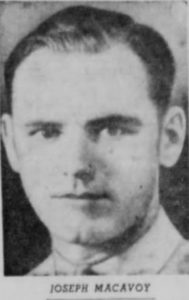
Later that evening, county investigators were led to a vehicle that had been purchased on Saturday at Yost’s Filling Station. The car, which was parked outside a tavern in Sutton, had what looked to be blood-splatter on the body. The owner, Private Joseph T. MacAvoy was first questioned in Sutton, then taken to an adjacent county and interrogated further.

By 5:30 the next morning, the twenty-four-year-old married solider from Brooklyn had confessed. MacAvoy was serving his second enlistment at nearby Harvard Army Airfield, a small training base sixteen miles south of Sutton. MacAvoy had recently been demoted from sergeant, and was out on bond pending trial for attacking a woman in Hastings. After he was arrested in that case, his wife, Evelyn, returned to Brooklyn. It was later reported that she left because she could not find adequate living arrangements.

In his confession, MacAvoy claimed he knew Anna and had made a date with her that night, the two planning to meet at 11:30 near Yost’s station.

“I knew her because I had met her once before,” MacAvoy related. “I called her aside and told her I would pick her up at 11:30 on the corner by Yost’s garage. We got into the car and drove out to this road.”

On that road, the two had an argument when she refused his advances. They both got out of the car and in the middle of the road, he beat her to death.

“I grabbed her by the throat and threw her down. I grabbed the crank and she started hollering. I hit her about four times on the head and body.”

“The crank entered at her left ear and was driven through the head coming out at the right temple,” a state sheriff told reporters.

Although she was nude, and an autopsy report said she was sexually assaulted, MacAvoy, denied raping the sixteen-year-old, but later said they had intimate relations, implying it was consensual. He also denied driving a chisel into her head.

He further stated that he returned to the airbase at 1:30 a.m., and on Sunday, he drove back out to view the body, then left. As to why he was in a tavern on Monday night in the same small community that was electrified by the tragedy, the same small town that was the girl’s home, was never reported on.

joseph-macavoyMacAvoy was turned over to civilian authorities and was held at the state penitentiary in Lincoln until his trial could begin one month later in Clay County. Although he initially pleaded guilty at his August arraignment, at the start of his trial, he changed his plea to not guilty by reason of insanity.

Following jury selection, his six day trial began on September 9 and included several outbursts  in which he had to be restrained. His fate was left to the jury on September 15. Two hours later, they returned with a guilty verdict and recommendation for the death penalty.

When he heard the sentence, MacAvoy collapsed, and had to be carried out of the courtroom. His mother and sister from Brooklyn attended the trial.

Despite pleading not guilty by reason of insanity, no sanity hearing was granted by the courts, and no doctors are known to have testified at his trial. Instead, prosecutors focused on his confession which was heard and witnessed by eight people, including a stenographer.

Although he was supposed to be electrocuted on December 30, several appeals and a broken electric chair extended MacAvoy’s life until March 23, 1945. For most of that time, the state was unable to get the parts it needed to repair the electric chair, not used since young Henry Sherman went crazy and killed three people back in 1928. Sherman was electrocuted the following year, and it went unused for seventeen-years.

But by 5:50 a.m. that Friday morning, the chair was fixed, tested, and ready for its next customer. The day before he died, MacAvoy was visited by his mother between two and four o’clock in the afternoon. Then, he was taken away and his head was shaved. His only visitors, besides prison officials, were Chaplain Lessten and Father Sherman. Chaplain Lessten, who was with him praying and talking most of the night, reported he ate a large portion of fried chicken and was in good spirits.

When the warden went to MacAvoy’s cell to get him, a newspaper reported the following conversation.

The warden asked: “How are you?”

MacAvoy: “I’m all right.”

Warden: “Are you sure?”

MacAvoy: “Yes.”

The former soldier showed no unwillingness as he was taken from his death cell.

After he was strapped in, MacAvoy, who had become resigned to his fate in recent weeks, was asked if he had any last words.

He said only, “Good-bye Chaplin, good-bye Warden.”

Both responded, “Good-bye Joe.”

At 5:59, MacAvoy was hit with 2,300 volts for twenty seconds, but it didn’t kill him. Unconscious, doctors could still detect a heartbeat. A second was shock applied at exactly 6:00 a.m. and at 6:01, MacAvoy was pronounced dead.

Notes:

Up until the end, MacAvoy denied driving a chisel into her head. At trial, it was proven that a chisel he had access to, and was in his car, was used to make the wounds in Anna’s head.

Anna’s funeral was held at the Congregational Church in Sutton on Friday, August 13. It’s unclear where she was buried, but I assume in Sutton. If she were alive today, Anna Milroy would be eighty-nine-years-old.

Update from Anna’s nephew on June 14, 2018.

Joseph and Anna were not dating. Anna was walking home with her sister and brother when she told them she needed to use the restroom. She told her siblings to go on. Joseph was hiding in the restroom with a rag soaked in chloroform and planned to attack the first woman who entered. After using the rag to subdue Anna, he took her out of town to sexual assault her. She woke up during the attack and fought back, as they found hair under her fingernails. Joseph severely beat her and left her.

He returned the next night, found her still alive, and drove the chisel into her head, killing her. This brutal act the second night got him the death penalty. Joseph was actually restricted to base as he had recently assaulted a woman in a nearby town, but he had numerous forged passes which allowed him to leave base. If Anna had survived, the beating was so severe she would have been unable to resume a normal life. Joseph had bought the car he used in the crime the same night he assaulted Anna. Other military men testified he put the chisel in the car the next day. Joseph tried to claim he was drunk the night he assaulted Anna and should be spared the death penalty. However, the next night when he killed her, he was sober and that contributed to the death penalty.

My late mom, Anna’s younger sister, and I were able to obtain all the court records to this case. The woman at the courthouse took us into the court room and showed us where Joseph sat and where my grandparents sat. She gave us some information of events in the trail and said my grandparents were within arms reach of their daughter’s murderer. She then told us she was the court recorder for the trial. I have more information on this crime which I might share. The last document in the court papers is a letter from the Nebraska Prison Warden advising that the execution of Joseph was carried out.


—###—


Famous Crimes the World Forgot Published in Czech Republic

Home | New Books, Recent News | Famous Crimes the World Forgot Published in Czech Republic


zapomenuti-seriovi-vraziIn January of this year, I was contacted by the Omega publishing company in the Czech Republic about acquiring the Czech language rights to my December 2014 book, Famous Crimes the World Forgot: Ten Vintage True Crime Stories Rescued from Obscurity. Since it is an independently published book, I found this to be a great opportunity to reach an international audience beyond what Amazon and this blog is capable of doing. Omega’s parent company also owns a chain of book stores throughout the country.

In February, I sold the rights under a standard contract and read that it could take up to 18 months before the book is translated, edited, printed and released. Well, I was recently amazed to discover they accomplished all that in seven months, far ahead of schedule. A representative with the publisher contacted me a few weeks ago to let me know that not only were they finished translating the book, they had also released it under the title: Zapomenutí sérioví vrazi – which translates to “Forgotten Serial Killers.”

czech-flagThis is a proud moment for me, and although I don’t like to talk about myself, I did want to share it on my blog. Any kind of acknowledgement from your peers is both a blessing and humbling. I am very grateful to the staff with Omega publishing company, SRO, for doing such a fine job in translating and publishing my book for the beautiful people of the Czech Republic. From my heart, thank you.

—###—


The Mysterious Murder of 15 year-old Nora Fuller, 1902

Home | Feature Stories | The Mysterious Murder of 15 year-old Nora Fuller, 1902


Introduction:

On January 11, 1902, fifteen-year-old Nora Fuller disappeared after she left her home. She told her single mother of three that she was going to meet with a man about a job as a nanny after she found his advertisement in the local newspaper. She didn’t come home that night or the next, and the search for Nora Fuller began. Her nude body was found one month later in an empty apartment.

The careful planning and attention to detail by her cunning killer is what makes this case so intriguing. Added to the mystery is that Nora may have been secretly meeting with a much older man, confiding to one friend that he was her boyfriend.

In a story that was on going, with front-page coverage in San Francisco newspapers between January and March 1902, the city was captivated by the mysterious murder of Nora Fuller. This extreme level of publicity put enormous pressure on the San Francisco Police Department to solve the case.

Beneath this introduction is a 3,000-word feature story written by retired San Francisco Police Captain Thomas A. Duke in his book, Celebrated Criminal Cases of America, published in 1910.

According to Duke’s story, the police were eventually able to identify a strong suspect, or so they believed at the time. Unfortunately, he left town before he could be arrested and was never seen or heard from again. What is most fascinating about Duke’s story is the long-running account of circumstantial evidence that police believed connected the murder to this man.

The pressure to solve the case also meant that dozens of other men who were rounded up and interrogated had their names published in the local newspapers as well. With the public’s fear and anger already inflamed by those same dailies, the lives of these men were effectively ruined.

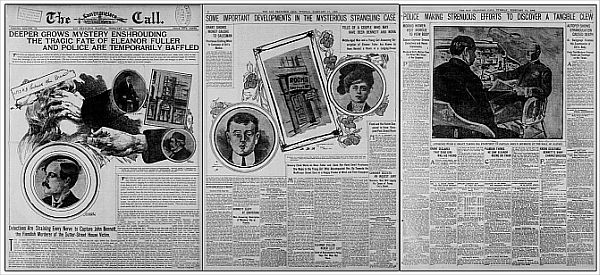
At the end of the story is a link to download a three-page .pdf file containing the front and two interior pages San Francisco Call published on February 11, 1902—three days after Nora’s nude body was discovered. Nearly every square inch of those three pages is devoted to the Fuller murder.
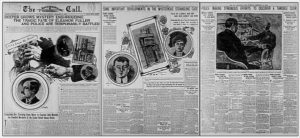
sfcallthumbThe information within those three pages may not match up with Duke’s account, who wrote it years later and had a more complete view of the crime.

I have also added a link to an October 17, 2016, sfgate.com article.

I will add more links to this feature story, including links to more pdf files, in the near future.


The Nora Fuller Case
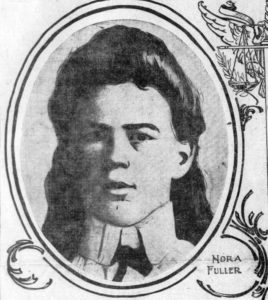
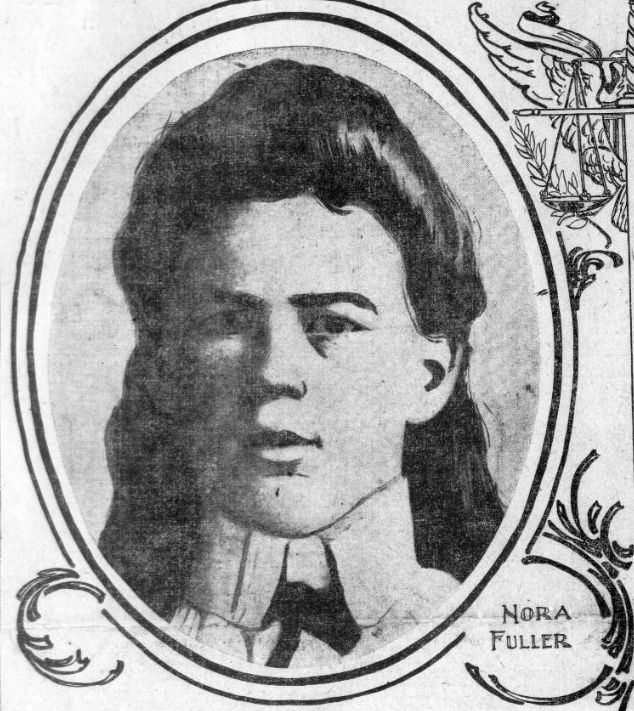
nora-fullerEleanor Parline, better known as Nora Fuller, was born in China in 1886.

In 1890 her father was an engineer on the Steamer Tai Wo. One night he was sitting asleep in a steamer chair on the deck of the vessel while at sea. Shortly after he was seen in this position his services were required in the engine room, but when a helper was sent after him the chair was vacant, and Parline was never seen again. A year later Mrs. Parline married a man named W. W. Fuller, in San Francisco, but seven years later she obtained a divorce.

As she had four small children, Mrs. Fuller experienced much trouble in getting along. In 1902 she lived at 1747 Fulton Street. At that time Nora, who was then fifteen years of age, decided to quit school and seek employment.

On January 6 she wrote to a theatrical agency, and after stating that she had a fairly good soprano voice, asked for employment. Two days later the following advertisement appeared in the Chronicle and Examiner:

“Wanted—Young white girl to take care of baby; good home and good wages.”

At the foot of the advertisement was a note directing anyone answering to address the communication in care of the paper the advertisement was found in. Nora Fuller answered it, and on Saturday, January 11, she received the following postal:

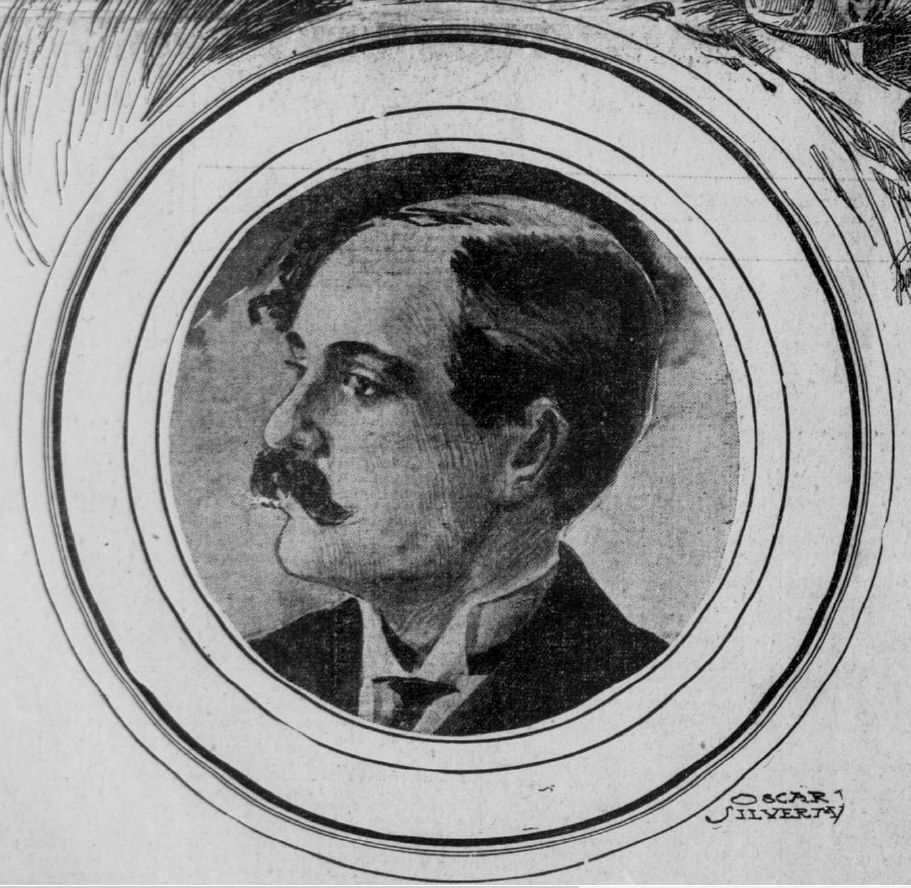
“Miss Fuller: In answer to yours in response to my advertisement, kindly call at the Popular Restaurant, 55 Geary Street, and inquire for Mr. John Bennett, at 1 o’clock. If you can’t come at 1, come at 6. ‘ JOHN BENNETT.”

Mrs. Fuller sent Nora to the rendezvous, and the girl took the postal card with her. About one hour later Mrs. Fuller’s telephone bell rang, and her twelve-year-old son answered.

A nervous, irritable voice, which sounded some like Nora’s, told him that the speaker was at the home of Mr. Bennett, at 1500 Geary Street, and her employer wanted her to go to work at once. (It was subsequently learned that 1500 Geary Street was a vacant lot).

The boy called out the message to his mother, who instructed him to tell Nora to come home and go to work Monday. The boy repeated the message, and the person at the other end said: “All right;” but before any more could be said by the boy the receiver at the other end was hung up. Nora Fuller never came home. A few days later the distracted mother notified the police.

F. W. Krone, proprietor of the Popular Restaurant, was questioned and he stated that about 5:30 on the evening of January 11, a man who had been a patron of his place at different times during the past fifteen years, but whose name he had not up to that time heard, came to the counter and stated that he expected a young girl to inquire for John Bennett, and if she did to send her to the table where he was seated.

The girl did not appear, and Bennett, after waiting one-half hour, became restless and walked up and down the sidewalk in front of the restaurant for several moments. He then disappeared.

This man was described as being about forty years of age, five feet nine inches high, weighing about 170 pounds, wearing a brown mustache, well dressed and refined appearing.

A waiter employed at the Popular Restaurant, who frequently waited on “Bennett,” stated that the much-wanted man was a great lover of porterhouse steaks, but the fact that he only ate the tenderloin part of the steak earned for him the sobriquet of “Tenderloin.”

On January 16 lengthy articles were published in the papers in regard to the mysterious disappearance of the girl.

On January 8, [three days before Nora’s disappearance] a man giving the name of C. B. Hawkins called at Umbsen & Co.’s real estate office, and, addressing a clerk named C. S. Lahenier, inquired for particulars regarding a two-story frame building for rent at 2211 Sutter Street. The terms were satisfactory to Hawkins, but Lahenier asked the prospective tenant for references. He replied that he could give none, as he was a stranger in the city, but as he had a prepossessing appearance the clerk let him have the key after paying one month’s rent in advance. The man then signed the name “C. B. Hawkins” to a contract.

He stated that he was then stopping at the Golden West Hotel with his wife. The description of Hawkins was identically the same as the description of Bennett.

On the following day the real estate firm sent E. F. Bertrand, a locksmith and “handy man” in their employ, to the Sutter-Street house to clean it up.

Many days after this a collector for the firm named Fred Crawford reported that the house was still vacant—judging from outside appearances. He went to the Golden West Hotel to inquire for Hawkins, but he was not known there.

On February 8 the month’s rent was up, and a collector and inspector named H. E. Dean was sent to the house.

Using a pass key he entered, but finding no furniture on the lower floor, he went upstairs, where he found the door to a back room closed. This he opened, but as the shade was down the room was in semi-darkness. He discerned a bright-colored garment on the floor, but as he seemed to know by intuition that something was wrong, he hurriedly left the building, and meeting Officer Gill requested him to accompany him back to the house. The officer entered the room, and upon raising the shade found the dead body of a young girl lying as if asleep in a bed. On the bed were two new sheets, which had never been laundered, a blanket and quilt. An old chair was the only other furniture in the house. Neither food nor dishes could be found. Nor was there any means of heating or lighting the house, as the gas was not connected.

The girl’s clothing was in the bedroom, also her purse, which contained no money, but a card with the following inscription thereon:

“Mr. M. A. Severbrinik, of Port Arthur.”

(It was subsequently learned that this man sailed for China on the Peking three hours before Nora Fuller left home on January 11.)

On the floor was the butt of a cigar, and on the mantle-piece in the front room was an almost empty whiskey bottle. There were no toilet articles in the house except one towel.

Many letters were found addressed to Mrs. C. B. Hawkins, 2211 Sutter Street. They were from furniture houses and contained either advertisements or solicitations for trade. A circular letter addressed to Mrs. Hawkins and bearing a postmark of January 21, 11 p. m., or ten days after the dis-appearance of Nora Fuller, had been opened by someone and then placed in the girl’s jacket, which was found in the room. Mrs. Fuller identified the clothing as belonging to her daughter, and subsequently identified the body as the remains of Nora. No trace was ever found of the postal card Nora received from Bennett.

Dr. Charles Morgan, the city toxicologist, examined the stomach and found no traces of drugs or poisons. Save for an apple, which the deceased had evidently eaten about one or two hours before death, the stomach was empty.

There was a slight congestion of the stomach, possibly due to partaking of some alcoholic drink when the stomach was not accustomed to it. Mrs. Fuller stated that Nora ate an apple shortly before she left home on January 11.

Dr. Bacigalupi, the autopsy surgeon, found two black marks on the throat, one on each side of the larynx, and as there was a slight congestion of the lungs, he concluded that death was due to strangulation. But the child had been other-wise assaulted and her body frightfully mutilated, evidently by a degenerate. Captain of Detectives John Seymour took charge of the case.

B.T. Schell, a salesman at J. C. Cavanaugh’s furniture store, located at 848 Mission Street, stated that at 5 p. m., January 9, a man of the same description as “Hawkins” or “Bennett,” and wearing a high silk hat, called and said that he wanted to furnish a room temporarily. He purchased two second-hand pillows, a pair of blankets, a comforter and top mattress. He insisted that the goods be delivered at night or not at all. This Schell promised to do. The customer then wanted to know what assurance he had that the salesman would not substitute another mattress, and Schell suggested that he put his initials on the mattress as a means of identification. Acting on this suggestion Hawkins used a large heavy pencil and wrote the letters “C. B. H.” on the mattress. After leaving word to deliver the articles that night to 2211 Sutter Street the man departed.

Lawrence C. Gillen, the delivery boy for this firm, stated that he had to work overtime in order to take the articles to the Sutter Street house that night.

When he arrived the house was in darkness. He rang the bell and a man came to the door, and from what he could see with the lights from the street lamps he was of the same description as the man who made the purchases, and he wore a silk hat. Gillen asked him to light up so he could see, but he said, “Never mind, leave the things in the hail.”

Richard Fitzgerald, a salesman employed at the Standard Furniture Company, 745 Mission Street, stated that a man of “Bennett’s” description bought a bed and an old chair from him on January 10, and that he engaged an expressman, Tom Tobin, to deliver the same to 2211 Sutter Street.

Tobin stated that this man was present when he arrived, and requested him to set up the bed in the room where it was found. This man he described as being of Bennett’s ‘appearance.

It is probable that the sheets, towel and pillow cases were purchased at Mrs. Mahoney’s dry goods store, 92 Third Street, which was just around the corner from the Standard Furniture Company. These articles were carried away by the purchaser.

On the floor of the room where the girl’s body was found was a small piece of the Denver Post of January 9, upon which was a mailing label addressed to the office of the Railroad Employees’ Journal, 210 Parrott building.

When this paper arrived at the Parrott building it was given by Exchange Editor Scott to a Mr. Hurlburt, a delegate from Denver to a railroadmen’s convention then in session in the assembly room in the Parrott building. After glancing at it he threw it on a large table, and some other delegate picked it up and took it to Dennett’s restaurant, where he left it on the dining table. The steward of the restaurant, Mr. Helbish, picked it up, and after taking it to the counter began to read it, believing it was the San Francisco Post. He laid it down, and Miss Drysdale, the cashier, glanced over it. She laid it down, and how it got to 2211 Sutter Street remains a mystery.

A seventeen-year-old girl named Madge Graham met Nora Fuller in June, 1901, and they became very friendly. Madge boarded at Nora’s house for a while until her guardian, Attorney Edward Stearns, requested her to move away, because a lawyer named Hugh Grant was a frequent visitor at the Fuller home.

She claimed that Nora Fuller frequently spoke to her of having a friend named Bennett, also she believed that the advertisement was a trick concocted by Nora and “Bennett” to deceive Mrs. Fuller.
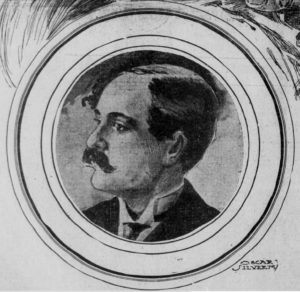
john-bennett

John Bennett

She furthermore stated that Nora often telephoned to some man, and that one day Nora requested her to tell Mrs. Fuller that she and Nora were going to the theater that night. Madge did as requested, but she stated that instead of going with her, Nora went with some man. It was also claimed that someone gave Nora complimentary press tickets to the theaters.

A. Menke, who conducted a grocery at Golden Gate and Central Avenues, stated that Nora Fuller frequently used his telephone to call up someone at a hotel, although she had a telephone in her own home a few blocks away.

Theodore Kytka, the handwriting expert, made an examination of the original slips filled out by “Bennett” for his advertisement for a young girl, and also the signature of “C. B. Hawkins” to the contract when he rented the house, and found both were written by the same person.

On February 19 the Coroner’s jury rendered the following verdict:

“That the said Nora Fuller, aged fifteen, nativity China, residence 1747 Fulton Street, came to her death at 2211 Sutter Street in the City and County of San Francisco, through asphyxiation by strangling on a day subsequent to January 11 and before February 4, 1902, at the hands of parties unknown. Furthermore we believe that she died within twenty-four hours after 12 m., January 11. In view of the heinousness of the crime, we recommend that the Governor offer a reward of $5,000 for the discovery and apprehension of the criminal.

“ACHILLE ROSS, Foreman.”

Believing that the person who committed this crime might have changed his address and sent a written notification to that effect to the postal authorities, Theodore Kytka examined 32,000 notifications of changes of address. Of this number he found three signatures that bore considerable resemblance to the Bennett-Hawkins style of penmanship, and one of these three was almost identically the same.

This proved to be the signature of a man in Kansas City, Mo., and Captain Seymour went east to make a personal investigation. It was found, however, that the man had nothing to do with the crime.

On January 16, five days after the disappearance of Nora Fuller, but three weeks before her fate was known, the papers of San Francisco gave considerable space to the mysterious case. Two days later a gentleman connected with a local paper notified the police department that a clerk in their employ named Charles B. Hadley had disappeared. It was afterward said that he was short in his accounts with his employers.

Detective Charles Cody was detailed to locate the man, and he found that he had lived at 647 Ellis Street with a girl born and raised in San Francisco, who had assumed the name of Ollie Blasier, because of her infatuation for a notorious character known as “Kid” Blasier.

No trace of Hadley was found. Finally the body of Nora Fuller was discovered, and photographs of the signature of “C. B. Hawkins” on the contract with Umbsen & Co., and the “C. B. H.” on the mattress, were published in all the papers.

The Blasier woman had a photograph of Hadley in her room, upon the back of which he had written his name, “C. B. Hadley.” Seeing the great similarity in the handwriting she delivered this to Detective Cody, who in turn delivered it to Theodore Kytka for investigation.

Kytka determined at once that the person who wrote “C. B. Hadley” on the photograph also wrote “C. B. H.” on the mattress, and “C. B. Hawkins” on the contract.

While Hadley had the same general physique as “Hawkins,” it was known that he was always clean shaven. Miss Blaiser stated, however, that she had seen Hadley wear a false brown mustache about the house, and it was subsequently learned that he purchased one at a Japanese store on Larkin Street.

In addition to this, Chief of Police Langley, of Victoria, B. C., made an affidavit to the effect that a Mr. Marsden, a storekeeper in Victoria, B. C., had stated that he had been a companion of Hadley’s, and that while out on a “lark” he had seen Hadley wear a false mustache. Miss Blasier made a further statement substantially as follows:

“I now recall that after the disappearance of Nora Fuller Hadley made a practice of getting up early in the morning and taking the morning paper to the toilet to read.

“On the day of his final disappearance he followed this practice, and after he left the house I found the morning paper in the toilet, and I noticed a long article about the disappearance of Nora Fuller. It was evident that his mind was greatly disturbed on this morning.

“The next day I was making up my laundry, and at the very bottom of the pile of soiled clothing I found some of his garments which had blood on them. I burned them and also his plug hat.

“It is well known that Hadley is partial to porterhouse steaks and that he eats only the tenderloin.

“On the evening of January 16, Hadley telephoned to me that he would not be home. I confess that I suspect he committed this murder.”

Theodore Kytka obtained Hadley’s photograph and altered it by giving him the appearance of wearing a mustache and plug hat. This was shown to different persons who had dealings with “Hawkins,” with the following results:

Tobin, the expressman, said it looked very much like him; Lahenier, the real estate man, said it bore a marked resemblance. Ray Zertanna, who had seen Nora in the park with a man, stated that the picture was a good likeness of this man. Schell, who suggested that “Hawkins” place his initials on the mattress, said it was an exact likeness of Hawkins. Fred Krone, the restaurant man, who had the conversation with “Bennett” on the evening Nora left home, said it was not a likeness of Bennett.

Hadley left his money in a certain bank in this city, where it remains even now.

An investigation was then made as to his past, and it developed that he was an habitue of the tenderloin district, and that he was on the road to degeneracy. His true name was Charlie Start, and his respected mother resided in Chicago.

On May 6, 1889, Superintendent of Police Brackett, of Minneapolis, issued a circular letter offering $100 reward for the arrest of Charles Start for embezzlement.

About two years before the murder of Nora Fuller, Hadley enticed a fifteen-year-old girl into a room and outraged her. He then purchased diamonds and jewelry from a certain large jewelry store in San Francisco and gave them to the girl, who is now a respectable married woman residing in the neighborhood of San Francisco.

The country was flooded with circulars accusing Hadley of this murder and calling for his apprehension, but he was never located.

Many believe that he committed suicide.

Links:

Download 3 page .pdf file of February 11, 1902, San Francisco Call

Read sfgate.com October 17, 2016, article about the case.

—###—


New Book: Unwanted: A Murder Mystery of the Gilded Age, by Andrew Young

Home | New Books | New Book: Unwanted: A Murder Mystery of the Gilded Age, by Andrew Young


A Sensational Crime and Trial that Confronted Racism, Sexism, and Privilege as America Took to the World Stage

1577170371On the foggy, cold morning of February 1, 1896, a boy came upon what he thought was a pile of clothes. It was soon discovered to be the headless body of a young woman, brutally butchered and discarded. She was found just across the river from one of the largest cities in the country, Cincinnati, Ohio. Soon the authorities, the newspapers, and the public were obsessed with finding the poor girl’s identity and killer. Misinformation and rumor spread wildly around the case and led authorities down countless wrong paths.

Initially, it appeared the crime would go unsolved. An autopsy, however, revealed that the victim was four months pregnant, presenting a possible motive. It would take the hard work of a sheriff, two detectives, and the unlikely dedication of a shoe dealer to find out who the girl was; and once she had been identified, the case came together. Within a short time the police believed they had her killers—a handsome and charismatic dental student and his roommate—and enough evidence to convict them of first-degree murder. While the suspects seemed to implicate themselves, the police never got a clear answer as to what exactly happened to the girl and they were never able to find her lost head—despite the recovery of a suspicious empty valise.

Centering his riveting new book, Unwanted: A Murder Mystery of the Gilded Age, around this shocking case and how it was solved, historian Andrew Young re-creates late nineteenth- century America, where Coca-Cola in bottles, newfangled movie houses, the Gibson Girl, and ragtime music played alongside prostitution, temperance, racism, homelessness, the rise of corporations, and the women’s rights movement. While the case inspired the sensationalized pulp novel Headless Horror, songs warning girls against falling in love with dangerous men, ghost stories, and the eerie practice of random pennies left heads up on a worn gravestone, the story of an unwanted young woman captures the contradictions of the Gilded Age as America stepped into a new century, and toward a modern age.


—###—


Jack McCullough asks Court for Certificate of Innocence

Home | Recent News | Jack McCullough asks Court for Certificate of Innocence


When Jack McCullough was arrested in 2012 for the 1957 murder of Maria Ridulph, Sycamore, Illinois authorities boasted they had solved the nation’s oldest cold case. Following McCullough’s trial and conviction, the long-running television series 48 Hours profiled the case in an episode, CNN produced a special web feature on it, and author Charles Lachman wrote a book about it called “Footsteps in the Snow.” His 2014 book was then used as the basis for Lifetime Network documentary.
 
jack-mcculloughAll four of those works presumed McCullough was guilty. A second book about the case, “Piggyback,” by self-published author Jeffrey Dean Doty was also released in 2014, and theorized that McCollough was innocent. In 2015, a new state prosecutor for DeKalb County reviewed the case and determined that evidence that would have exonerated McCullough was suppressed during his original trial.
 
In a March 2016 hearing, that new prosecutor asked the court to dismiss the charges. A judge vacated the sentence and McCullough was released in April 2016. The charges were dropped one week later. Now, McCullough is back in the news asking the court for a certificate of innocence.
 
According to the original FBI investigation, they reasoned she was abducted and killed between 6:45 and 7:00 o’clock on the night of Dec. 3, 1957, near her Sycamore home. At approximately that same time, Illinois Bell Telephone records indicate McCullough was in Rockford, Illinois, 40 miles northwest of Sycamore, and had placed a collect call to his mother.
maria_ridulph
Maria Ridulph, – Wikipedia
—###—