True Crime Books by Jason Lucky Morrow

Welcome to HistoricalCrimeDetective.com [Est. 2013], where you will discover forgotten crimes and forgotten criminals lost to history. You will not find high profile cases that have been rehashed and retold ad infinitum to ad nauseam. This blog is the official website for true crime writer Jason Lucky Morrow, author of four books including the popular series: Famous Crimes the World Forgot, Volume I and Volume II. If you would like to send me a comment, Contact Me Here. - Please follow this historical true crime blog on FACEBOOK.

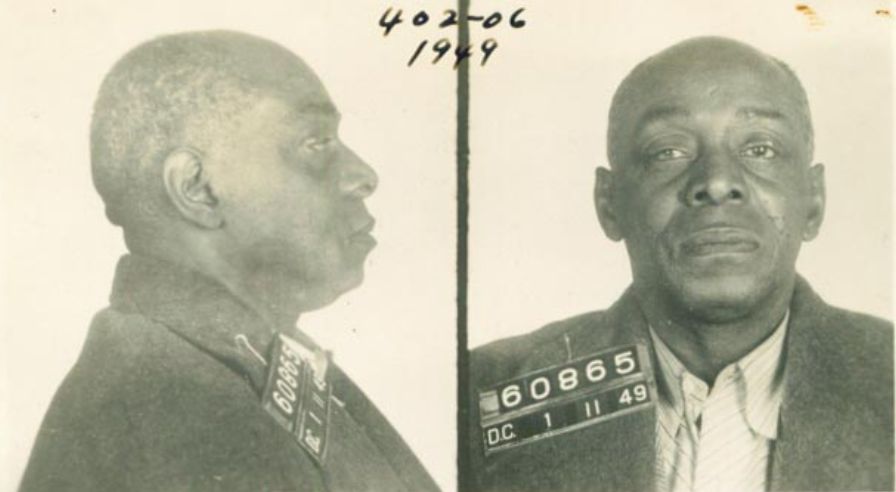
Mug Shot Monday! Charlie Johnson, 1949

Home | Mug Shot Monday | Mug Shot Monday! Charlie Johnson, 1949


Charlie-Frazier-Johnson

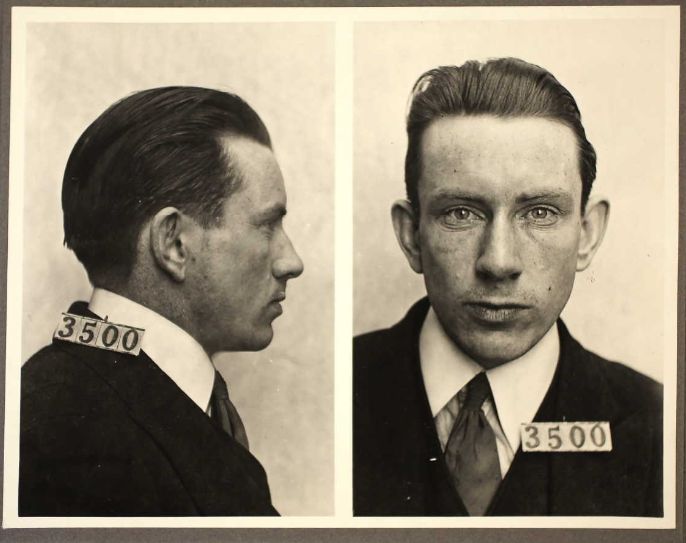
Mug shot Charlie Johnson, 1949

Charlie Johnson was a career criminal who was arrested in Washington D.C. on January 11, 1949, for pick-pocketing. He was sentenced to one year in prison and fined $200. He was born in 1895 in Kansas City, Missouri, and his criminal record dates from 1917. His record states he was living in New York City when he was arrested in Washington D.C.

No further information could be found.

—###—


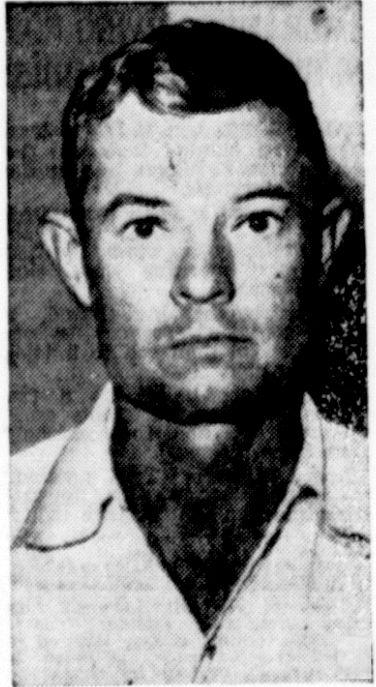
Triple-Slayer Curtis Shedd, 1950

Home | Short Feature Story | Triple-Slayer Curtis Shedd, 1950


On August 3, 1950, Curtis Shedd stopped by the Walhalla, South Carolina, home of his trade school pal, John Boyter, to pick-up Boyter’s two daughters for an afternoon of cruising around the countryside. Earlier that day, Boyter was seen in Shedd’s car as the two drove around town. He was never seen alive after that morning.

Triple Slayer Curtis Shedd

Triple Slayer Curtis Shedd

Six days later, John Boyter’s body was found near a logging road in a heavily wooded area just across the South Carolina/Georgia state line. The thirty-eight-year-old had been beaten with rifle butts to the bead, and murdered with a shotgun blast to the chest.

Shedd was arrested on Saturday, August 12, after he returned to attending trade school classes where he pretended like nothing had happened.

He initially denied murdering his friend, and claimed he did not know the whereabouts of Boyter’s two daughters, Jonnie Mae, 14, and Jo Ann, 8. However, the girls’ grandmother reported they were last seen getting in Shedd’s car.

Thirty-year-old Shedd turned out to be a recently released convict who had twice served two-year sentences for robbery in separate cases. Shedd eventually cracked under a grueling interrogation and told officers that he had raped and strangled the two girls, and left their bodies in a lonely, wooded ravine near Highlands, North Carolina.

After his confession, a crowd of an estimated 4,000 people gathered in Walhalla, where Shedd was being held in the local jail. Although most of them were just curious about the man who had committed the worst local crime in decades, shouts of “We want Shedd. . . we’ll kill him!” were heard. Fearing a lynching, which hadn’t occurred in that county in twenty-years, the sheriff requested and received fifty armed soldiers from the South Carolina National Guard. They surrounded the jail and stood as buffer between the angry throng of revenge seekers and Curtis Shedd.

The local sheriff told the crowd to “go on home and let law and order take its course.” He added that he begged the men to “pray and head your Bibles” and then come back if they thought it was God’s way. They moved off slowly after the appeal and Shedd was slipped out of town and moved to a jail in Georgia where a murder warrant for the death of John Boyter had been filed. This charge was later dropped in favor of putting Shedd on trial for the rape and murder of the two girls in North Carolina.

Shedd was tried in December 1950 in Franklin, South Carolina, where a jury found him guilty and sentenced him to death. He was then executed on March 23, 1951, seven months and three weeks after he kidnapped, raped and murdered Jonnie Mae and Jo Ann Boyter.

You can read more about Curtis Shedd from Google Newspaper Archives.

—###—


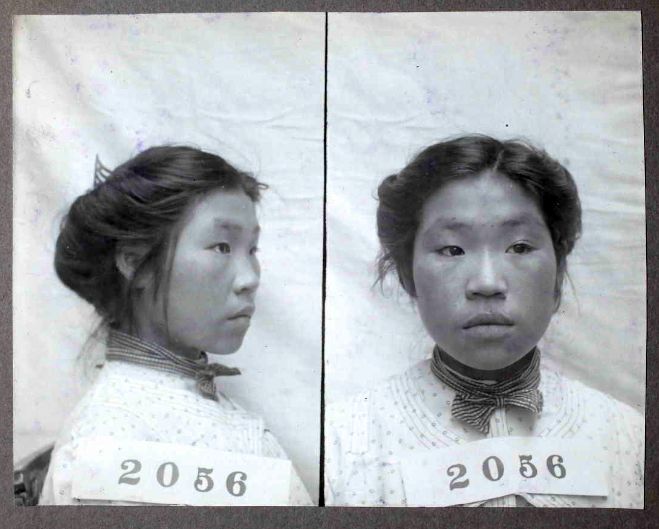
Mug Shot Monday! Carrie Sang Sing, 1911

Home | Mug Shot Monday | Mug Shot Monday! Carrie Sang Sing, 1911


Carrie-Sang-Sing-1

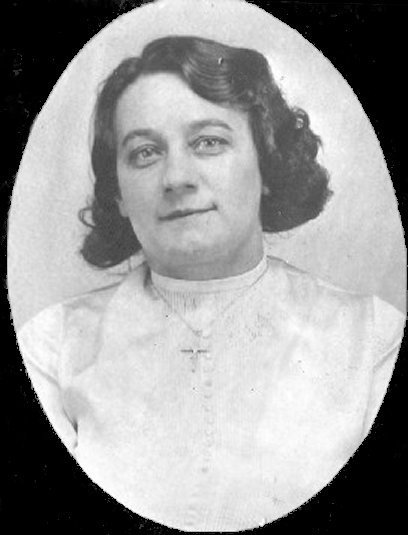
Carrie Sang Sing

On August 1, 1911, seventeen-year-old Carrie Sang Sing was arrested near Nome, Alaska, for slashing an unnamed person with a knife. Since Alaska was a territory at the time, her case fell to federal court where she was tried, convicted, and sentenced to two years in prison—with the option of only serving eighteen months for good time. All Alaskan prisoners were sent to McNeil Island Federal Penitentiary but since the prison had no facilities for women, female prisoners were transferred to Leavenworth prison in Kansas. However, since Leavenworth didn’t have facilities for women either, they were sent to the Kansas State Penitentiary.

When she arrived in Kansas, the beautiful, exotic looking Carrie, whose last name came from her Chinese husband, was a source of amazement and amusement to nearly everyone who had never seen an Eskimo before. Her transfer to Kansas was a source of news for several area newspapers. Two of the articles are posted below.

Article #1

“An Eskimo Woman Begins Sentence in Lansing Prison,” The Leavenworth Times, Leavenworth, Kansas, October 29, 1911, page 1.

A full-blooded Eskimo woman, Carrie Sang Sing, arrived here last night in the custody of a United States Marshal B. J. Doten, and his wife on her way to the [Kansas State] Penitentiary at Lansing to serve two years for assault with a deadly weapon. She is the first Eskimo to be imprisoned there.

Carrie Sang Sing may not ring like a true Eskimo name. It is because Carrie was married to a Chinaman in Nome. The marshal said he had heard her maiden name, but he couldn’t remember it, and Carrie could not spell it.

Carrie’s step-mother died in prison at McNeil Island a little more than a year ago and her father, who has been imprisoned at McNeil Island, Lives in Nome, Alaska.  His name is Ableruk. Both her father and step-mother were convicted of the same offense for which Carrie was brought all the way from Nome.

Carrie didn’t restrict her [debauchery, indulgence] to eating gumdrops and tallow candies, and that is why she is at Lansing. While under the influence of strong drink, an earmark of civilization that she readily adopted, Carrie slashed a fellow native with a knife.

Two years at Lansing may mean a life sentence to Carrie. Eskimos do not live long in temperate climate and, the next summer may kill her. This gave her little worry last night as she stood at the window of the Kansas City Western Railway Company’s office, where she was waiting for the car to Lansing, and gaped at the crowd that gaped at her. Carrie is young and probably was an Alaskan belle.

Article #2

“Eskimo in the Kansas Pen,” Lincoln County Leader, Toledo, Oregon, February 23, 1912, page seven.

Leavenworth. Kan.—Brought nearly 5,000 miles to serve a sentence In the United States penitentiary hero, Carrie Sang Sing, an Eskimo woman, was refused admission and had to be taken to the Kansas penitentiary at Lansing, where all women Federal prisoners are kept now.

Carrie canto front Cape Nome. Alaska, and is the first Eskimo woman ever a prisoner in the Kansas penitentiary. She was sentenced for two years for an attack with a deadly weapon. While under the influence of whiskey she took the warpath in Nome and severely wounded several persons with a pistol.  [Not true, she slashed one person with a knife.]

Carrie’s name doesn’t sound very much Eskimo, and it isn’t. She is the wife of a Chinese. The marshal who brought her said he couldn’t pronounce her maiden name and had forgotten it, anyway, so that part of the prison record is a blank. Her father and mother have been in prison at McNell’s Island, Wash., for similar offenses. The mother died there and the prison officials fear that Carrie will not be able to survive the heat in the Kansas prison neat summer.

—###—


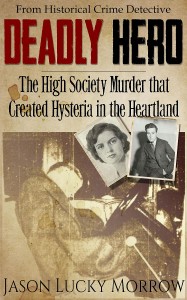
My New Book Deadly Hero
Available May 20 on Amazon

Home | New Books | My New Book Deadly Hero
Available May 20 on Amazon


.

What can you buy for $1.99? Eighteen months of hard work for my latest book, Deadly Hero: The High Society Murder that Created Hysteria in the Heartland, which will go on sale on Amazon on May 20. It is available for preorder now. The $1.99 sale will last until May 31.

Here is the synopsis. I will be posting excerpts for the next week.

eCover-smallOn the night of Thanksgiving, 1934, the son of a prominent Tulsa doctor was shot to death in his car in the wealthiest neighborhood of the oil-rich city. Two days later, the son of one of the most powerful men in the state walked into the sheriff’s office with his lawyer and surrendered.

The killer’s name, and who his father was, would shock the entire nation and make news around the world.

In a convoluted story, the mentally unstable genius claimed he killed in self-defense and to protect wealthy debutante Virginia Wilcox—the object of his unrequited love. But prosecutors claimed their star prisoner was the actual mastermind of a diabolical plot in which he would emerge as the hero, win Virginia’s heart, and gain acceptance into the Wilcox family by her mega-rich father.

Tulsa’s high-society murder scandalized the Oil Capitol of the World when the investigation churned up unsubstantiated reports of rich kids wildly out of control. Looking out over their Christian, conservative city, adults imagined sex-mad teens driving dangerously over their streets to get to hole-in-the-wall gambling joints and breast-bouncing dance parties where they would plan big crimes—all while high on marijuana and drunk on 3.2 beer. A tornado of rumors and gossip tore through town, stirring up mass hysteria and igniting a moral crusade to save the souls of Tulsa’s youth. When a key witness was found dead in his car under similar circumstances, it only confirmed their worst fears.

In a notable year for famous criminals, this case from the Oklahoma heartland received nationwide coverage each step of the way. This true story is not a “whodunit,” but rather, a “will he get away with it?” The answer to that question is still up for debate after the killer did something only the bravest of men would ever do.

http://www.amazon.com/dp/B00XLSKNI2/

—###—


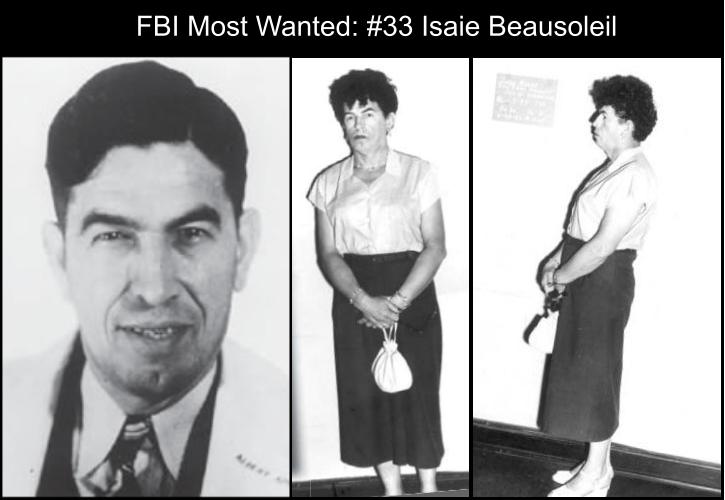
Mug Shot Monday! Isaie Beausoleil,
FBI Most Wanted, 1952-1953

Home | Mug Shot Monday | Mug Shot Monday! Isaie Beausoleil,
FBI Most Wanted, 1952-1953


Isaie-Beausoleil-Complete

Isaie Beausoleil was a fugitive who was placed on the FBI’s Most Wanted List in 1952 and was captured one year later dressed as a woman-a disguise he had been using to escape detection. The following article is from the FBI’s booklet, Ten Most Wanted 60th Anniversary, 1950-2010.

Although investigators described “Top Ten Fugitive” Isaie Beausoleil was a tough-to-track “lone wolf” because he kept a low profile, they captured him because of his not-so-subtle disguise. Dressed in a black satin bathing suit, covered up with a blue blouse and a green skirt, Chicago Park Police searched him following reports of suspicious behavior in the women’s restroom.

Initially searched by a female officer, Beausoleil was turned over to another Chicago Park Police officer once it was determined the woman was in fact a male. He was handcuffed bearing painted fingernails and taken into custody. Once fingerprinted, he was identified as a “Top Ten Fugitive.”

Already possessing a lengthy arrest record, he acquired a spot on the “Top Ten” on March 3, 1952, a few years after he was charged with first degree murder. On August 17, 1949, a bludgeoned woman’s body was discovered in a ditch alongside a Michigan road; two weeks later, police were on the hunt for Beausoleil. Police ultimately named Beausoleil, the bludgeoned woman’s companion, as the “logical suspect” because his car was spotted fleeing the murder scene and was later recovered in Boston, Massachusetts.

Suspicion mounted when he visited North Avenue Beach in Chicago, Illinois, dressed as a woman and was observed acting peculiar in the women’s restroom.

In September of 1953, after deportation back to Canada because of violations of immigration laws, he was sentenced to five years’ probation for unlawful entry into the United States. A month later, Beausoleil stood trial for earlier crimes and received five-to-ten years and one-to-three years for attempted robbery and escape, in addition to a parole violation.

—###—


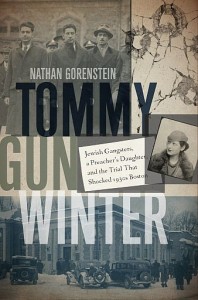
Tommy Gun Winter by Nathan Gorenstein

Home | New Books | Tommy Gun Winter by Nathan Gorenstein


A tale of love, murder, insanity and the law. Plus two zealous newspaper reporters and a couple of clever detectives in 1930s Boston.

Tommy Gun Winter” is the improbable but true story of four Bostonians who once shared the front pages with John Dillinger, Pretty Boy Floyd and Bonnie and Clyde. One was a beautiful minister’s daughter, another was a graduate of MIT, and their leader was Murt Millen – smart, persuasive and unbalanced.

The story is told by a veteran journalist who tracks down a family secret.

Gorenstein_Tommy-Gun-WinterMillen was the son of a successful immigrant Jewish contractor. He dreamed of becoming a race car driver, but instead chose crime. He ensnared his brother, Irv, and then aeronautical engineer and ROTC officer Abe Faber. The brilliant Faber found in Millen the only person he ever loved.

Norma Brighton was the 18-year-old who fled her father’s home two weeks after meeting Murt in a beachfront dance hall.

Murt and Norma married, and three weeks later the first person died.  Then another. And then came a fatal bank robbery.

In an era before surveillance cameras, cell phones or computers the gang escaped clean away after Murt cut down two police officers–Francis Haddock and Forbes McLeod. There was little evidence at the scene, eyewitnesses were unreliable, the license plate number was fake. Police were stymied. But working the crime were a couple of clever detectives and two zealous newspaper reporters. What followed was a remarkable investigation and record-setting trial where testimony from friends, family, physicians and seventeen psychiatrists unveiled an emotional triangle gone very bad.

This story of an interfaith marriage, sex, insanity and bloodshed made the three men and their “red-headed gun moll” infamous. Using newly released state police records, trial transcripts and meticulous research, Gorenstein’s account explores the Millen, Faber, and Brighton families and introduces us to cops, psychiatrists, newspaper men and women, and ordinary citizens caught up in the extraordinary Tommy Gun Winter of 1934.

—###—


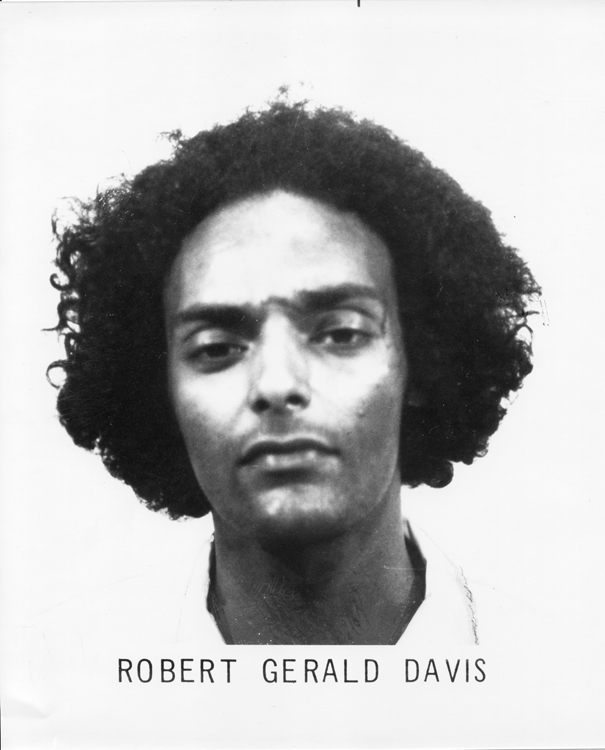
Mug Shot Monday! Robert Gerald Davis, 1975

Home | Mug Shot Monday | Mug Shot Monday! Robert Gerald Davis, 1975


Robert Gerald Davis

Robert Gerald Davis

On July 1, 1974, Davis and three accomplices robbed a Camden, New Jersey, grocery store and during their getaway, shot six bystanders who got in their way, including a thirteen-year-old boy. The boy later died and Davis fled to Pittsburg, Pennsylvania, where he and another accomplice got into a shootout with two police officers, killing one of them.

Cop killers were a favorite target of the FBI’s Most Wanted division and Davis was placed on the list on April 4, 1975. He was captured four months later on August 5, 1975, in Venice, California. He was tried and sentenced to life in prison plus forty-five years.

Killed a cop and a 13 year-old boy, wounded six other people.

—-###—-


Mug Shot Monday! Mark Maxwell, 1919

Home | Mug Shot Monday | Mug Shot Monday! Mark Maxwell, 1919


Mark-Maxwell1

In August 1919, Mark Maxwell worked for the railway division of the US Postal Service when he embezzled $9,000 from registered banking deposits bound for the Federal Reserve. Stationed in Mansfield, Washington, Maxwell tried to evade capture by traveling across the country to New York City. Distancing himself from the crime didn’t help and the twenty-two-year-old was identified, captured, and extradited back to Washington where he stood trial and was sentenced to serve four years in prison.

—###—


Serial Killer Anna Marie Hahn, 1933-1938

Home | Short Feature Story | Serial Killer Anna Marie Hahn, 1933-1938


Anna Marie Hahn was a female serial killer who became the first woman ever to be executed in Ohio after it was confirmed that she poisoned five old men to death in order to gain their estates through fraudulently produced wills or by raiding their bank accounts.

Hahn1In 1927, Anna emigrated from Germany and settled in Cincinnati where she married Philip Hahn, a telegraph operator. A few years into their marriage, Philip came down with a mysterious illness and over the loud protestations of Anna, his mother had him transported to the hospital where she looked after her son’s care.

In 1932, Anna gave up her small bakery she owned and took up a new profession as a home nursemaid to single, elderly men. Between 1933 and 1938, Anna cared for five men who all died while in her care—five men that we know about. Authorities, at the time, stopped exhuming bodies after five of them were found to have traces of arsenic.

Her victims and the profits she gained included:

  • Erich Koch, 72, May 6, 1933, house.
  • Albert Parker, 72, date unpublished, a $1,000 loan given to Anna before he died. The IOU she signed disappeared after his death.
  • Jacob Wagner, 78, June 3, 1937, $17,000 left to his “beloved niece” Anna.
  • George Gsellman, July 6, 1937, $15,000.
  • George Obendoerfer, August 1, 1937, $5,000.

One man who escaped her fatal care was George Heiss who became suspicious when flies sipping the beer she brought him keeled over and died in front of him. He ordered her to take a big swallow from his beer stein, and when she refused, he fired her.

Obendoerfer’s death, which occurred out of state, raised suspicions and authorities began their investigation which led to Anna’s arrested and a four week trial in November 1937, in which she was found guilty and sentenced to death. The motive for the murders, it came out, was to cover losses incurred by her addiction to gambling.

All the way up until the very end of her execution, slated for December 7, 1938, Anna believed the state of Ohio would not put a woman to death and her sentenced would be commuted. She was wrong. As they were strapping her into the electric chair, it dawned on her that she was going to die and in her last words, she pleaded with the warden to save her life. “No, no, no! Mr. Woodward, Mr. Woodward, don’t do this to me. Won’t someone help me?”

Another report states that her last words were: “Please don’t. Oh, my boy. Think of my boy. Won’t someone, won’t anyone, come and do something for me? Isn’t there anybody to help me? Anyone? Anyone? Is nobody going to help me?”

She was also, apparently, in the middle of saying the Lord’s Prayer when the switch was thrown.

Read More:

http://murderpedia.org/female.H/h/hahn-anna-marie.htm

—###—


Mug Shot Monday! Murderer Paul Clein, 1909

Home | Mug Shot Monday, Short Feature Story | Mug Shot Monday! Murderer Paul Clein, 1909


Paul-Clein

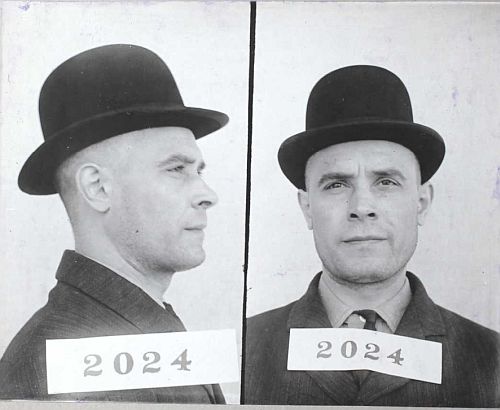
Paul Clein

On March 1, 1909, thirty-six-year-old German immigrant, Paul Clein, and Polish immigrant John Saudawski, also in his late thirties, were seen together eating supper at a German bakery in Spokane, Washington. Three weeks later, Saudawski’s partially burned body was found on the Fort George Wright military reservation[1] on the outskirts of Spokane. When city coroners performed an autopsy on Saudawski, they found partially undigested beans in his stomach, and estimated he had eaten two to four hours before his death. They also discovered and removed two .32 caliber bullets–one from the victim’s neck, and the other from his skull.

Investigators quickly determined that Clein was the last known man seen with Saudawski. They also discovered he had recently traded off a .32 caliber pistol—the same caliber used to kill Saudawski. When confronted with this fact, Clein denied it, and said he gave the weapon to his fiancé, Mrs. Ida Douglas, one month earlier, and that she had since parted with it. Douglas declined to speak with police or reporters, but would not alibi her lover, either.

Clein had arrived in Spokane by way of British Columbia where he served as a mounted police officer. Before immigrating to Canada, Clein was a soldier in the German army. From his military and law enforcement experience, Clein was a tough customer during his interrogation, which may have included violence. He was smart enough to know that any confession on his part would be fatal, but to wiggle his way out of the murder charge, he gave multiple statements that conflicted with each other.

After three days of questioning, Clein eventually placed himself with Saudawski on March 1, when he admitted having dinner with the Polish immigrant. As the last known person with Saudawski before he disappeared, Clein was formally charged with his friend’s murder.

“He has explained things in a way that did not explain them, as subsequent investigations revealed,” the Spokane Press newspaper reported on March 25. “He has become entangled in his statements, has told conflicting stories, yet through it all, denies any responsibility for the unoffending Pole, Saudawski.”

As soon as Clein was named the chief suspect, both the Spokane police and newspaper reporters began digging into his background and discovered more forensic and circumstantial evidence against him, as well as unsavory facts about his character.

Wagon tracks leading to the area where the body was found matched the rubber padded wheels of a rented buggy that was traced back to a downtown Spokane stable where the owner identified Clein as one who hired the rig. That particular buggy had distinctive yellow running gears which several witnesses identified as being in the vicinity of Fort George Wright military reservation on the Tuesday morning of March 2. Clein’s time card at his place of employment revealed that he arrived for work two hours late that same morning.

When investigators searched Clein’s hotel room, the found a hidden compartment in his trunk that revealed his true name was Paul Krasnensky, and that he was once married with twins, but that his wife and one of the children had died while they were living in Canada. His remaining child was then placed in someone else’s care before Clein set off on his own.

They also found love letters from “a woman of ill repute” back in Kalso, British Columbia. Mae Randall was later described by reporters as a beautiful, young blonde woman who wore the latest fashions. Just prior to Saudawski’s murder, Clein had written to her asking for money. When he was arrested, police found him in possession of $30, money which he said he always carried with him. However, his coworkers stated he was “crying poverty” in the days before March 1.

As if his carrying on with two women, one of them a fancy prostitute, wasn’t bad enough, Spokane detectives found several tools belonging to his employer in Clein’s hotel room.

When the coroners determined Saudawski had been murdered two to four hours after he last ate, the assumption was made, by local prosecutors, that he was murdered on state land. This belief led to state charges and a May trial in a Spokane courtroom where Clein was found guilty and sentenced to death.

After he was convicted, Clein continued to profess his innocence and begged to be turned loose so he could catch the real killer.

“I can find the fellow who did it if they will turn me loose,” Clein self-righteously declared to a Spokane Press reporter. “And I will secure his conviction with stronger testimony than circumstantial evidence at that. What can a man do when he is cooped up here?”

However, when the reporter repeated Clein’s fanciful proposition to the prosecutor’s office, it got a good laugh. During Clein’s trial, while Ida Douglass sobbed for her fiancé in the courtroom, Clein’s former lover, Mae Randall, dropped a stack of love letters on the prosecutor’s desk one night after jury selection. In them, he had written to her of his heartfelt desire for their impending marriage and at the same time, made emotionally manipulative demands for Mae to send him money. To the city of Spokane, Clein’s ability to seduce two women at the same time destroyed his credibility—which only made his latest proposal to track down the real killer seem ludicrous to everyone but him.

“At the prosecutor’s office Clein is regarded as the most persistent liar prosecuted in Spokane County in years,” the Spokane Press writer continued. “No stock is taken in his insinuations that someone else killed Saudawski. Clein, after his arrest, tried to cast suspicion on Paul Fuchs, causing him to be detained for a day or two. Then later, Clein insinuated things against his former roommate, Joe Schultz, which the officers found had no basis.”

The only person to believe in Paul Clein’s honesty was Paul Clein. Even the woman who cried for him at his trial refused to perjure herself regarding his claim of turning over his revolver to her one month before the murder.

But what he lacked in honesty he made up for with dumb luck and on January 4, 1910, Clein was granted a new trial that would take place in federal court. The motion came from his attorney, who argued that since Saudawski’s body was discovered on federal land, the state could not prove that he wasn’t killed on federal land. The judge in his first trial agreed and Clein’s case was moved to federal court.

Due to internal matters at the federal courthouse, Clein’s case was continually postponed but on May 22, 1911, approximately two years after his first trial, he was found guilty a second time and sentenced to life in prison. His life had been spared—but not for long. According to the McNeil Island Federal Prison records, Paul Clein, inmate number 2024, died on May 20, 1914, at 11:20 a.m. He was buried in the prison cemetery the following day. His cause of death was not listed.

[1] Most of the land from this former military base is now home to Spokane Falls Community College.

—###—