True Crime Books by Jason Lucky Morrow

Welcome to HistoricalCrimeDetective.com [Est. 2013], where you will discover forgotten crimes and forgotten criminals lost to history. You will not find high profile cases that have been rehashed and retold ad infinitum to ad nauseam. This blog is the official website for true crime writer Jason Lucky Morrow, author of four books including the popular series: Famous Crimes the World Forgot, Volume I and Volume II. If you would like to send me a comment, Contact Me Here. - Please follow this historical true crime blog on FACEBOOK.

The Evil Dr. Hyde of Kansas City

Home | Feature Stories | The Evil Dr. Hyde of Kansas City


.

Originally Published: “The Diabolical Plot Concocted by Dr. B. C. Hyde of Kansas City to Gain Control of Col. Swope’s Millions,” by Thomas Samuel Duke, Celebrated Criminal Cases of America, The James H. Barry Company, 1910. Note: This is very famous case in Kansas City.

Kansas City, Missouri, 1909-1910

Thomas Hunton Swope, afterward known as Colonel Swope, was born in Kentucky in 1829. After accumulating a few thousand dollars in his native state, he proceeded to Kansas City, Mo., in 1860, where he invested a large portion of his savings in suburban lands which were practically worthless then but which subsequently enhanced in value until Swope became a multi-millionaire.

He conceived a plan of devoting to public benefactions a large part of his wealth and as a part of this philanthropic plan he gave to Kansas City a magnificent tract of territory embracing 1,354 acres, which is now known as Swope Park, the second largest park in America. In his later years Swope became extremely eccentric and seldom appeared in public.

He had two sisters and two brothers. One brother, Logan Swope, died in February, 1900, leaving a widow and seven children, named Chrisman, Frances, Thomas, Lucy, Margaret, Stella and Sarah. In 1909, Chrisman, the eldest, was 31 years of age, and Sarah, the youngest, was 14 years of age. Mrs. Logan Swope resided with her family in a large mansion near Independence, Mo., which is a short distance from Kansas City. Colonel Swope, who never married, and his cousin, J. Moss Hunton, resided in the same house.

Colonel Swope’s property was valued at $3,600,000 and he made a will which provided that Mrs. Logan Swope’s children should each receive about $200,000, with the exception of Francis, who was to receive but $135,000. There was also a residuary fund amounting to $1,405,595 which was to be equally divided among these seven children, but Swope had about decided to change his will and leave the residuary to charity. The entire Swope family knew the contents of this will and also knew of Swope’s determination to change it. The executors of this will were J. Moss Hunton, Attorney John Paxton and Steward Fleming, Colonel Swope’s nephew.

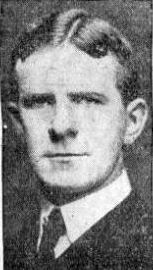
Dr-Bennett-HydeBennett Clarke Hyde was born in Cowper County, Missouri, in 1872, but spent his boyhood days in Lexington, Mo., where his father was a Baptist preacher. Young Hyde received a college education and afterward graduated from the University Medical College in Kansas City, Mo.

In 1898-99 Dr. Hyde was demonstrator of anatomy at this college and during this time several graves were robbed. Finally two African-Americans named Sam McClain and Charley Perry were arrested for robbing the grave of Michael Kelly at St. Mary’s Cemetery in Independence, Mo. They subsequently confessed to this crime and several others of a similar nature, and swore that they sold the bodies to Dr. Hyde. The doctor was arrested but the case never came to trial and was dropped from the calendar on March 4, 1899.

Continue reading this story by clicking on the link below.

Click Here to Read the Rest of This Story

—###—


Mug Shot Monday! ‘Fighting Frederick Hansen’ 1920

Home | Mug Shot Monday | Mug Shot Monday! ‘Fighting Frederick Hansen’ 1920


.

Frederick-Hansen2

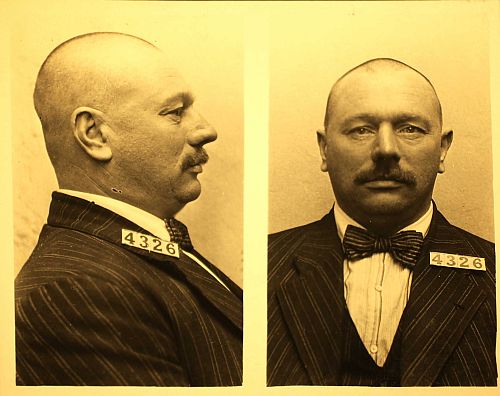
Fighting Frederick Hansen

“Fighting” Frederick Hansen, first mate on the SS ROLPH,  picked up a crew at Vancouver to haul lumber to Melbourne in 1920. The vessel was owned by James Rolph Jr., the mayor of San Francisco and future governor of California.

Hansen had been convicted of killing a seaman in 1917 and investigated for the murder of a second.  Once the ROLPH reached Australia, most of the crew, intimidated by the mate, was discharged. The vessel then headed to Newcastle to pick up a cargo of English coal for Chile. By this time, the crew included only two Americans.

According to later testimony, Hansen hit a German sailor with a belaying pin and when the man went overboard, made no attempt to rescue him. Hansen also assaulted other seamen with the apparent connivance if not the direct orders of the captain. Charged under the 1915 Seaman Act, he was indicted in 1922 for assaulting A.R. Arnesen, a naturalized U.S. citizen.  Hansen was found guilty and sentenced to five years in federal penitentiary.

The four seamen who were libellants were awarded a total of $14,500 in damages – paid by the ship’s owner. One sailor had been virtually blinded by Hansen’s beatings.

Mr. Hansen is partially the subject of a book, Brutality on Trial: Hellfire Pedersen, Fighting Hansen, and the Seamen’s Act of 1915

Source: http://www.lawcourts.org/LPBR/reviews/gibson0107.htm

Be sure to check out our other Vintage Mug Shots with Stories.

—###—


The Mad Butcher of O’Farrell Street, 1955

Home | Feature Stories | The Mad Butcher of O’Farrell Street, 1955


.

Originally published: “The Mad Butcher of O’Farrell Street,” by Mitchell Chaindown, Front Page Detective, April, 1956.

San Francisco, December 25-28, 1955

The sound was a shriek that started high and piercing and ended in a gurgle that was scarcely audible. The man leaped from his bed and ran out into the hallway of the Eddy Street rooming house.

He saw his neighbor in Room 13, pretty 19-year-old Georgia Anne Barrett, standing nude except for her slip, and that was pulled halfway down her body. She was clutching her throat, staring ahead with eyes glazed by terror. Before he could reach her, he saw four separate rivulets of blood shoot out from between her clasped fingers and gush in dark streams down over her breasts. He reached out and caught her just as she collapsed.

“My God, my God,” he mumbled as he half-dragged half-carried her into her room and placed her on the bed. “Can you talk, Georgia? Can you tell me what happened?” he begged even as he reached for the telephone to call police. But the girl only rolled in a slow, agonizing rhythm on the bed and moaned intermittently. . . .

Inspector Bruce Jones, on general detail from the night bureau of inspectors, was the first to respond. He used the few minutes before the ambulance arrived .to ask as many questions as he could.

“Who is she?”

“Georgia Anne Barrett, a waitress, lives here in Room 13.”

“Any boyfriends you know of?”

“Yeah. Fellow named Dido.”

“Last name?”

The informant shrugged and Jones, hearing the final whirr of a siren, turned from the knot of roomers to help superintend the girl’s removal. He rode with her to the hospital, hoping she would come out of her coma long enough to describe her attacker.

With the first signs of life in her pain-wracked body, Jones asked, “Was it Dido?” Georgia’s answer was a negative roll of her head.

“Who was it then?”

Another shake of the head; an agonized, “Don’t . . . know. .”

“Man?”

“Yes . .”

Click Here to Read the Rest of This Story

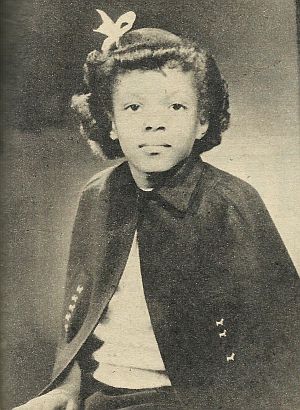
Victim Elizabeth Simpson, Age 13.

Victim Elizabeth Simpson, Age 13.

—###—


Mug Shot Monday! Kenneth “Screwdriver” Cindle

Home | Mug Shot Monday | Mug Shot Monday! Kenneth “Screwdriver” Cindle


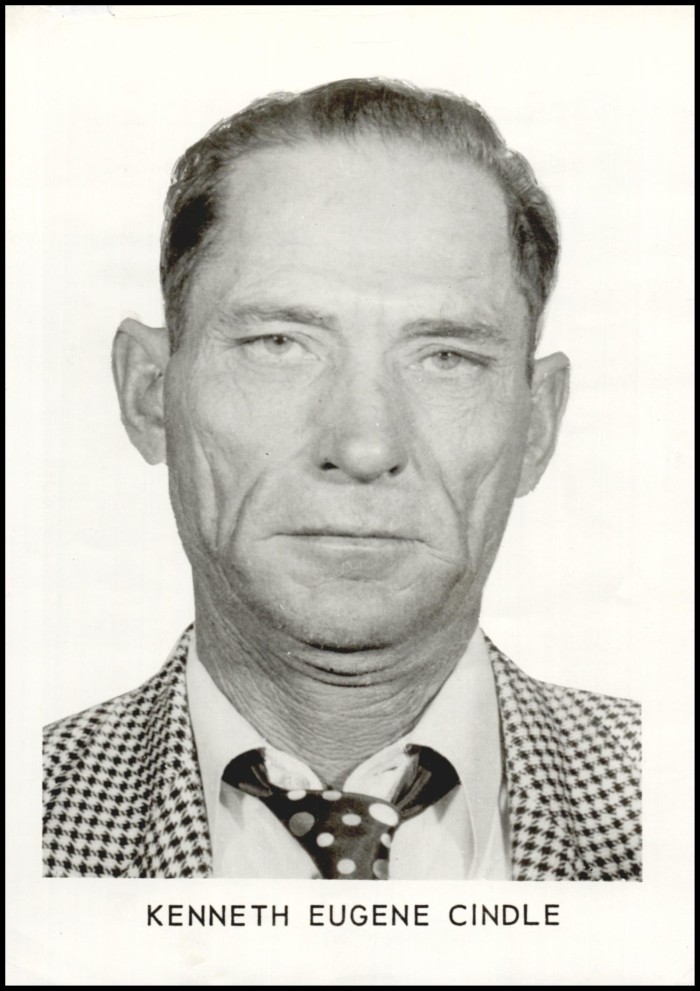
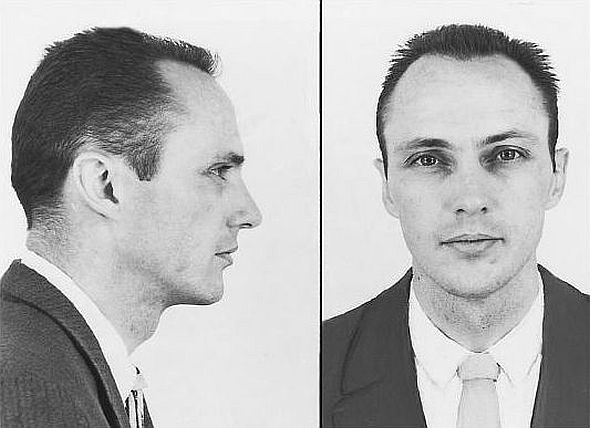
Kenneth Eugene Cindle, 48, aka “Screwdriver,” was named to the FBI’s Most Wanted List on Dec. 23, 1960 following the shotgun hold-up of a Wichita, Kansas restaurant that netted him and a partner, $236. The partner was quickly captured in Amarillo, Texas.

The FBI circular said Kenneth-Eugene-Cindlehe was an avid gambler, heavy smoker, and heavy drinker. The name of an ex-wife, “Opal,” was tattooed on the outside of his left forearm. He was also missing two fingers. He had a long prison history for armed robberies, assaults, and other offenses. He was picked up by police several times in Oklahoma but was let loose before they could learn his identity. [Not uncommon before AFIS].

He was caught on April 1, 1961 in Cochran County, Texas after a local farmer saw his photograph on television, and recognized him as a hitchhiker he had picked up earlier that day. Cindle had been hitchhiking across the county and working odd jobs to avoid apprehension.

It’s unclear from my archival sources but I believe he was sentenced to 15 years in a Kansas prison as a habitual offender.

Check out more of our Vintage Mug Shots.

Photo Credit:  [Photograph 2012.201.B0226.0200], Photograph, December 27, 1960; digital image, (http://gateway.okhistory.org/ark:/67531/metadc201952/ : accessed June 24, 2014), Oklahoma Historical Society, The Gateway to Oklahoma History, http://gateway.okhistory.org; crediting Oklahoma Historical Society, Oklahoma City, Oklahoma.

—###—


Guess My Crime: David Carmack, 1909

Home | Uncategorized | Guess My Crime: David Carmack, 1909


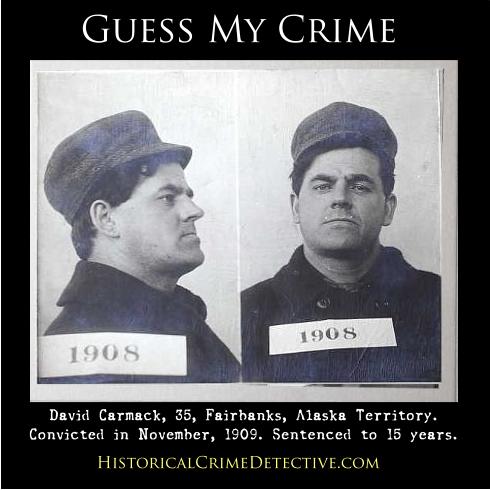
Consider the mug shot below and the clues it contains and see if you can figure out what his crime was by using the internet. You can post your answer on our Facebook Page. I will post an answer with story tomorrow on Facebook.

GMC-David-Carmack

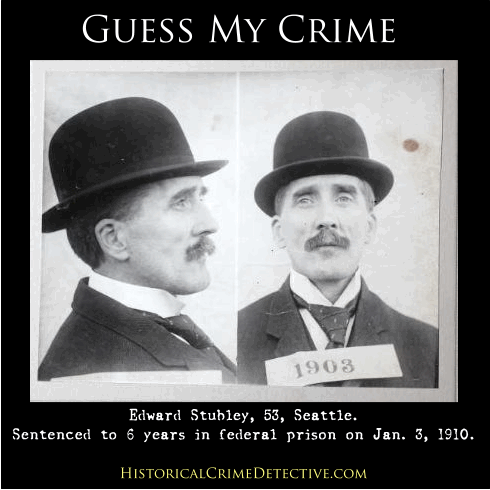
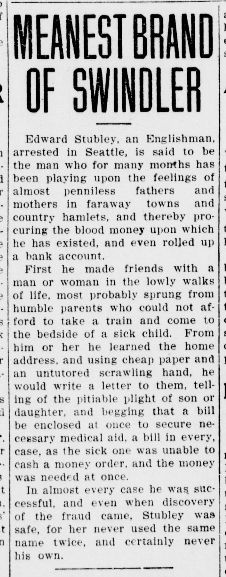
The picture below was our last week’s “Guess My Crime.” An Article about Edward Stubley’s crime is beneath the picture.

GMC-Edward-Stubley

The Spokane Free Press, Feb 18, 1909

The Spokane Free Press, Feb 18, 1909

—###—


The Famous Harry Thaw & Stanford White Case of 1906

Home | Short Feature Story | The Famous Harry Thaw & Stanford White Case of 1906


.

The Harry Thaw & Stanford White case of 1906 is perhaps one of the most famous cases of the 20th Century in terms of newspaper coverage and books written. The case had all the elements a lasting true crime story requires: high society, famous people, sex, jealousy, and cocaine. The following story was published in 1910.
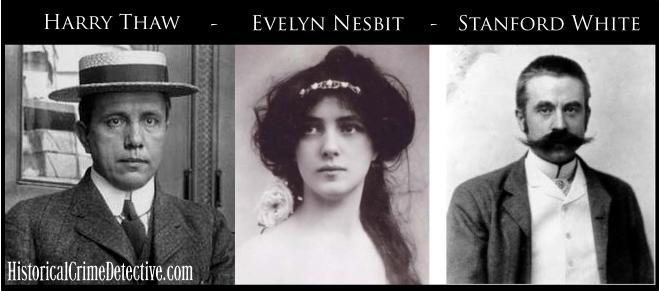
Harry Thaw, Evelyn Nesbit, Standford White


Story by Thomas Duke, 1910
Celebrated Criminal Cases of America
Part III: CASES EAST OF THE ROCKY MOUNTAINS

Stanford White was born in 1852, and after receiving a college education in America, his father sent him to Europe to study architecture.

When he returned to New York he became a member of the firm known as McKim, Meade & White. He advanced rapidly in his profession, until he was considered one of the greatest architects in America. He drew the plans for the famous Madison Square Garden in New York, where he subsequently came to a tragic end.

Although he had an estimable wife residing in Cambridge, Mass., and a grown son who was at the time attending Harvard College, White had a suite of rooms in the tower of the Madison Square Garden, which he called his studio, but where he gave a great variety of spicy entertainments.

Frequently his guests were girls of tender years. One of the “events” in the tower was a stag dinner, and when the time for dessert arrived an immense pie was brought into the room. Suddenly a beautiful 15-year-old girl, scantily attired, burst through the crust, and after posing for an instant, she joined the guests.

It was claimed that this girl afterward became one of White’s victims.

Evelyn Nesbit was born near Pittsburg on Christmas Day, 1884. Her father died when she was 12 years of age, and about three years later her mother, who has been referred to as a frivolous and extravagant woman, married a Pittsburg broker named Charles Holman.

As Evelyn was a remarkably beautiful child she earned considerable money by posing for artists in Pittsburg and afterward in New York. She subsequently became a chorus girl.

In the spring of 1901 Evelyn met a wealthy married man named James Garland, and shortly afterward she and her mother were his guests on a yachting trip.

Later Mrs. Garland sued her husband for a divorce and Evelyn Nesbit was said to have been mentioned as the reason.

According to Evelyn’s own statement a young woman friend invited her to dinner in New York in August, 1901, and without having the slightest idea as to where she was going to dine, Evelyn was inveigled by this girl into the studio in the tower where she met Stanford White for the first time.

About one month after the first meeting, White invited her to the tower at the conclusion of the Florodora performance in which she was a chorus girl.

She claimed that White represented that three other girls would be in the party. When Evelyn arrived at the studio White stated that the other girls had disappointed him, but he invited Evelyn to remove her hat and take a glass of champagne.

She reluctantly accepted the invitation, and after partaking of the wine she immediately lost consciousness. When her mind again cleared she found herself in the bedroom of the suite, the walls and ceiling of which were covered with mirrors.

Realizing that an assault had been committed upon her, she became hysterical, but White finally succeeding in pacifying her and then exacted a promise that she would never tell her mother of what had just transpired.

For several months afterward White met Evelyn clandestinely and the intimate relationship continued. In the meantime he was introduced to Evelyn’s mother and won his way into her confidence. Posing as the protector of the family he rendered financial assistance to Evelyn with the mother’s knowledge and consent.

William Thaw was one of the most prominent men in Pittsburg, and when he died he left an estate valued at $35,000,000, to be distributed among his family, consisting of Mrs. Thaw and several children.

Among these children was Alice Thaw, who married the Earl of Yarmouth, but was subsequently divorced; and Harry Kendall Thaw.

The latter was a wild, eccentric youth with such extravagant habits that his father provided in his will that Harry should receive only a monthly allowance. He had a penchant for chorus girls, and in that manner met Evelyn Nesbit some months after her first experience with White in the tower. They became very friendly, and Thaw showered her with tokens of his regard.

About this time White gave a dinner to which several guests were invited, including Jack Barrymore the actor, and Evelyn Nesbit. According to Evelyn’s statement, Barrymore afterward proposed marriage to her, and as White was apparently jealous of the young man, he suggested to Evelyn’s mother that the girl be sent to Mrs. De Mine’s private school in New Jersey.

As the mother was also opposed to Barrymore she readily agreed to White’s suggestions.

While at this school Thaw and White were such frequent visitors that there was considerable gossip among the pupils regarding their relations with Evelyn. About this time she underwent an operation for appendicitis, but as soon as she recovered she returned to New York, where she resumed the improper relationship with White, the meetings usually taking place in the tower after her night’s work at the theater. During this time White was contributing liberally toward her support.

In the early part of 1902 she discontinued her intimate relationship with White, according to her statement, but when she and her mother left for Paris a few months later as the guests of Thaw the girl had in her possession a letter of credit from White.

After Evelyn and her mother traveled in Europe a few months with Thaw, the mother and daughter had a violent quarrel, which resulted in the former returning to America, leaving Thaw and the daughter alone. The pair then traveled under assumed names as man and wife.

According to Evelyn’s statement she and Thaw were in Paris in June, 1903, when Thaw proposed marriage to her. She claimed that she hesitated and finally answered “No.”

When pressed for a reason for her refusal, she stated that she then confided to Thaw all of her relations with White.

Evelyn returned to New York on October 25, 1903, and was followed by Thaw in November.

On October 27 Evelyn met White by appointment and went with him to the law office of Abe Hummel.

In this office a lengthy affidavit was prepared in which it was charged that while on the trip through Europe Thaw frequently beat Miss Nesbit until she became unconscious, and that his reason for so doing was because Evelyn had refused to make an affidavit to the effect that White had drugged and outraged her, she, according to the affidavit, stating that such a statement would be false. The affidavit further alleged that Thaw was a cocaine fiend and that Miss Nesbit found a hypodermic syringe in Thaw’s bureau and saw him swallow cocaine pills.

Although Evelyn Nesbit signed this statement she afterward claimed that she had been wilfully misquoted and that while she signed a paper some days later at the tower, she did not know its contents at the time. A. S. Snydecker afterward swore that Miss Nesbit read the paper carefully before signing it.

When Thaw returned from Europe Evelyn told him of this incident, and at Thaw’s request the affidavit was subsequently burned in Hummel’s office in Evelyn’s presence, but Hummel took the precaution to have it photographed first, and this photograph afterward became one of the principal exhibits in one of the most sensational murder trials in the criminal history of America.

After the affidavit was burned Evelyn ceased to associate with White and devoted most of her time to Thaw. They registered at several hotels in New York, but were requested to leave.

According to a statement made by Ben Bowman, an employee at the Madison Square Garden, White called after the performance on December 28, 1903, and inquired if Evelyn Nesbit had gone home.

When informed that she had, White pulled out a revolver and swore that he ‘would kill Thaw at once. Bowman related this alleged occurrence to Thaw shortly afterward.

After much persuasion Mrs. Thaw consented to her son’s marriage, and he and Evelyn became man and wife in Pittsburg on April 4, 1905.

A few months later Thaw visited Anthony Comstock, Superintendent of the Society for the Prevention of Vice in New York, and reported that White was using his suite in the tower as a trap for young girls.

An investigation was instituted, but no tangible evidence was obtained. Thaw did not mention his own wife’s experience.

Mrs. Harry Thaw claimed that after she was married she saw White a couple of times and he attempted to annoy her by his attentions. She related these incidents to her husband and also told him that a Miss Mabel MacKenzie had informed her that White had openly boasted that he would get her (Mrs. Thaw) back from Thaw.

On the evening of June 25, 1906, Thaw and his wife and Truxtun Beale, formerly, of San Francisco, had dinner at the Cafe Martin in New York. While they were dining, White and his son passed through the cafe, and Mrs. Thaw called her husband’s attention to the occurrence.

After dinner the Thaw party proceeded to the Madison Square Roof Garden, where the play “Mam’zelle Champagne” was being produced.

Presently White entered alone and took a seat within view of the Thaw party. Harry became very restless and began walking about the place. Finally Mrs. Thaw suggested that they leave and the party proceeded to do so, Thaw apparently following the remainder of the party.

When he reached the table where White was seated Thaw suddenly turned, and facing White he drew a revolver and fired three shots, the first bullet passing through White’s eye into the brain, causing instant death ; the other two producing superficial wounds.

Thaw immediately surrendered to an officer, to whom he stated: “I killed him because he ruined my wife.” Mrs. Thaw rushed up and after embracing her husband asked him why he did it. He replied: “It’s all right, I probably saved your life.”

Three days later Thaw was indicted for murder. January 23, 1907, was the date set for the trial in Justice Fitzgerald’s court. District Attorney William T. Jerome personally prosecuted the case, and D. M. Delmas, the celebrated San Francisco attorney, appeared as chief counsel for the defense.

Nothing of importance which has not already been briefly related in this narrative was brought out by either side. Mrs. Harry Thaw testified in accordance with the statements previously made by her.

It was the contention of the defense that Thaw was in-sane when he killed White but that he became rational afterward.

During the trial District Attorney Jerome asked that the jury be excused. He then requested that a commission be appointed to ascertain the condition of the defendant’s mind. His request was finally complied with, and after a lengthy examination the commission reported that Thaw was sane at the time of the examination. The trial was then continued.

On April 6 the arguments began. Delmas charged that Evelyn Thaw’s mother received the wages of her child’s downfall, with which she bedecked herself with diamonds and finery and afterward assisted the prosecutor of the girl’s husband.

Jerome referred to the tragedy as a mere, sordid, Tenderloin homicide, and referred to Mrs. Thaw’s testimony as a tissue of lies invented to prevent a deliberate, cold-blooded murderer from being put under ground.

The case was finally submitted to the jury on April 10, 1907, but after deliberating for forty-seven hours the jurors decided they could not agree and were discharged.

Seven jurors believed the defendant guilty as charged, while five voted for an acquittal on the ground of insanity.

On January 6, 1908, the second trial began before Justice Dowling. On this occasion M. W. Littleton represented Thaw, and produced evidence tending to show that Thaw had inherited insanity.

, On February 1 Thaw was found not guilty on the ground that he was insane when he killed White. He was immediately transferred to the asylum for the criminal insane at Matteawan.

In July, 1909, Thaw attempted to procure his release on a writ of habeas corpus. The case was heard before Justice Isaac Mills, at White Plains, New York, and Jerome again represented the State.

Several alienists testified that Thaw was a degenerate paranoiac and would never recover.

Mrs. Susan Merrill testified that between 1902 and 1905 she conducted in succession two lodging-houses in New York where Thaw rented rooms under assumed names and to which he brought at various times over one hundred girls. Thaw represented that he was a theatrical agent, and Mrs. Merrill stated that on several occasions she caught him lashing the girls on the bare arms and bodies with a whip. Mrs. Merrill further testified that Thaw had subsequently provided her with money to purchase the girls’ silence, one of them receiving $7,000.

Clifford Hartridge, former counsel for Thaw, then took the stand and produced a whip which he testified had been delivered to him by Mrs. Merrill and a woman named Wallace.

On August 7, 1909, Thaw’s attorney, in his closing argument, accused Evelyn Thaw of secretly assisting Attorney Jerome during the case then drawing to a close.

On August 12 Justice Mills dismissed the writ of habeas corpus and declared that the release of the petitioner would be dangerous to public peace and safety and that he was afflicted with chronic delusion insanity. Thaw was then re-turned to the asylum.

In a suit to recover $92,000 from the Thaws for services alleged to have been rendered, Attorney Clifford Hartridge testified on April 1, 1910, that he paid hush money amounting to $30,000 to feminine acquaintances of Harry Thaw. He further testified that a woman named Mrs. Reed, whom Thaw met at Mrs. Merrill’s, received $5,000.

—###—

Mug Shot Monday! Alcatraz Inmate Jim Quillen

Home | Mug Shot Monday | Mug Shot Monday! Alcatraz Inmate Jim Quillen


Jim Quillen, Reformed Alcatraz Inmate & Author

Jim Quillen, Reformed Alcatraz Inmate & Author

After a wild crime spree of robbery and kidnapping in 1942, escaped San Quentin prisoner Jim Quillen was sentenced to 45 years and sent to Alcatraz on Aug. 28 where he became prisoner #586.

When he arrived on Alcatraz, he was an angry and bitter young man with a “maladjusted attitude.” He grew up never really knowing his mother and after a prison minister tracked her down, only to discover that she had died recently and was buried in a pauper’s grave, something changed in Quillen. With no hope of ever getting free, he began a rigorous course toward self-improvement. His attitude changed 180 degrees and he began working in the prison hospital where he sought and received training as a radiology technician.

He was transferred to San Quentin in 1952 where he became a certified radiology technician. He was eventually released and although he steered clear of crime, his personal life was a roller coaster for many years. Eventually, he met the right woman and had daughter.

In 1991 he published his memoirs, Alcatraz from the Inside, 1942-1952. His bitter attitude toward authority and seeming disapproval toward prison officials, who were merely doing their jobs according to 1940s standards, comes through in the book and was noted by book critics.

Quotes from his record before his reformation: “Subject is impulsive and seems to think himself a “Big Shot” because of his long sentence.” “Subject is a Bitter Youth” with a “Maladjusted Attitude”.

From Publisher’s Weekly, 1991: Quillen’s autobiography focuses on his decade-long incarceration at the “Rock,” the former federal prison on Alcatraz Island, Calif., including the 1946 escape attempt that left several inmates and guards dead. Arguing that the brutality of the system made the bloodshed inevitable, he calls Alcatraz “a prison where the sole purpose was to degrade, deprive, humiliate and break the inmates.”

But Quillen never proves his case; most of his anger arises from the constant surveillance and security that made escape virtually impossible. Indeed, what comes through the author’s deliberately low-key account is the fervor with which he thought about, dreamed about and planned escapes. A veteran of two escapes from a state reformatory as well as one from San Quentin prison (during which he kidnapped two hostages), Quillen did try to escape from Alcatraz.

Most readers will find it hard to empathize with his complaints of overly restrictive security given that record. Ultimately, however, the details of life inside jail are more intriguing than the failed attempt to blame the system. Those details, and the story of Quillen’s eventual rehabilitation after release, redeem the book.

—###—


The Kitsap County Killer, 1934, Leo Hall

Home | Short Feature Story | The Kitsap County Killer, 1934, Leo Hall


The Mass Murder of Six People in a Washington Cottage

Story by Sam D. Cohen, for his syndicated column Today’s True Detective Story, “Killer of Six Captured, Brutal Murders are Solved,” July 11, 1941, Pittsburgh Post-Gazette, Peach Section, page 2.

ON A SATURDAY in March 1934, Tom Sanders stepped out of his Erland Point, Washington cottage and glanced around. He had been annoyed by the howling of dogs nearby. The mournful cries came from the Flieder cottage, a short distance away. Here he went, and to his surprise, discovered that the howling came from a large sedan parked in the rear of the cottage. There were three white poodles and when he opened the door they leaped at him with frantic gestures of joy.

Sanders glanced at the house and though the day was cold, no smoke came from the chimney; the blinds were all down but not all the way. The powerful beam of his searchlight cut through the darkness and he saw a card table and chairs. Then he recoiled in horror. Sprawled on the floor on either side of the table, were two bodies—those of a man and a woman. Sanders hurriedly phoned the authorities, and 10 minutes later Kitsap County under-sheriff Rush Blankership and another officer appeared.

The officers were aghast at what they found. Not only were the bodies of Mr. and Mrs. Flieder discovered but four more still forms —Mr. and Mrs. Chenovert, Bert Balcom and a Mr. Jordan. All the victims had been well-known locally and they all lay dead—murdered. Bullet wounds and heads bashed in with a bloody hammer found on the floor gave a clear picture of how the crimes had been accomplished. Marks on the woman’s fingers, empty pocket books and wallets gave the motive of the brutal murders—robbery.

Dragnet Out

A HUGE dragnet was thrown out at once. Orders were issued immediately to bring in anyone showing signs of being in a struggle or whose clothes appeared to be bloodstained. Results from this widespread move came almost immediately. A dozen suspects were brought in for questioning, but in every instance they were able to prove either that their wounds had been incurred prior to that fatal evening in March, or could give a satisfactory explanation for them.

Meanwhile, an autopsy had been performed on the bodies. In every ease where the victims had died immediately, the killer had made sure he would not testify against them by deliberately cutting their throats. Public indignation rose to fever heat and the authorities redoubled their efforts to locate the slayers.

Weeks, months passed, and as the killers’ trail grew cold it began to look as if Washington’s most sensational crime would never be solved. And so it might have been—except for one thing: the magnitude of the crime. Thus it was in January, 1935 when William Severyns became the new sheriff, and one of his first official acts was to call in his chief criminal deputy, 0. K. Bodia, and instruct him to work on the case. It was a tough assignment and Bodia knew it. The best detectives in the Northwest had worked for months and failed. Nevertheless, he eagerly tackled the job.

Dropping into a beer parlor in downtown Seattle one afternoon in early September, he noticed two men in earnest conversation. Suddenly he heard a reference made to the killing and a man’s name mentioned several times, with his address. The man was Leo Hall, 710 Columbia Street. Making quiet inquiries he learned that there were three brothers, Leo, Gus and Bob: Leo was the oldest, 33: then came Gus, 26, and last Bob, several years younger than Gus. As it turned out, Leo had disappeared and could not be found.

Probes History

Leo Hall Erland's Point Mass Murderer

Leo Hall

The deputy’s suspicions were now fully aroused and he determined to probe the man’s history thoroughly. Going through police records, he found that back in 1932, Leo Hall bad been arrested for automobile theft and that while trying to escape had been shot by an officer. The wound had proved almost fatal and because of that fact, and his youth, he had been given a suspended sentence. He learned also that Hall had been quite friendly with a bootlegger than held in the county jail on grand larceny charges.

Bodia next visited the “pal,” Larry Paulus, and then casually mentioned Hall.

As the name dropped from the deputy’s lips, Paulus stiffened and his face became grim. “A swell pal he turned out to be,” he sneered. “First he promises me smokes that never come and then while I’m tight in stir, he runs out with my wife. But he better watch his step—I’ve got enough on him to burn him, plenty.”

Carefully hiding his elation, the deputy prodded him on and on. The convict required little prodding. “I’m talking of those six killings,” he stated. “If you want to learn more you’ll have to ask my wife. I heard her talk of it in her sleep and she mentioned Hall’s name.”

But the fugitive proved as elusive as an eel. As for Peggy Paulos it did not take much pressure to make her open up, and then with a dramatic suddenness that cracked like a whiplash, came the announcement: Peggy Paulos had confessed. The sensational case was at last broken wide open! The news was carefully suppressed from the public and the hunt for Hall pushed with redoubled vigor and another break in the case came.

A man walked into police headquarters in Portland, OR and asked to see Captain Keegan. He said he had recently invented a new automobile carburetor. Needing capital to finance the device, he met a Mr. Stuart, who claimed to have plenty of money. Stuart had immediately professed a great interest in the invention and asked for a demonstration. But when they started out, instead of wanting to drive over the regular highways, he had insisted that they turn into unfrequented roads. This fact and something in Stuart’s manner caused the inventor to fear that the man was intending to kill him and take his car.

Assuring the man that he would be protected, Keegan told him to arrange another appointment with Stuart at the same place the following day. This was arranged and when the man stepped up to join him, Detectives Malchorn and Eichenberger sprang out of concealment and seized him.

Chief Suspect Located

Mr. Stuart was Leo Hall, their chief suspect.

Deputy Bodia left immediately for Portland and returned with the prisoner who refused to admit his guilt. Betty Burns was once more picked up and asked to repeat her story. Under the guidance of Detective Captain Yoris she began her confession, one of the most extraordinary ever filed among criminal records. It was a story of how one man, with only a woman’s assistance had held up and later had taken the lives of six human beings.

Haltingly, in a low voice, she told of mentioning to Hall that the Flieders had money. He suggested they rob them. Thinking it a joke, she had agreed to meet him downtown the following day, but when he went to his safe deposit box and took out a pistol and a hammer, she became frightened and tried to draw back, but Hall wouldn’t listen.

He had forced her to accompany him and again and again he threatened.

Here, as she told of entering the house and began to approach the dreadful events that later transpired there, it became apparent she was nearing a breakdown. Haltingly, she had managed to describe how they had bound the victims and searched them, but as she came to the point when Hall had begun killing them in cold blood, she broke down completely. Sobbing wildly, hands pressed tight over her eyes as if to shut out that horrible vision, she cried again and again.

“Oh, it was terrible—terrible! I didn’t know what to do. I ran out and he shot at me.”

Since that moment, she said, she had lived in agony. A week later Hail located her and warned her that if she breathed a word of what had happened that night he would kill her, too. Tortured by her conscience on one hand and fear of Hall on the other, she had remained silent until she could do so no longer—until she had either talk or go mad.

On December 9, 1935 the pair faced trial. The jury deliberations were brief. Only one ballot was required to reach a decision: Betty Burns was acquitted and Leo Hall was found guilty of first degree murder, with recommendations that he receive the death penalty.

Three days later, Hall appeared in court with his counsel to ask for a new trial. It was refused and after Superior Judge H. G. Sutton had pronounced sentence, death by hanging, the veteran jurist remarked: -“The evidence in this case was the strongest and most conclusive I have ever listened to.”

Hall heard the sentence calmly, displaying the same stoical indifference he had exhibited alt during the trial.  He was executed by hanging on Sept. 11, 1936.

Leo Hall

Photo Credit, Washington State Penitentiary via Historylink.org

—###—


Inside a 1939 Execution

Home | Feature Stories | Inside a 1939 Execution


.

Originally Published as: “Want to See an Execution?” by Allen Rankin, Front Page Detective, April, 1956.

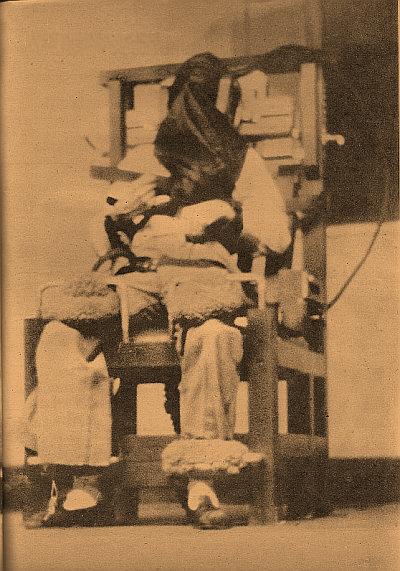
tinted-electric-chairIt was a bright moonlight night. I was 22, and, as I cruised out the Wetumpka Highway in the new family car, I clicked on the radio. Kay Kyser was playing Stardust. I had a heavy date—to see four men die.

“Want to go to a barbecue?” my city editor had asked me that morning. “If nobody else wants to,” I’d said, trying to look as grave and reluctant as possible, but inside I was elated. By “barbecue” the editor meant an electrocution at Kilby Prison a few miles from Montgomery—and this one was going to be the second largest execution in the history of Alabama.

Millions of people would like to witness an execution if given the chance—or they think they would. This was my chance. The assignment meant I had arrived as a full-fledged reporter, no longer to be considered a cub, but driving out to Kilby on the night of June 8, 1939, I was worried about how I would react to the legal, scientific killing of four men. Some reporters got sick at electrocutions; some fainted.

“This your first barbecue?” asked George Meeker, the police reporter for the opposition paper, who was riding out with me. It was an embarrassing and unfair question, I thought, but I had to answer, “Yes.”

“Then you’d better have a slug of this,” said Meeker as we parked beside Kilby’s high, white wall. He held out half a pint of bourbon. “You’ll probably need it.”

I declined, but watching Meeker, two years older than I, take several long belts of raw whisky to fortify himself made me more uneasy. I began to wish our midnight party was over.

Click Here to Read the Rest of the Story


Mug Shot Monday! Kenneth Christiansen, 1964

Home | Mug Shot Monday | Mug Shot Monday! Kenneth Christiansen, 1964


.

Kenneth-Malcom-Christiansen

Kenneth Malcom Christianson – 1964, FBI Most Wanted, Escaped convict

Kenneth Malcolm Christiansen, was a tall, tattooed California prison escapee who engaged in a “white collar” holdups,  was  added to the FBI’s list of “Ten Most Wanted Fugitives” on July 27, 1964.

On Christmas Eve, 1963, Kevin Malcolm Christiansen escaped from the California Institution for Men at Chino where he was serving two consecutive sentences of five years to life for armed robbery.

After his escape, Christiansen robbed banks, restaurants, bars and jewelry stores in Arizona and California, equipped with a brief case and posing as an attorney. This ruse provided easy access to the office of the manager of these institutions who was then robbed.

On July 27, 1964 Christiansen was placed on the FBI’s Most Wanted List. He was captured two months later while trying to rob a seafood restaurant in Silver Spring, Maryland.

Description from FBI circular: Christiansen is distinguished by his height of 6 ft. 5 in., stooped posture and thin, 160-pound build. He is also prominently marked with tattoos, bearing a heart, dagger, scroll and the words “Love To Dad” on the outside of his right forearm. On the outside of his left forearm he bears tattoos of an anchor and the initials “U. S. N.,”

—-###—-