True Crime Books by Jason Lucky Morrow

Welcome to HistoricalCrimeDetective.com [Est. 2013], where you will discover forgotten crimes and forgotten criminals lost to history. You will not find high profile cases that have been rehashed and retold ad infinitum to ad nauseam. This blog is the official website for true crime writer Jason Lucky Morrow, author of four books including the popular series: Famous Crimes the World Forgot, Volume I and Volume II. If you would like to send me a comment, Contact Me Here. - Please follow this historical true crime blog on FACEBOOK.

The Cupcake Killer, 1942, Queens, New York

Home | Short Feature Story | The Cupcake Killer, 1942, Queens, New York


This story was written by NYPD detective Captain Henry Flattery, Retired, for Front Page Detective magazine, November, 1955. It was part of a collection of stories called, “Dumbells I have Known.” which poked fun at some stupid criminals. He was with the NYPD for thirty years and worked on many important cases from that time including the still famous Ruth Snyder – Judd Grey case. – At the bottom is a link to another nice feature story about the case.


Sometimes a man who murders in haste is smart enough to realize that all the signs are going to point to him, so he tries to cover up by planting misleading evidence or incriminating someone else. But time is always working against him and he invariably bungles the job. At best, he gains only a few extra hours of freedom. Here is a good example of that:

During World War II, there was a man we called the “Cupcake Killer.” He got an unexpected break when his victim inadvertently threw suspicion on another man. In spite of that, and in spite of the Cupcake Killer’s clever ruse to throw us off, he was arrested within 24 hours. He had killed in an angry frenzy and left a calling card.

On a cold winter night in 1942, Patrolman Joseph Doyle was walking past the Dutch Reformed Church in Queens when he saw a light flicker in the dark churchyard. For a moment he stared into the blackness, wondering if he could have been mistaken. Then the light flared again. Doyle jumped the fence. Instantly the light died and there was the sound of running footsteps up the gravel drive. Doyle searched the area with his flashlight but could find no one.

He went back to where he had first seen the beam of light. No windows were broken in the church. There was no indication that anyone had tried to break in. Then Doyle saw the woman. She was lying just off the path. A green scarf was tightly knotted around her throat, which had been viciously slashed. She was young and had been pretty once. Now she wasn’t.

Ten minutes later, the churchyard was filled with policemen. Searchlights were set up and the medical examiner began inspecting the body.

As I listened to Officer Doyle’s story, it struck me that the killer must have lit some matches after the woman was dead: he wouldn’t require any light to strangle her or cut her throat, and even if he did she’d be unlikely to hold still while he used his hands to light a match. That being the case, the killer must have been looking for something, her purse if he was a mugger, something that belonged to him if he wasn’t.

“Cover every inch of the yard,” I instructed my men. “I’m looking for a calling card.”

But, except for a bakery carton of cupcakes, nothing was turned up. There were no signs of a struggle.

The medical examiner made his report: “She probably died a few minutes before Doyle spotted her. Strangled with the scarf. Those cuts are funny. Not one big one but a whole series of little ones, as if the killer had used a small knife. And not a very sharp one at that. No matter. The scarf’s what killed her.”

By this time, a crowd had gathered outside the churchyard although it was almost 2 a.m. Hoping to get a lead on the dead woman’s identity, I asked them to file by and have a look at her. They did, but it brought no results.

Back at headquarters, I went through a pile of Missing Persons reports. There was nothing matching a description of our murder victim. It seemed to me that if the woman had been carrying a box of cupcakes, she might have a family. But if she had a family, why hadn’t they reported her missing?

Other things weren’t adding up, either. The case didn’t follow the pattern of the usual muggings. Muggers didn’t use scarves, they used their forearms. And they certainly didn’t hack away at their victims’ throats with a dull knife. They weren’t interested in killing, only in stealing. They’d kill if they had to, but they wouldn’t stop to cut someone’s throat after they’d gotten what they wanted by strangling.

No, it looked like our killer had planned on murdering the girl, then tried to cover up by making it look like a mugging. If that was so, whatever the killer was looking for in the darkness must have belonged to him—and must be important to us.

Now a clearer, more logical picture began shaping up. The girl had entered the churchyard with the killer. She knew him.

At 4:30 that morning, a patrolman found the victim’s purse five blocks from the churchyard. It matched her outfit and contained identification papers and a commutation ticket to Freeport, Long Island. We phoned Nassau County police, outlined the crime and asked for a check on a Carol Dugan of Freeport.

Meanwhile, another discovery had been made. In the churchyard, detectives had uncovered the calling card I was hoping for; a small, bone-handled knife. It still had blood on it.

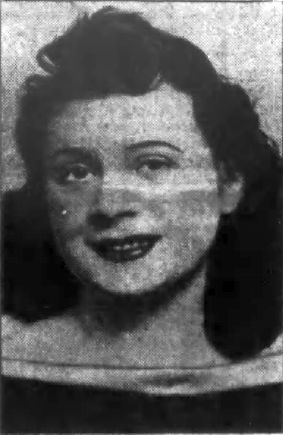
Carol-Duggan-Tuttle

Victim Carol Duggan Tuttle

By morning, we had the report on the victim. Her name was Carol Dugan Tuttle. She worked in a large chain store not far from the church. Her husband was on his way to police headquarters.

Now things began to move quickly. Tuttle, obviously shaken by his wife’s death, answered all our questions forthrightly.

Why hadn’t he notified the police when his wife didn’t get home by, say, midnight?

“She stayed out late pretty often. I thought she’d missed the last train. I had to put the kids to bed. Then I went to bed myself.”

Did he know of anyone who might want to kill her?

“Yes. That is, someone tried to kill her a couple of weeks ago. She came home about six in the morning, all beat up and cut. She said a sailor named Wright, John or Joe Wright, who used to work in her place had done it. She promised me she wouldn’t fool around anymore.”

At a tavern near the churchyard, one of several we had been checking, we began unfolding the mystery of Carol’s last hours. She had been there the evening before, drinking with a man the bartender knew only as ‘Jim.’ The bartender remembered the box of cupcakes.

“Was Jim a sailor?”

“No, a civilian.”

A check of the store where Carol had worked turned up a youngster who knew Jim well: “He’s James Mallon. Used to work here. He and Carol were sweet on each other.”

“Do you know a John or Joe Wright?”

“No.”

By now, I was convinced that the killer had tried to throw us a curve ball by making the murder look like a mugging. The question that remained, therefore, was which of Carol Tuttle’s after-hours friends, Mallon or Wright, was our man. We tried Mallon first.

A tall, rawboned young man, he was shocked when we told him Carol was dead.

“But I was with her last night,” Mallon exclaimed.

“Yes, we know. Let’s hear about it.”

“Well, we went to this tavern where we always used to meet. We had a few drinks and talked. About midnight or a little after, we left. Carol went to the railroad station and I came home.”

“You didn’t walk through the churchyard with her?”

“No.”

“Do you know a sailor named Wright?”

“No.”

“What about Carol’s husband? Know him?”

Now Mallon looked even more shocked: “What do you mean, Carol’s husband? She’s not married. She was going to marry me.”

We took Mallon to headquarters, then began checking Carol’s friends in Freeport. We hit pay dirt with the first one, a girlfriend, who remembered the time Carol had been beaten.

“She came to my house before she went home that night,” the girl explained. “She said she was afraid to let her husband see her like that. I persuaded her it was best to face the music so she went home.”

“Did she tell you who did it?”

“She didn’t have to. I know this Jim Mallon she goes with. He has a terrible temper.”

“What about the sailor, Wright?”

The woman shook her head. “I don’t know of any sailor.”

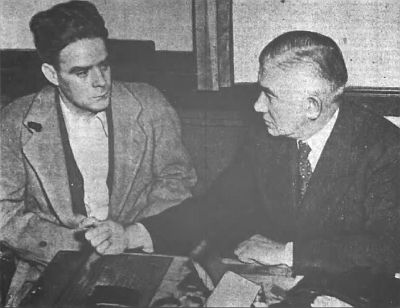
James-Mallon

James Mallon talking to a NYPD detective. He might be Cosmo Kramer’s father.

We went to work on Mallon but he insisted that he had left Carol shortly after midnight, that he had never known she had a husband and three children by a previous marriage. Then came the big break, a letter we found among Carol’s things. It was from Mallon and it read: “I know you are thinking of the children, but you don’t owe Harry anything.”

It was pretty clear now. Afraid to tell her husband about Mallon, Carol had invented the sailor named Wright—someone Tuttle could never check up on because he didn’t exist. As for Mallon, he was acting the injured innocent because if he could convince us that he didn’t know about Carol’s husband, he would have no motive for killing her. The letter made a liar out of him and a killer, as well. He had beaten Carol up because she wouldn’t leave her husband for him and he had murdered her for the same reason.

We were ready to play our ace. Calling in witness after witness, we showed them the little bone-handled knife we found in the churchyard and asked if they recognized it. Every one of them who knew Mallon identified it as the one he always carried on his key chain. Result: we had placed Mallon in the churchyard in contradiction to his statement; we knew what he was looking for when he lit the matches.

Caught dead to rights, Mallon finally confessed to Carol Tuttle’s murder and was given a 20 years to life sentence. He had gotten every break a killer could ask for: a phony suspect, a misleading motive and a chance to get away unseen. But he had stacked the cards too high against himself. He had killed in haste; he got plenty of opportunity to repent at leisure.

—###—


Small Town, Vigilante Justice in 1907

Home | Rediscovered Crime News | Small Town, Vigilante Justice in 1907


While searching my newspaper archive sources for specific stories, or just on fishing expeditions for new ones, I often come across stories about a lynch mob serving up vigilante justice to an unconvicted murderer. In most cases, the lynch mob would storm the jail where the prisoner was held and grab him while others held their guns on the local sheriff and his  deputies, or, like in the case below, they would capture him while he was being transported somewhere else.

Below is just one of the many stories I come across of lynch mob justice. I have placed a map at the bottom of the newspaper article for a reference. Also at the bottom of the story are a few more links to 1907 newspapers with more reports on this specific incident.

Update: October 9, 2016, photos added, bottom of page, submitted by reader.

Back Story to Lynching:

A farmhand working for the Copple family near Rosalie, Nebraska, got drunk one Saturday night in May of 1907, and just decided to kill his employers, Walter and Eva Copple. After Loris Higgins, using the alias Fred Burke, grabbed a shotgun and went outside, he called for Walter to come out of the house. When he did, he shot the farmer with both barrels. When Eva came running out to help her husband, he fired both barrels at her while the couple’s seven children watched in horror.

Higgins then stole $900 from his employer, sexually assaulted the Copple’s 13 year-old daughter, and threw the bodies of his victims into a hog pen where the pigs disfigured their corpses. He then saddled up a mule and rode off.

Higgins was captured one day later and held in the county jail in Omaha, Nebraska. When he was being transported to Pender, Nebraska, the county seat of Thurston County, where the crime took place, he was accosted by a vigilante mob when his train reached Bancroft, Nebraska, which is 11 miles from Pender.

“Higgins Is Lynched”

Red Cloud Chief, Red Cloud, Nebraska, Aug. 30, 1907, page 7.

Loris Higgins, alias Fred Burke, who shot and killed Mr. and Mrs. Walter Copple, farmers of Rosalie, Nebraska, [near the Iowa border] May 12, was lynched one mile from the town by a mob of twenty masked men.

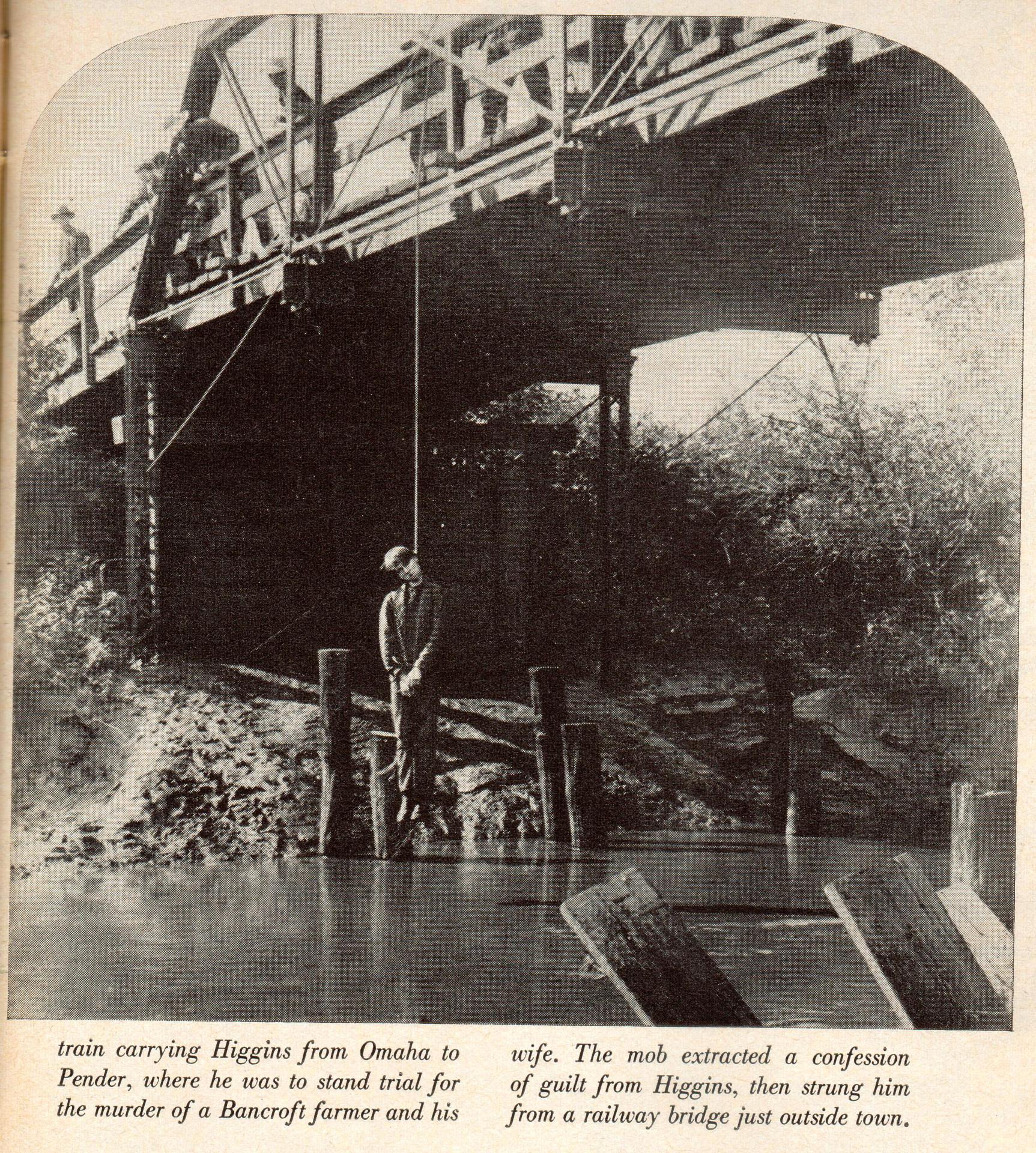
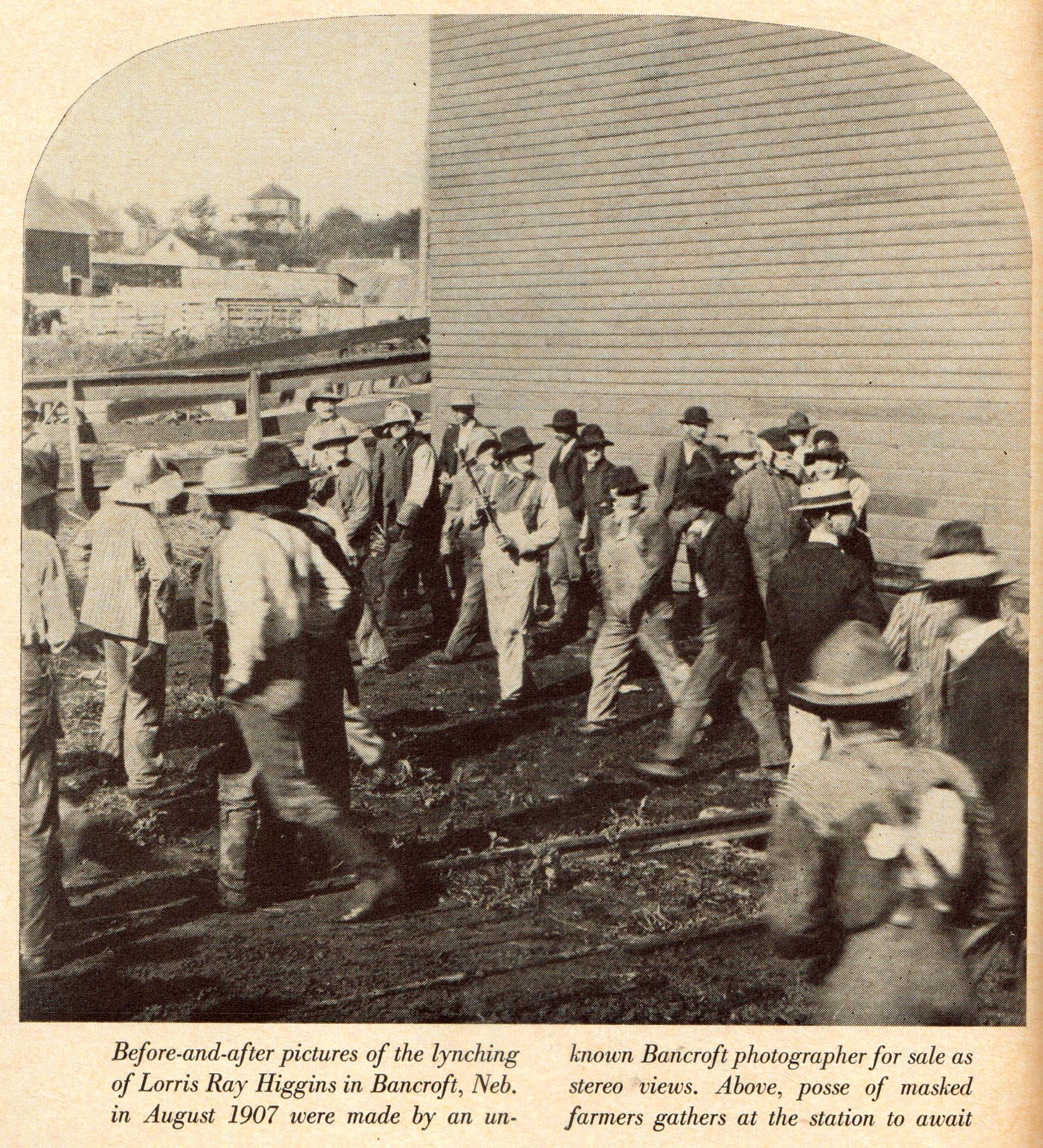
Higgins reached Bancroft [seven miles from Rosalie] on the Northwestern train in custody of Sheriff Sid Young of Thurston Country and a deputy, at 8:37 a.m. from Omaha while he had been confined in the Douglas County jail since his arrest soon after the murder. The masked men met the train, brushed the sheriff and his deputy to one side, threw a rope around the murderer’s neck and led him forth. He was placed in a wagon and hauled to the Logan Bridge one mile west of town where the lynching was performed.

The rope was tied to the highest beam of the bridge and after the victim made a statement he was thrown by the mob into the air and reached the end of the rope with a terrible sound, snapping his neck and producing instant death. Forty bullets were then shot into his body which was left dangling in the air for the officers to care for, while the executioners unmasked themselves and scattered in all directions in the timber which skirts the scene of the lynching.

The whole affair was performed with little excitement and was over before most of the people of Bancroft knew it was contemplated.

Sheriff Young, finding himself confronted by a resolute mob of masked men offered no forcible resistance to the taking of the prisoner. The sheriff was visibly affected by the demonstration, far more so than was Higgins. Higgins appeared little concerned, and when the rope which was to send him to his death in a few minutes was slipped over his head, he did not even flush or move, but stepped lightly from the train to the platform, surrounded by the masked crowd. He prayed as he alighted and continued his prayer until the train had gone and he was loaded into a wagon which was standing conveniently by.

Deputy Sheriff Knocked Down.

The sheriff’s deputy pulled his revolver when the mob appeared. The men told him to put up his gun and when he refused they knocked it out of his hand and knocked the deputy down and told him “not to be foolish.”

None of the mob had much to say to the victim and he was not assaulted until the bridge was reached. At the bridge, after the rope was tied and just before he was thrown into the air, he was given permission to make a statement. He availed himself of the opportunity saying he had long ago repented for his terrible deed, that he had made his peace with his God and was now ready to go and face Him, feeling that all would be well hereafter, he said he had tried atone for his wanton murder, but had no excuse to offer as he had no cause for committing it. He reavowed his faith in the religion he had found through the help of the “good women” in Omaha who came to his cell and prayed with him.

Hard to Fix Responsibility

He asked God to bless the little children whom he had left without parents by his deed and then to the I, masked men around him, he requested that a note be sent his mother asking her to write to his father at Nanta, Idaho.

The possibility of finding out the names of those who formed the mob is exceedingly remote. No one is standing on street corners condemning them nor professing that he knows a single man who engaged in the affair. So far as Sheriff Young is concerned, he does not appear to know them.

Thurston County authorities declare that they have proof that Higgins mistreated the thirteen year-old daughter.

More Reading:

Murder Near Pender,” Omaha Daily Bee, May 14, 1907, page 1. This story details the crime after it happened, and before the arrest of Higgins, alias Fred Burke.

Burke in Omaha Jail,” Omaha Daily Bee, May 16, 1907, pages 1. This story is about his capture and placement in jail.

Higgins Mother Hears News,” The Norfolk Weekly News-Journal, Aug. 30, 1907, page 8. This story is about the reaction of Higgins’ mother when she heard the news her son had been lynched.

Map:


View Larger Map

Images added 10/09/2016, Click to open larger in new window.

higgins-hanging-2-sharpened

higgins-hanging-1-sharpened

—-###—-


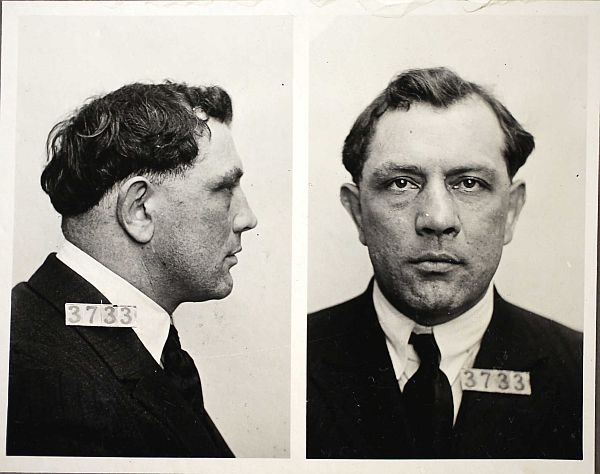
Mug Shot Monday! George Edward Cole, 1957

Home | Mug Shot Monday | Mug Shot Monday! George Edward Cole, 1957


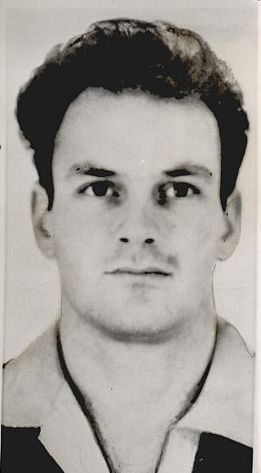
George-Edward-Cole

George Edward Cole

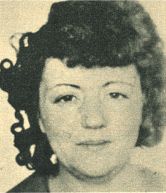
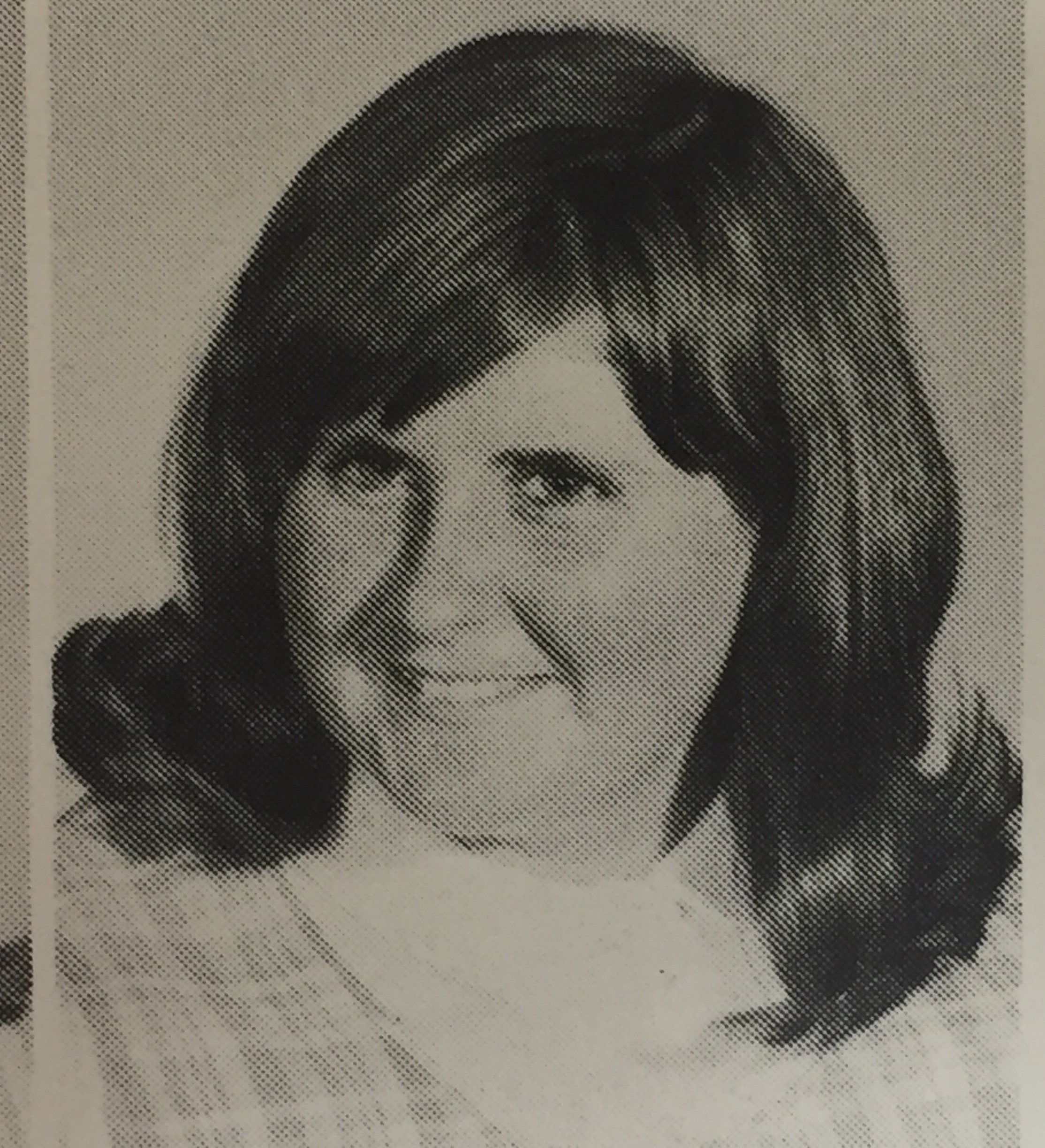
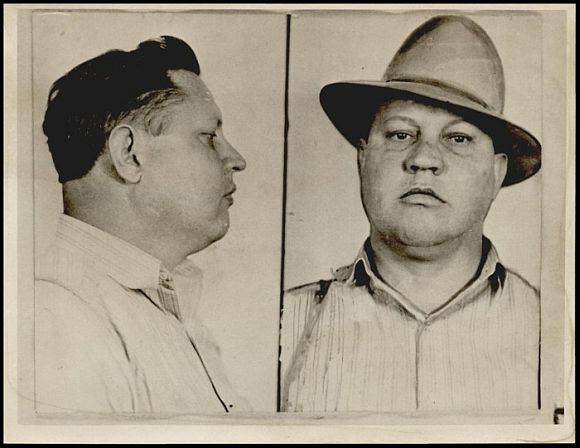
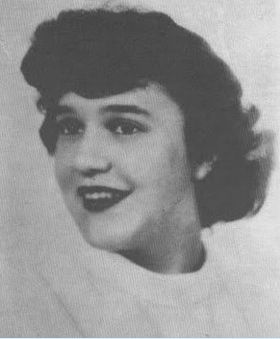
George Edward Cole shot and killed a San Francisco Police Sergeant during a hold-up of a tavern on Dec. 30, 1956. He was placed on the FBI’s Most Wanted List on Feb. 25, 1957. He was captured two years later in Des Moines, Iowa after a citizen identified his girlfriend, Yvonne Conley, 45, from a wanted poster. A magazine article later described her as 4′ 11, and dumpy, and declared she was an odd match for Cole who was 14 years younger.

yvonne-conley

My archival sources that I rely on do not have any more information about George Edward Cole after a jury selection for his trial in October, 1959. It just stops with that and I have no clear picture of what happened to him. His name does not appear on a comprehensive list of inmates executed in California before 1967. He also does not appear in the online California Death Records database as George Edward Cole or George E Cole with the correct age.

A little more information can be read about him here:

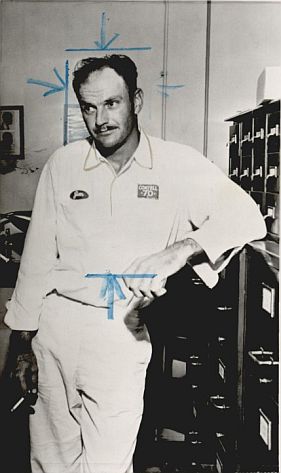
The second photograph, below, was taken nearly a decade after the mug shot featured on his FBI circular.

George-Edward-Cole-2


Photo Sources:

AP Wirephoto. [Photograph 2012.201.B0231.0668], Photograph, February 27, 1957; digital image, (http://gateway.okhistory.org/ark:/67531/metadc197502/ : accessed June 24, 2014), Oklahoma Historical Society, The Gateway to Oklahoma History, http://gateway.okhistory.org; crediting Oklahoma Historical Society, Oklahoma City, Oklahoma.

[Photograph 2012.201.B0231.0666], Photograph, July 8, 1959; digital image, (http://gateway.okhistory.org/ark:/67531/metadc220712/ : accessed June 25, 2014), Oklahoma Historical Society, The Gateway to Oklahoma History, http://gateway.okhistory.org; crediting Oklahoma Historical Society, Oklahoma City, Oklahoma.

—-###—-


Book Review: The Murder of Maggie Hume

Home | New Books | Book Review: The Murder of Maggie Hume


.

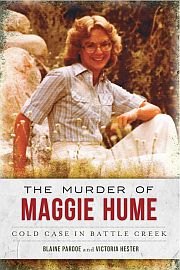
Book Review: The Murder of Maggie Hume: Cold Case in Battle Creek, by Blaine Pardoe & Victoria Hester, History Press, August, 2014.

While researching and writing his last true crime book, Murder in Battle Creek: The Mysterious Death of Daisy Zick, which was great reading, veteran author Blaine Pardoe was repeatedly confronted with another famous Battle Creek, Michigan cold case which has become the subject of his latest true crime book: The Murder of Maggie Hume: Cold Case in Battle Creek. Like an investigator with a nagging compulsion to go after a specific suspect, or to close an old case, Pardoe, assisted by his daughter Victoria Hester, dug into this 1982 murder mystery and came up with an accurate, thorough and unbiased account of this cold case which still has a chance of being solved.

The Maggie Hume case has the classic elements a true crime book needs to be successful: A young, attractive ‘girl next door’ victim who is special to the reader only because of her ordinariness; and a chief suspect that you really, really, really just love to hate.

Book Synopsis

TheMurderofMaggieHume“On August 16, 1982, an unidentified attacker brutalized and strangled Maggie Hume at her apartment in Battle Creek, Michigan. The daughter of a beloved local football coach, her seemingly senseless murder sparked intense scrutiny that lingers today. Award-winning author Blaine Pardoe and his daughter, Victoria Hester, crack open three decades of material on this mysterious tragedy, exposing dark secrets and political in-fighting that tore at the Battle Creek legal system for years. Compiled from documents, videos and interviews, this book presents the facts and clues of the case to the public for the first time.”

Pardoe is the master of atmosphere and setting the scene. Just like with his Daisy Zick book, Pardoe and his daughter Victoria, put you inside a DeLorean time machine with a flux capacitor, set the time dial to August, 1982, the location dial to Battle Creek, Michigan, and land in the middle of prose where the reader absorbs that era. Okay, Back to the Future came out AFTER the crime, but it’s a DeLorean time machine, it doesn’t matter.

Once you’re taken back to that time and place, you want to stay there and look around for a while. Peer over the investigators shoulder as they examine the crime scene. Sit in on any one of the numerous interrogations. Listen to family and friends as they chat about the peculiar antics and quotes of the chief suspect.

Pardoe and Hester present this story in a clear, concise manner. They parse out the facts in an unbiased tone and condense the entire case down to its core essentials. That’s not easy to do when the case file could very well be 10x to 100x the length of the book. In the beginning, they throw a lot of names at you, but there is no way around this, and the reader will have to make an effort to keep up with who is who, and who said what about the chief suspect. As I said before, the book has the classic elements needed for a good crime book, but only in the first half. In that first half, the story reminded me of the type of true crime stories Ann Rule would choose and write about. If you stop and think about why you love the victim and hate the chief suspect, it’s because Pardoe and Hester have guided you to feel that way by placing the reader in the middle of the storm that rolls in after Maggie’s death. That takes some skill.

But in the second-half of the book, the story takes a sharp left turn to reveal woefully misguided investigators who darn near ruin the case. Pope Francis very recently (Sept. 29, 2014) gave a sermon in which he said, and I’m paraphrasing, Satan seduces us by disguising evil as good. “He presents things as if they were good, but his intention is destruction,” – were his exact, translated words.

You’ll understand what I mean when you get to the second part of the book where two ambitious investigators falsely portray themselves as the angels of justice against a quasi-corrupt or incompetent system. As you read through that section, you fear that the case, which can still be brought to justice, is permanently derailed. However, that asinine era of the story ended years ago and by the end of the book, the reader’s hope returns, but just barely.

The language of investigators, prosecutors, families, and the media often employ the words cold case, and unsolved case. I would humbly like to submit for consideration into their glossary a new term which, at times, including this one, might be a smidgeon more accurate. The murder of Maggie Hume is not an unsolved case, it’s an unresolved case. Go back to the ‘Cluster B personality’ type of a chief suspect, and reread page 57 after you’ve read the entire story. The fact that I have that opinion should tell you that ‘I got into this book.’ If you read The Murder of Maggie Hume I  am betting you will too.

About the Authors

Blain Pardoe is an award-winning, best-selling author of numerous books ranging from science fiction to true crime, military history and business management. Mr. Pardoe was raised outside Battle Creek, Michigan, and received his bachelor’s and master’s degrees from Central Michigan University. He has been a featured speaker at the U.S. National Archives, the U.S. Naval Academy and the Smithsonian. He was awarded the State History Award in 2011 for his book on Battle Creek aviator Frederick Zinn (Lost Eagles). In 2013, he was the Michigan Aviation Hall of Fame recipient of the Harriet Quimby Award. He is the author of several true crime books, including The History Press bestseller Murder in Battle Creek: The Mysterious Death of Daisy Zick. He currently lives in Virginia outside Washington, D.C. He can be followed on Facebook or via his website (www.blainepardoe.com).

Victoria R. Hester is a graduate of Lord Fairfax Community College and resides in Culpeper, Virginia. She won two prestigious writing awards for her nonfiction work while in college. She is a full-time nurse and writes in her spare time. She is married and has a son. With her family being from the Battle Creek area, she has been visiting the community her entire life. This book is her first published work that she co-authored with her father.

—###—


Mug Shot Monday! Ed Hagen, Hero Policeman, Boxer, Bootlegger, 1921

Home | Mug Shot Monday | Mug Shot Monday! Ed Hagen, Hero Policeman, Boxer, Bootlegger, 1921


Ed Hagen was a former semi-professional boxer and hero policeman turned bootlegger. He was caught in April of 1919 trying to break into a government liquor warehouse. He was sentenced to two years in McNeil Island Federal Penitentiary. He appealed his sentence but eventually lost and began serving his sentence in March, 1921. The article below is just one of many stories about him that can be found on the internet by searching “Ed Hagen” Seattle Policeman. While he was appealing his sentence, he was working as a baker’s helper when he got his  hand caught in a dough mixer and lost two of his fingers. For a man that was shot several different times in the line of duty as a police officer, this was just one of many injuries he endured during his exciting and often publicized life.

Ed-Hagen-Cropped


The article below was originally published in The Seattle Star under the title “Done With Booze,” on August 5, 1921, pages 1 and 7.

Ex Patrolman Ed Hagen, once hero of Seattle, small boys’ idol and regarded as one the most courageous men in the police department, later one of the hardest-boiled bootleggers of the Northwest, now a federal convict, today is seeking a parole. He has reformed, he says.

Having served four months of a two-year sentence on McNeil Island Penitentiary for breaking into a government liquor storehouse. Hagen has written appealing letters to United States Attorney Saunders asking Saunders to help him gain his release.

“I am a changed man,” writes Hagen, “and a model prisoner. I see everything now in a different light, I want to go straight.”

Saunders is understood to have promised Hagen that the charge still pending against the prisoner hero will be dismissed, paving the way for parole board action. No parole could be considered too long as other charges are pending.

STARWICH AND DOUGLAS OPPOSED TO RELEASE

“What’s the matter? Are we short of whiskey in Seattle? He oughtn’t to be paroled. What he needs is a longer term.”

This was the pithy comment of Sheriff Matt Starwich, whose men had several brushes with Hagen, the bootlegger, before he was finally captured.

Prosecutor Malcolm Douglas declared he was not inclined to jump on a man when he is down but considered a parole for Hagen would be a mistake.

“We had a case against him before the government sent him to prison,” said Douglas. “We fined him instead of giving him a jail term on the understanding that he was going up for two years on the federal charge.”

SEARING LAUDS HIS FORMER PATROLMAN

“The mere fact that Hagen was a policeman should not interfere with his pardon any more than any other man’s. Personalities should not be considered in a matter of simple justice.” said Police Chief William H. Searing. “I would like to get Hagen out, but I’m not going to give any opinion on the case, further than to say that a better policeman never lived than Ed Hagen. If he had not gotten into bad company, he would have been the best man in the force. He was absolutely fearless.

“Hagen was wild. He got into bad company and now he’s paying for it. I’m sorry, because Hagen was a good man. He was simply an overgrown boy.”

Commended for Bravery

Hagen joined the force Nov. 3, 1907 as a “temporary” and shortly was commended for courageous action in connection with the arrest of a holdup gang.

He became the storm center of a dispute over bribery charges, was dismissed, reinstated, dismissed again, begged to come back, and finally resigned. Ten days later he rejoined the force and was again commended for a daring arrest of footpads.

In September, 1915, he was shot by two men at the end of the Madrona Park car line. They left him riddled and apparently dead.

In the hospital, during his long fight for his life, he became the hero of the town. Extra editions of the newspapers giving his condition hour by hour were eagerly seized and read. The name “Hagen” was on everybody’s lips.

Arrested for Bribery, Takes Bothel Gang

When he came out of the hospital and it was announced he would resume his old beat, a whole city rejoiced. In 1916, he was indicted for accepting a bribe. His acquittal was speedy. He returned to work and a few days later, singled handed, captured the notorious “Bothel gang” [Bothel, not Brothel].

Again he was arrested on bribery charges. A year later he quite the force, turned bootlegger, and to his friends, “went wild.”

He knew he was in bad with the federal prohibition men and delighted in it. He knew that they followed him about, and he would go on a wild goose chase just for the fun of leading them on. He would travel about the city for the joy of seeing them follow him. He was a model policeman except for his wild ways. He was the best worker on the force, his superior officers frequently declared.

His wife and his elderly mother visited him recently in the prison and came back to report they had never seen a man so changed. They had found him, they said, not only a model prisoner but a member of the prison church. Both are working toward his parole.


—-###—-


Savage Killer Timothy McCorquodale, 1974

Home | Feature Stories | Savage Killer Timothy McCorquodale, 1974


In Memoriam. Donna Marie Dixon, 1956 to 1974

Donna Marie Dixon, - courtesy of her friends.

Donna Marie Dixon, – courtesy of her friends.

Although it has been more than forty-years now, the memory of Donna Marie Dixon has not been erased by time. Her existence, her time with us in this world, lives on in the memory of four of her friends who wish to honor her, remember her, and pass along their love in the following statement. It is written by her friend Pam, who is mentioned in the story below, as well as Lauren, Susie, and Rick.

“Donna Marie Dixon was a sweet loving girl. Her loves in life were food, you ate what mama fixed, favorite food was food! Her favorite song was “Stairway to Heaven,” flowers were mums, birds were cardinals and her goal in life was to work with animals. Pam, her best friend, moved back to Newport News after the crime. Imagine how traumatic to be asked to identify you friend but don’t even recognize her. There is not a day that goes by that she doesn’t think about Donna Marie Dixon. She wants the world to know that “Leroy” or “Lee” does exist and she saw him get into the cab with Wes, Bonnie and Donna. We are looking for some pictures of Donna to add to the web and hopefully someone out there knows new information about this case. We need justice for Donna, gone way to soon….RIP”

Since the story below was published, it has become the most popular one on this blog. It has even generated interest into learning the identity of Timothy McCorquodale’s accomplice with the newly created thread, “Who was Leroy?” on the subreddit, Unresolved Mysteries, at reddit.com. According to Donna’s friends, an Atlanta detective is looking into the old files in this case in order to learn the true identity of “Leroy.”

Updated: June 30, 2016


Story by Jason Lucky Morrow

January 17, 1974,
Clayton County, Georgia,
outskirts of Atlanta

TO THE CLAYTON COUNTY police officer on routine patrol, the white object near the shoulder of Slate Road and Highway 42[1] looked like a bag of trash. Illegal dumping was a fairly common occurrence in his line of work and he stopped to check it out. When the officer walked around to the side of the road and shined his flashlight, the large pale object had legs, arms, breasts and a head.

Sometimes, flashlight beams reveal things we don’t want to see and this time was no exception. Looking down, the lawman was appalled to see that the young, shapely girl looked as if she had been tortured to death. Unsure if whether the nude female was alive or not, the policeman stood closer. If she was alive, he needed to render immediate aid but when he touched her cold skin, he knew.Timothy-McCorquodale
The officer radioed backed to headquarters for assistance and immediately began securing the scene. It was truly a horrific sight. The girl’s face looked like a distorted mass of barely recognizable features. Her nose was flattened and she was covered in purplish bruises with severe swelling that pushed everything out of position.

It got worse as he shined his flashlight over her body. Long, thin welts on her thighs indicated she had been whipped. Small round scorch marks over her torso and breasts indicated the tell-tale signs of cigarette burns. Hot red candle wax had been poured on her stomach, inner thighs and between her legs. When thrown out of the car, the body fell on its side with its arms and legs protruding out in abnormal directions—an indication they had been smashed and broken either before or after death.

Whoever murdered this poor girl was no master criminal. Before his colleagues even arrived, the officer found a good tire track by the road just waiting for a plaster-of-Paris cast. Next to the girl was a blood-stained portion of a cardboard box with black tape wrapped around it and what looked like fibers, possibly carpet fibers, adhered to the tape.

Despite their mistakes, her killer or killers had done one thing right; removed her clothes and stole her identification. But there was more than one way to identify a corpse and an ambulance carried the girl’s broken body to the Fulton County medical examiner’s office in nearby Atlanta where her fingerprints may indicate who she was. In a worst case scenario, the M.E. could make a dental impression.

Although Atlanta and the suburbs which surround it have grown exponentially since 1974, it was much smaller then. But to those who lived there at the time, the city had grown fast in the few decades leading up to 1974. As part of that rapid growth, hippies, motorcycle gangs, runaways and hustlers were all attracted to a mid-town Atlanta district known as the “The Peachtree Strip.”

The Strip, as it was more commonly called, was a sleazy area of run-down motels, darkened strip-clubs, dangerous bars, and cheap apartment houses. Since there were no local missing person reports of a five-foot four-inch girl with brunette hair weighing close to 140 pounds, Clayton County investigators worked off the assumption that she was one of Atlanta’s many runaways.

“Literally, thousands of runaway teenagers find a home among the dubious denizens of ‘The Strip.’ It was the thinking of detectives that the female victim might have come from among their number,” a crime magazine reported the following year. “It is nearly impossible to walk in the streets for the clusters of the unwashed and non-working, most of them young, and most of them looking for a victim or a handout.”

On Saturday, two days after the gruesome discovery, a confidential informant working for Sheriff Earl Lee of nearby Douglas County provided investigators with two names possibly tied to the woman’s death. One was a young woman in her twenties known as “Bonnie,” while the other was a man known as “Wes” or “West,” also in his twenties. Both subjects were known to frequent ‘The Strip.’ For Sheriff Lee, his informant was as solid as they come and had always provided them with good tips in the past. If he said to look for a “Bonnie” and “West,” that’s what they needed to do.

With a solid lead pointing to the rundown Strip, a special squad of Atlanta homicide investigators was formed to probe possible connections to an area they knew well. They began a slow, building by building, person by person canvas of the Strip and it didn’t take long for them to find people who knew the victim. The Strip may have had its share of petty thieves, drug-dealers, pimps and hustlers, but when it came to murder, detectives knew someone would eventually talk.

And that’s exactly what happened. Talking to a young couple inside a bar one afternoon, a teenage girl told detectives the victim was a friend of hers who had hitchhiked to Atlanta after running away from her parent’s home in Newport News, Virginia. Her name was Donna Marie Dixon and she was just seventeen years-old.
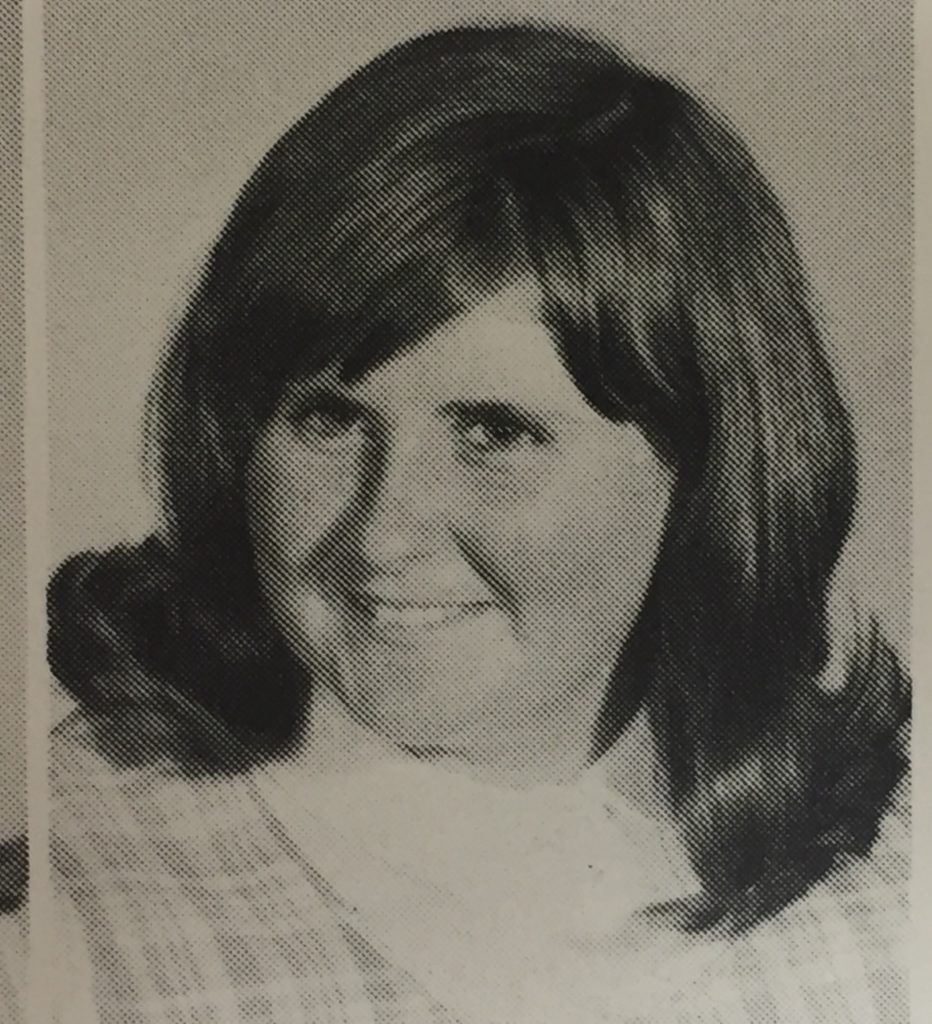
Donna Marie Dixon, - courtesy of her friends.

Donna Marie Dixon–photo courtesy of her friends.

The young girl was asked to identify her friend at the morgue but she was unable to recognize Donna’s battered face. The victim’s parents were then contacted in Newport News and the sad information was passed on to her step-father who broke the news to her mother. When they came to retrieve their daughter’s body later that next week, Donna’s parents made a positive identification. By then, however, police would already know for certain it was young Donna Marie Dixon.

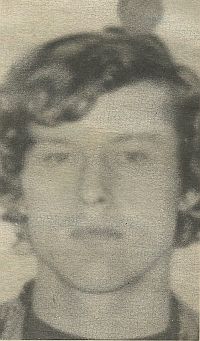
As it turns out, there were a lot of “Bonnies” associated with the Strip, but the small-time criminals, who often knew more than police, could associate the name “Bonnie” with the name “West” who turned out to be Wes McCorquodale, a tall, baby-faced twenty-one-year-old from Alma, Georgia who had a slight-build and a full head of stringy blond hair that covered his ears. During the colder months, McCorquodale would often wear the same coat which was described to detectives. The two subjects lived in an apartment on Moreland Avenue in southeast Atlanta, the same direction from The Strip which led to the spot where the victim was dumped.

As the two Atlanta detectives left the bar where they had learned their suspects’ names, they got in their car and were about to start for the apartment complex when they noticed a slightly-built young man with blonde, stringy-hair wearing the same color coat they were told to look for. After they slowly got out of the car and approached the him, they identified themselves and demanded to know his name.

It was Timothy Wesley McCorquodale.

During his interrogation at headquarters, McCorquodale told detectives “Bonnie” was his girlfriend, Bonnie Succraw Johnson. He gave police her address and place of work where she was picked up and brought in for questioning.

Although McCorquodale quickly waived his right to counsel and gave a full confession, the statement from his girlfriend, Bonnie, was the one used during his trial. The two lived together in an apartment in the 700 block for Moreland Avenue which they shared with her three-year old daughter by another man, and a female roommate named Linda Deering, who was eight months pregnant. Both Linda and Bonnie were given immunity in exchange for their statements which were some of the most sickening, cold-blooded and shockingly horrific documents ever presented in a Georgia courtroom.

During the early morning hours of January 17, Bonnie said she left the bar where she worked and met up with her boyfriend at another nightspot. Inside, McCorquodale was with Donna Marie Dixon where he was accusing her of stealing $50 from his acquaintance, “Leroy.” Despite the runaway’s repeated and steadfast denials, Bonnie’s boyfriend couldn’t seem to let it go and she tried to calm him down. Bonnie then took Donna into the ladies room where she did a full search of the plump girl which turned up nothing. Undeterred, McCorquodale then insisted Donna gave the money to a black man he saw her talking with and assumed was her pimp.

Outside the nightclub, McCorquodale let loose a barrage of racist insults over her assumed association with a black man. Then, McCorquodale, Donna Dixon, “Leroy,” and Bonnie caught a taxi which they took back to Bonnie’s apartment. Inside, McCorquodale’s obsession over the girl’s supposed theft of $50 intensified with heavy-handed questions that implied her guilt.

As the girl sat there sobbing, issuing quiet denials, McCorquodale changed tactics and pretended to soothe her feelings. As his left hand gently stroked the back of her head, Bonnie said she saw her boyfriend’s face change and she knew what was going to happen next; McCorquodale drew back his fist and smashed Donna in the face. After that, McCorquodale and Leroy began to slap, punch and hit the girl as they got her down to the floor.

Because of all the noise, the young couple’s roommate, Linda, woke from the back bedroom where she was sleeping with Bonnie’s three year-old daughter. Together, Bonnie and Linda watched and did nothing as McCorquodale and “Leroy” tortured the poor girl over the next couple of hours. First, they tied her wrists with Bonnie’s nylons, and then they started slapping and punching her, while denigrating her for associating with a black man and not “staying with her own kind.”

To keep her screams from reaching the neighbors, they put a washcloth in her mouth and secured it with electrical tape. McCorquodale then pulled off his leather belt that included a large, Western style buckle, and began whipping the girl with it.

Then, they ripped off her clothes.

Now that the young victim was nude, gagged, and bound, the torture began to escalate with cigarette burns, and hot wax from a red candle that was dropped on her stomach and private parts. The two men then took turns raping her orally, vaginally and anally. Afterward, the girl’s genitals were mutilated with chemicals and scissors.

As Bonnie told her story in a calm manner, the detectives were sickened by what they heard. After the rape and mutilation, Donna’s torturers took a break and released the girl to go wash up in the bathroom. By now, the three year-old had awakened and was put back to bed with a story that Timothy and Bonnie were helping a kitten who had a broken-leg. Linda would later claim she remained in the bedroom with the little girl and didn’t see what happened next.

In the living room, McCorquodale and Leroy discussed killing Donna Dixon. Timothy told his girlfriend to get a rope and she gave him a thin length of clothesline she recently purchased to hang in the bathroom.

After being coaxed out of the bathroom, and then a closet where she hid, McCorquodale pounced on her from behind and began to strangle her. At this point, Bonnie said, she told Leroy to get her boyfriend off of the victim or else he was going to kill her. It took both of them to pull McCorquodale off the dying girl.

As they looked down at her, the unconscious girl began to go into convulsions and her eyelids fluttered open and shut—indicating to her torturers she was still alive, but barely. It would have been the perfect time to call an ambulance but Bonnie, Linda and Leroy submitted to Wesley who was intent on destroying Donna’s innocent life. “Still tense with maniacal cruelty, the wiry McCorquodale threw himself upon her again, straddled her body, and choked her to death.” As he did so, he apparently slammed her head up and down and up and down, which eventually broke her neck.

Now the foursome had a real problem, getting rid of the body. To get Donna’s battered corpse out of the apartment, they found a cardboard trunk which once contained the toys and clothes of Bonnie’s little daughter To get his victim inside the small box, McCorquodale had to stomp down on her arms and legs to break her bones. When witness Linda Deering later told police what it sounded like, she said “it was like you had taken a big stick and jumped on it, a cracking sound.”

McCorquodale voluntarily gave a written statement to police that was similar to Bonnie’s, but included information on how he had gotten rid of the body and some of the evidence. The day after the murder, McCorquodale and his girlfriend took a bus back to The Strip where he found a friend with a van who agreed to help him dump a box of trash by the side of the road. McCorquodale fiercely claimed his friend did not know what was in the box until they dumped it and refused to give police the man’s name. Because he was the decent type, McCorquodale claimed he got rid of it by the side of the road “so that it could found.”

As hard as they tried, police could not learn the identity of “Leroy” who was new to The Strip and whose last name was unknown. Bonnie and Linda did not know his last name and police could find no one on the street who even knew who he was. It was assumed that after the murder, “Leroy” left town and he was never caught.

Back at the apartment on Moreland Avenue, police found the victim’s blood in the carpet and on the tiles in the closet where she tried to hide. In the dumpsters, they found two white trash bags that contained her clothing, jewelry, purse and an address book with her parents Newport News address written inside.

On February 6 McCorquodale was indicted for first-degree murder and his trial took place in April in an Atlanta courtroom. His defense attorney eagerly tried to plead his client guilty, but Judge Osgood William would not accept saying he “could not, under any circumstances, sentence someone to death.”

To relieve himself of this burden, Judge Williams said he was rejecting McCorquodale’s guilty plea and forced the case to a jury trial where his punishment would be determined by twelve men and women. In spite of his unwillingness to sentence a man to death, Judge Williams noted that if McCorquodale was sentenced to death, it would be more beneficial for the higher court to have trial transcripts, as well as a decision that came from a jury.

In his opening arguments, McCorquodale’s defense attorneys told the jurors, “We’ve been trying to plead guilty for two days. Ladies and gentleman, we’re guilty. It’s that simple. We don’t deny what the witnesses are going to say.”

And what the witnesses, investigators, and experts had to say was revolting.

“The jury of six men and six women grew paler and paler as they listened to the medical man testify,” Richard Devon wrote for his article in Official Detective Stories magazine. “In truth, the evidence was enough to turn the stomach of any normal person, and numerous spectators, sickened, left the court room. Much of the evidence is unprintable.”

During the trial, both his girlfriend Bonnie, and roommate Linda Deering testified against him. When he was questioning Bonnie about the victim’s strangulation with the clothesline cord, assistant district attorney Melvin England stopped the flow of sickening testimony to ask her a simple question.

“Back up, just a minute, let me ask you—at the time the defendant put the cord around Donna’s neck, did she say anything?” England inquired.

Just as calmly as she had testified all day, Bonnie told the court: “She said, ‘Oh my God, he’s going to kill me.’”

For a good part of the two day trial, the jurors were sickened by not just what the women said, but how they said it. They were calm and unemotional on the witness stand with no affect in their voice or body language. Later on, Bonnie told the jury of a cold blooded telephone call she received at work from Linda.

Dearing called Bonnie and informed her, “That the victim’s body was smelling up the apartment and to tell McCorquodale to come and get it.”

Dearing also had the unusual task of keeping Bonnie’s three year-old daughter away from the cardboard box that was shoved into a closet which had a cloth curtain instead of a door. It was the same closet Donna Dixon had tried to hide in.

After a ninety-seven minute deliberation, Timothy Wesley McCorquodale was convicted on April 12 and sentenced to death. In December of 1974, the Georgia Supreme Court denied his appeal. However, McCorquodale, along with all other death row inmates, were granted an indefinite stay of execution by Governor and Presidential candidate, Jimmy Carter, as the death penalty issue was revisited by the United States Supreme Court in 1976.

By sheer luck or miracle, McCorquodale’s execution date was continually put off until the 1980s. In May of 1980, McCorquodale and three other Georgia death row inmates wrote a letter to President Jimmy Carter with an offer to go on a military mission to rescue the fifty-two American hostages held by Iran at that time.

“All four of us have discussed this proposition and we would rather go to our graves fighting for our country than sitting here and rotting in this hell,” wrote famed mass-murder Carl Isaacs. Isaacs killed six members of the Ned Alday family in 1973.

Although their letter was published in newspapers, President Jimmy Carter never wrote back. For Isaacs, it was another one of his many publicity stunts. The three other prisoners that were to accompany him on their secret mission were Timothy McCorquodale, Troy Gregg, and Johnnie L. Johnson.

Two and one-half months later, on July 28, 1980, McCorquodale, Gregg, Johnson and David A. Jarrell escaped from a maximum security prison at Reidsville, Georgia. Using hack saw blades smuggled into prison with the approval of a corrupt guard, the four death row inmates sawed through the bottom bars of their cell doors. Then, at 6 a.m., they just walked out of the prison wearing re-tailored pajamas dyed black and made to look like guard uniforms. Although they were scrutinized at the main gate of the 2,100 inmate prison, the fake uniforms were enough for them to bluff their way through. The accessories and patches sewn into the phony uniforms came from the corrupt guard who had been selling drugs to prisoners.

One hour later, Gregg telephoned Albany Herald newspaperman, Charles Postell, and told him of their escape and said they were in Jacksonville, Florida. When Postell called deputy commissioner Col. William Lowe to inform him of the escape, Lowe later told reporters it was the first time he had heard about it.

“Their flight from fourth floor cells was so well executed that more than hour after Postell informed prison officials of the ‘news tip,’ the escape had not been confirmed,” the Associated Press reported.

Three of the prisoners were captured two days later inside of a rundown house near a lake in North Carolina following a six hour stand-off with police that included a helicopter hovering overhead. The house was owned by William “Chains” Flamont, a member of the motorcycle gang the ‘Outlaws.’ Flamont said he was friends with escapee Jarrell, and news reports at that time indicated McCorquodale may have been a member of the Outlaws when he murdered Donna Dixon. Also in the house at the time was James Cecil “Butch” Horne, a close friend of Flamont’s, who also may have been a member of the Outlaws.

Although police wouldn’t say what tipped them off, before the stand-off they retrieved Gregg’s body from a nearby reservoir. Flamont told police a fight erupted between the prisoners and Gregg was beaten to death. Later reports indicated McCorquodale was the key individual behind Gregg’s murder.

After the prisoners were returned, eleven individuals were indicted with helping the four death row inmates escape. This included McCorquodale’s mother and aunt who investigators said sent him the hacksaw blades concealed inside the handle of a portable radio. Investigators also reported McCorquodale’s mother, Toni Jo Hooper, and Aunt, Minnie Hunter, visited the prison the day before the escape and left a car with the keys inside waiting in the parking lot for the four to drive away in after their escape.

Besides a prison guard, authorities also indicted Charles Postell and his wife who they said purchased the hacksaw blades. Postell vigorously denied these charges with the declaration that Georgia authorities were trying to get revenge on him for publicly embarrassing him. The hardware store attendant, whom Georgia investigators claimed sold the hacksaw blades to Postell’s wife, could not remember the purchase.

“We are inclined to view it all as harassment and revenge,” Postell’s boss at the Albany-Herald told reporters on August 28, after his employee was released on $5,000 bond. “Certain law enforcement agencies got egg on their faces.”

The outcome of the eleven indictments is unclear from available newspaper archives. If the hacksaw blades were smuggled in a portable radio purchased by members of McCorquodale’s family, it would be completely unnecessary to have someone else purchase the hacksaw blades.

During a preliminary hearing for “Butche” Horne, another witness testified: “That McCorquodale knocked Gregg down and began stomping him. He said McCorquodale, who is six-foot three-inches tall and weighs about 300 pounds picked up his right foot and stomped down with all his weight several times on Gregg’s upper chest, throat and head.”

Butch Horne then pushed McCorquodale off and stomped on Gregg himself, the witness said in court. In spite of this testimony, officials chose not to charge McCorquodale or Horne with the murder of Gregg.

McCorquodale’s appeals dragged on for seven more years with the help of an attorney from the National Association for the Advancement of Colored People. Besides alleged errors made during his 1974 trial, McCorquodale’s various appeals claimed that he told a state psychiatrist in 1976, who believed him, that he could not remember murdering Donna Dixon.

”I cannot believe that I would do them things,” he claimed during a session. ”I just don’t believe I could do it.”

In the year leading up to his execution, those who knew him said that Donna Dixon’s killer, now in his mid-thirties, underwent a religious transformation. In a last bid to stay alive, McCorquodale wrote a letter to the state pardon and parole board. The board chairman then told reporters “he does show considerable remorse for what he’s done.”

But it was too little, too late and Monday, Sept. 21, 1987 McCorquodale’s legal luck ran out and at 7 p.m. he was strapped into the state’s electric chair. In a 1990 article, newspaper reporter Amy Wallace recalled the time she witnessed McCorquodale’s execution.

Placing both his hands on the armrests, the six-foot-one-inch, 270-pound inmate hoisted himself into the electric chair that inmates had built out of sturdy Georgia pine.

As usual, there would be no single executioner. To spare any individual the job of killing, the state had divided each electrocution into dozens of tasks, and prison employees were asked to volunteer for just one. On this day, dozens of people would perform the many rituals that, altogether, would lead to McCorquodale’s death.

Earlier that afternoon, one guard had served him his last meal: boiled shrimp, crab legs, tossed salad with Thousand Island dressing and apple pie à la mode. Another prison official had tape-recorded a private statement that would be stored in the prison archives, and the prison barber had shaved McCorquodale’s head.

Now, six guards surrounded him. In a carefully choreographed procedure, they fastened ten leather straps around McCorquodale’s body, cinching them tight. The guards exited and a prison electrician attached two electrodes to wet sponges at the top of the inmate’s head and on his right ankle.

Before the leather hood was placed over his head, McCorquodale was asked if he had any last words. With a thumbs-up to his father, cousin, and two other family members, McCorquodale said, “Yes, I would like to tell my dad, and everybody with him, that I love them very much. Stay strong in Christ.”

At 7:23 p.m. Eastern time, thirty-five year-old Timothy Wesley McCorquodale was pronounced dead. Donna Marie Dixon would have been thirty-one years old.

[1] State Route 42 and Highway 23 now run concurrent with each other near Slate Road, Clayton County, GA.

 Here is a link to an audio recording of his execution.

Bibliography

“State Murder Trial Continued Despite Plea,” United Press International, Pulaski Southwest-Times, Pulaski, VA, April 12, 1974, page two.

“Incredible Torture-Murder by a Southern Sex Sadist!” by Richard Devon, Official Detective Stories, August, 1975.

“Condemned Await Supreme Court: Re-evaluating the Death Penalty,” United Press International, The Argus, December 1, 1975, page two.

“3rd Man’s Execution Date Set,” Associated Press, Thomasville Times Enterprise, October 26, 1976, page ten.

“Gilmore Wins Plea for Execution; Pardons Board Orders Date Set,” John Nordheimer, New York Times, Dec. 1, 1976, page forty-nine.

“Inmates Volunteer for Hostage Rescue,” Associated Press, Logansport Pharos-Tribune, May 11, 1980, page two.

“Killers Flee GA. Prison,” Associated Press, Winchester Star, July 29, 1980, page one.

“4 Killers Flee,” Associated Press, The Daily Globe, July 30, 1980, page twenty-two.

“Fugitives Holed Up for Six Hours before Surrender,” Associated Press, Elyria Chronicle-Telegram, July 31, 1980, page one.

“Jury Indicts Three after Jail Escape,” Indiana Evening-Gazette, August 14, 1980, page three.

“Evidence Lacking for Murder Trial in Escapee’s Death,” Associated Press, The Sumter Daily-Item, August 26, 1980, page one.

“Editor Indicated on Escapes,” United Press International, Marshall Evening-Chronicle, August 28, 1980, page eight.

“Appeal Challenges Death Jury,” Associated Press, The Harrisonburg Daily News-Record, August 31, 1982, page nine.

“Slayer Executed in Georgia; High Court Rejects Appeals,” Associated Press, New York Times, September 22, 1987, page A24.

“Commentary: States Using Death Penalty Must Not Look Away,” Amy Wallace, Los Angeles Times, April 8, 1990.


 —###—

Mug Shot Monday! WJ Edwards 1938

Home | Mug Shot Monday | Mug Shot Monday! WJ Edwards 1938


.

WJ-Edwards

WJ Edwards 2-15-39, Convicted of Murder

Story 1: “Two Are Held in City Death, Shots Blamed on Robbery Fear”

Two men were held in the city jail Monday and funeral arrangements completed for a third as the aftermath of a shooting Sunday night in a one-room house at 129 West Chickasaw Avenue,

Services for Wayman Y Stallcup, 33 years old, 735 Southeast Eleventh Street, will be at 10 a.m. Tuesday at Hahn Funeral Home, with burial in Sunny Lane Cemetery.

W.J. Edwards, 39 years old, at whose home Stallcup was shot, admitted firing the two fatal shots, police said, and was being held in the city jail, pending action Tuesday morning by the county attorney, Leo Nichols, 49, 17 ½ East Reno Avenue, visiting Edwards when the shooting occurred was held as a witness. Edwards told police he shot Stallcup, his wife’s nephew, because he thought Stallcup was going to rob him.

Stallcup, a WPA worker, is survived by his wife and two small daughters, Betty and Nancy; his parents, Mr. and Mrs. I.N. Stallcup, and five brothers and one sister.

Daily Oklahoman, Dec. 20, 1938, page 19.

Story 2: “Rattlesnake Eater Has Brief Murder Trial Role: Apache Joe Says That is his Only Name”

A man who eats rattlesnakes and cactus Monday was a surprise witness in the trial for murder of WJ Edwards, charged In connection with the death, December 18, of W. F. Stallcup, WPA worker.

He is Apache Joe, former medicine show operator, former Wild West star, a worker in leather, as much at home on the desert as in the city and spry for his 73 years.

That is the only name he knows, he said on the stand, when called as a state witness. In 1866 his parents were killed by Apache Indians who took him into the tribe. He was a baby, not yet able to walk, so he thinks he must be about 74 years old by now.

Apache Joe, who has lived In Oklahoma City, all in trailers, hotels, and rooming houses for five years, thinks he carries his years so lightly because of the rattlesnake diet.

Once a year, in September, he goes to Arizona to participate in tribal rites of the Apaches. That’s when he gorges himself with rattlesnake meat. And he always brings several cans of it home. His annual supply was exhausted New Year’s day.

Apache Joe testified he was living in a trailer close to the Edwards’ house, 129 West Chickasaw Avenue, in which the argument and fatal shooting occurred.

Apache Joe said he heard shots and saw a body fall out the door of the Edwards house and that somebody then pulled the body back into the house.

One defense witness will he heard Tuesday morning before the ease goes to a district court jury. Edwards, a large swarthy man, testified in his own defense Monday and claimed that he shot Stallcup in self-defense.

Daily Oklahoman, Feb. 14, 1939, page 10.

Story 3: “Murder Term Set At Life: Surprise Witness Helps to Convict Edwards”

W. J. Edwards was found guilty of murder and his sentence set at life imprisonment by a district court jury Tuesday, principally upon testimony of a surprise witness known as “Apache Joe.”

Edwards was tried for the fatal shooting of W. Y. Stallcup, WPA worker, killed December 18.

Judge Clarence Mills will pass sentence Saturday morning. Sid White, defense attorney, indicated he planned to appeal the verdict.

That Apache Joe’s testimony was the turning, point in the case seemed apparent Tuesday when the Jury walked to the 100 block West Chickasaw avenue, where the shooting occurred, to see if the leather worker could, have seen a body fall out the door of the Edwards house from his trailer, about 75 yards away.

Defense witnesses had maintained this was impossible. The jury apparently decided Apache Joe had told the truth.

Photo Credit: [Photograph 2012.201.B0320.0219], Photograph, February 15, 1939; digital image, (http://gateway.okhistory.org/ark:/67531/metadc206407/ : accessed August 25, 2014), Oklahoma Historical Society, The Gateway to Oklahoma History, http://gateway.okhistory.org; crediting Oklahoma Historical Society, Oklahoma City, Oklahoma.

Check out our other Mug Shot Monday Photos

—###—


The Marian Baker Murder of 1950

Home | Feature Stories | The Marian Baker Murder of 1950


.

Originally Published: “I Had To Kill,” by George Beltz, Front Page Detective, May, 1950.

Editor’s Note: Articles written for detective magazines during the 1940s, 50s and 60s often incorporated “recreated dialogue” in order to both tell the story and to advance the storyline. For readers today, this dialogue will feel contrived and trite. In spite of this, these writers made every effort to present a factual story. In nearly all cases, they were newspaper reporters with close knowledge of the case who wrote for crime magazines to earn extra money. Most of them wrote under a pseudonym, but not all.

Want to Read this Story Later on Your Tablet?
Download PDF File of “The Marian Baker Murder of 1950″

Lancaster, Pennsylvania, January, 1950

What is in a murderer’s mind when his fingers close around the windpipe of his victim and the pressure is increased until he feels the crunching of cartilage? Does he look down at what he has done, and then, like a child with a broken toy, try to set the sagging head straight-again? Does he brush back the wisps of hair that have fallen out of place, and, as he feels the skin grow first cool, then cold, is there a feeling of panic and revulsion?

Somewhere in Lancaster, Pa., the night of January 10, 1950, a man knew the answers to these questions, and, buried under a sheet of corrugated roofing, in an abandoned summer bungalow, was a dead girl who had for one fleeting second before she died seen the look in a killer’s eyes that told the story.

But Marian Baker, 21 years old, engaged to be married, was dead and the dead don’t talk.

Victim Marian Baker

Victim Marian Baker

Nothing was left of a girl who had pounded a typewriter in the office of Franklin and Marshall College, listened to a softly playing car radio; parked on a lonely hill; learned to cook and to sew so that when she married in June she would make a good housewife. Nothing was left of a girl who looked for an apartment, clipped recipes from women’s magazines, fed a horse a lump of sugar or kissed her fiancé out in front of everybody Christmas Eve when she announced her engagement.

Back in her room was a narrow shelf with a few hats and hanging on a rack, a few dresses; a few trinkets, half a shelf of books, a photograph of a boy, a car and a girl; some letters and a hairbrush. That was all that was left to say there had ever been a Marian Baker.

In another room, a boy sat smoking, looking out of the window. Closing his eyes he felt the throat under his hands. Then he threw the cigarette down, stamped it out, and walked through the door. There was no turning back now. Marian Baker was dead and in all Lancaster only her murderer knew it.

But four days later the whole town knew; the whole state, the whole nation knew. Marian Baker’s body was found under a wooden saw horse, covered by a piece of rusty, corrugated roofing, beneath the porch of a summer cottage on Mill Creek; a cottage the owners visited almost by accident; a discovery made only because two peculiar marks, like those of dragged heels, roused the curiosity of Mrs. Francis Harnish.

The victim's body as it was discovered.

The victim’s body as it was discovered.

In the failing light of day the yard was roped off and the girl’s broken body was removed from its makeshift grave for Dr. Charles Stahr to make his preliminary examination. State, county and city police made casts of the footprints found in half frozen mud and studied the crooked path left by the killer as he pulled the victim under the house.

Like a wind-fanned flame, word spread over the campus that Marian Baker, whose disappearance four days before had become the main topic of talk, was found; that she was dead and that her killer was not known.

The report had snaked its way across town without missing an ear by the time the sad procession that followed the ambulance was back in town.

victim-marian-baker

Marian Baker’s body is removed from underneath the porch of a deserted summer cabin.

“We have to crack this and crack it fast,” Commissioner Fred McCartney said. “This case is front page throughout the East. Up until now it was a missing person we wanted—today it’s a killer. Where are the records on the girl’s disappearance?”

The file on the week long search for Marian Baker was voluminous, but unrevealing. At the time the body was found, a 13-state alarm was in effect and state police, city and county officers were making every effort to locate the missing girl.

Marian had left the college shortly after 1 P.M. on Tuesday, January 10. She went first to the Farmer’s Bank & Trust Company and deposited canteen funds in the amount of $75.

“We traced her from the bank to the post office,” Lancaster Police Captain John Kirchner said. “She mailed a registered letter, then picked up her engagement ring which had been left at a jewelry store for repairs. At 2:15 George Crudden, a newspaperman, saw her downtown. Judging by the time her wrist watch stopped, she was killed exactly 20 minutes later. But that’s as much as we know.”

Marian had been reared by an aunt and uncle who lived a few miles from Lancaster. After getting a job at the college she boarded with friends.

“Nothing there for a clue,” Captain Kirchner said. “She had a 5:30 appointment at a beauty parlor on Tuesday—which was never kept. Fellow workers closed her desk when she failed to come back from her noon errand at the bank.”

“No motive and no suspects,” McCartney said. “What about her fiancé? We have to start some place.”

“I Can’t Believe It!”

Edgar R. Rankin, the 21-year-old youth to whom Marian Baker was engaged, had already spent four sleepless nights aiding in the search for his sweetheart. News of her death had nearly shaken him loose from his reasoning.

“I just can’t believe it,” he said. “I just can’t believe it.” But the lifeless body with the crushed skull that lay on the morgue slab was not to be refuted.

Rankin repeated his original story that he had not seen his fiancée since the previous Sunday when he left her at her rooming house following a date.

“There’s a lover’s lane near the cottage where the body was found,” Sergeant John Auman pointed out. “Do you think she might have gone there with someone else? A college student, maybe?”

“NO SIR!” Rankin’s temper flared at the suggestion. “Marian wasn’t dating anyone but me.”

Rankin was sure of this, but the troopers weren’t. The girl had vanished from the crowded streets of a comparatively large city. No one could have forced her into an automobile without attracting attention.

“My guess is she went out with someone else,” one of the troopers said after Rankin left. “A last date with some suitor after she announced her engagement. But the guy was jealous and refused to call it quits. It’s happened before and it will happen again.”

Following this theory, a visit was paid to the Weaver home where Marian had resided. The girl had been considered a guest rather than a boarder. She and Mrs. Weaver went to grade school together and werelifelong friends.

“Then you should know something of her social life,” Aumon said.

“Marian and Edgar went together for nearly two years,” Mrs. Weaver said. “In all that time she dated another boy on only one occasion. That was about a year ago when she and Edgar had a quarrel. It was just a silly little spat and they made up quickly.”

“You’re sure Rankin didn’t brood about it?”

“I should say not. He forgot the, whole thing. Since then the two of them have spent all their time apartment hunting and Marian has been learning to cook and sew.”

Sergeant Aumon was shrewd enough to see the line of questioning was leading nowhere. Marian probably accepted a lift in the car of a person she thought was a friend, but she certainly hadn’t gone off on an afternoon date with someone other than her boyfriend.

“Marian fully intended to return to the college or she would have locked up her desk for the day,” Aumon theorized. “But on the way back she met someone—a student, a professor, or just an acquaintance who happened to be going her way. Whoever it was, he took the girl out to Mill Creek and killed her. Our job is to find that man!”

It was easy to say, hard to do. F. & M. was a coeducational school with several thousand students on its roster. In addition, the slain girl had many friends and acquaintances off the campus.

On Sunday, Dr. Stahr definitely set the time of death as Tuesday afternoon, January 10. His post-mortem report stated that the victim had been strangled and beaten to death but she had not been sexually assaulted. Intent to do so, however, still remained as a possible motive for the crime.

“We’re slicing things pretty thin,” Aumon said thoughtfully, when he heard this. “If Marian Baker’s watch was correct, she was picked up, driven three miles into the country and murdered—all in the space of 20 minutes after George Cudden saw her on a downtown street. Her watch was broken at 2:35.”

Who Drove The Coupe?

Captain Kirchner and Commissioner McCartney enlisted the aid of college president Theodore Distler in the herculean task of identifying every F. & M. student who had been absent from class on the afternoon of the slaying. A probe of all known sex offenders also got underway.

“We know this girl was dragged to the cottage,” Aumon told the troopers. “That means she was slain elsewhere perhaps in a car. I want all garage and car cleaning establishments posted. Watch for bloodstains on the upholstery or floor of every car that comes in.”

Identification men were also doing a job with the killer’s footprints found in the mud at the Harnish cottage. The moulages (plaster casting) were too rough for identification, but temperature readings for the murder date were obtained and experts accurately estimated the consistency of the half frozen soil. By measuring the size and depth of the’ footprints they were able to state with a fair degree of accuracy that the murderer was tall, heavily built and probably a young and active man.

Meanwhile, outraged citizens, anxious to lend every support to the killer hunt, were pouring tips into headquarters: The first definite lead came from a neighbor who lived several doors beyond the Weaver home.

“This may not help much,” she said. “But on Tuesday, about 5 o’clock, my 8-year-old daughter told me she saw Marian come out of the house carrying a suitcase. She said she got into a car with a man who wasn’t Ed.”

“Could she describe the car at all?”

“Only that it was a coupe.”

Aumon questioned the youngster at length but his slowly rising hopes plunged like a lead weight in water as he discussed this latest development with Sergeants James Haggerty and V. E. Simpson.

“She must be mistaken,” Haggerty argued. “Unless the killer was shrewd enough to reset his victim’s wristwatch and then deliberately break it, Marian Baker had been dead for several hours when this child thought she saw her.”

“And don’t overlook the medical report,” Simpson remarked. “Analysis of her stomach contents indicate the victim died within three hours after eating her last meal at noon.”

“We can’t get around that,” Aumon admitted. “But I do have a hunch about the watch.”

A phone call to Mrs. Weaver established that Marian customarily wound her wrist watch at approximately 7 A.M. before leaving for work. Aumon then phoned officials or the Hamilton Watch Company in Lancaster.

“Would it be possible,” he asked, “to check the spring tension of a watch and find out how long it has run since last being wound?”

Assured that such a procedure was entirely feasible, the sergeant sent in the broken watch for testing. If it had run seven and a half hours, the time of death would be confirmed. If longer, then the killer was cagier than was thought.

By Monday morning none of the lines out had brought in a nibble. Edgar Rankin described his fiancée’s missing engagement ring as a small diamond in a gold setting with baguettes on either side. This information was passed on to pawnbrokers in Lancaster and nearby towns on the off chance that the killer would attempt to cash it in.

Friends and acquaintances of the victim were brought in for questioning and then released. Anyone without an alibi for the time of death was under suspicion and suspects were a dime a dozen. Captain Kirchner and President Distler swelled this number when they reported 175 students were absent from their classrooms on the previous Tuesday.

“Talk to those who had girl trouble first,” Aumon ordered. ‘We’ll get to the rest later, if necessary.”

The absentee students were processed quickly, but out of the welter of statements, one fact stood out from all others. Marian Baker had eyes only for Ed Rankin. Donald Mylin, treasurer of the college, recalled that she had gone out with a pre-med student who was graduated in June, but it was nothing serious. Many students frankly admitted an interest in the pretty girl, but all declared their advances had been firmly declined.

A phone call from the Hamilton Watch Company verified the time element. The watch still had 35 hours running time left which meant, if it was wound at 7 A.M., it was broken at 2:35 P.M.

But Aumon was far from satisfied with the progress the case was making. “Here’s a girl who doesn’t date,” he said. “Engaged to be married, learning to cook everything. So she’s given a ride by someone she knows. But why did she go out to Mill Creek? That’s an off-trail spot where only young lovers go.”

“I think I’ve got the answer to that,” Captain Kirchner said. “I’ve been given a tip that might be worth looking into. Marian Baker was learning to drive a car. She’d been taking lessons secretly, planning to surprise her friends.”

“Of course, of course!” Aumon was amazed by the simplicity of the solution. “A back road, away from traffic, where she could practice. Nothing better than Mill Creek for that. Who was the instructor?”

“I wish I knew,” Kirchner said. “Someone not connected with the college, I understand, but no one can give me his name. If only the girl hadn’t been so secretive . .”

“We’ll find him,” Aumon said confidently “Someone knew about those driving lessons or you couldn’t have been tipped off. It’s simply a matter of time.”

The questioning of absentee students was abandoned as investigators concentrated on finding the man who had been teaching Marian Baker to drive.

In the midst of this flurry of activity a man who introduced himself, as a local mortician requested an interview with Aumon.

Question Alerts Mortician

“It’s about a student,” the undertaker said nervously. “The boy asked me how long it takes a body to decompose. I didn’t think much about it at the time, but since this murder, well, I thought I’d better get in touch with you.”

“Good Lord!” Aumon said. “Who was he?”

“His name is Alvin Edwards.”

Captain Kirchner went through the student list to learn whether Edwards was in the clear. “No dice,” he said, after a moment. “Edwards has an air tight alibi. On the afternoon of the murder he went to a movie with some friends.”

“Morbid curiosity, I suppose,” Aumon agreed. “What else have we got?”

“Not much,” the captain admitted. “Right now we’re looking for Jim Withers, the chap who dated Marian last June. Someone saw him in town a week ago and I thought he might have looked her up again.”

“Might as well forget Withers,” Aumon said. “The man I want is the fellow who was teaching Marian Baker to . . .”

He was interrupted by a sergeant who hustled a total stranger into the office. “Here’s someone you’ll want to see, John,” the sergeant said.

Aumon studied the tall, thin man who twisted his hat nervously and looked at him with an uncertain smile. “I’m Ben Williams,” he said quickly. “Drive a bread truck here in town.”

“Sit down, Ben. What’s on your mind?”

“Well, I . . you see, I knew Marian Baker pretty well. In fact, I’m the one who was teaching Marian Baker to drive.”

The sergeant kept his face blank.

“I intended to keep out of this.” Williams said. “Then I heard you were looking for the man Marian was taking lessons from. So I thought I’d better let you know I didn’t do it.”

“Right now you’re an A-I suspect,” Aumon said gravely. “If you are innocent, I hope for your sake you have an alibi.”

“I think I have,” he said. “Last Tuesday delivered bread all day.”

“Marian Baker was picked up, driven to Mill Creek and murdered all within 20 minutes,” the sergeant pointed out. “Your alibi isn’t tight, mister! Suppose you were driving around in a bread truck. There was nothing to keep you from taking this girl out to Mill Creek.”

“I covered a rural route that day,” Williams explained. “At the time of the murder I was at least 15 miles from town in the northern part of the county. What’s more, I can take you to every stop I made.”

Aumon felt his best lead slowly collapsing from under him. “We’ll give you a chance to prove that,” he said, but mentally he crossed Ben Williams from his list. The man’s alibi was too good to be faked, and in a matter of time the driver was given back his freedom, and cleared unconditionally of any complicity in the slaying.

“That leaves us with Jim Withers,” Aumon said bleakly. “Perhaps Kirchner isn’t so far wrong as I thought.”

That evening, Major William Hoffman, commander of the Philadelphia state police barracks, arrived in Lancaster to assist with the investigation. Hoffman had been watching the case closely and was much concerned over the last lead that had blown up in their faces.

“We simply must get results,” the major insisted. “Everything indicates a local man—someone known to the victim. Find him!”

“Jim Withers seems to be our best bet,” Aumon assured him. “We’re cooperating with Captain Kirchner and his men. So far we’ve learned that Withers left Philadelphia, heading west. He stopped in Lancaster to visit friends and was here until last Tuesday evening. He left then, intending to drive at night and avoid traffic. But no one seems to know his destination.”

“Did you get the make and license number of ‘his car?”

“Not the license,” Aumon admitted. “We have a description on the teletype now, and the number will go out as soon as the license bureau opens in the morning.”

“What about students?”

“All but 20 checked out okay. The remainder are being questioned.”

No one wanted to admit it, but the Withers’ lead was actually a forlorn hope. True, he had dated the girl six months previously, prior to his graduation. But there was no record of his ever having tried to get in touch with her again—and no reason for him to have returned to town with murder in his heart.

“We’re going to find him,” Aumon predicted. “But he’ll have an alibi. What then?”

The pawn shop alert had netted nothing; no one had attempted to dispose of the diamond engagement ring. Nor did any bloodstained cars show up in local garages. And one by one the 20 students were being alibied and released.

On Wednesday morning, Corporal James Kane sought out Alvin Edwards, the student who had asked about decomposing bodies. Sensing that the murder of Marian Baker was fast heading into the limbo of unsolved crimes, Kane was determined to crack it.

“Not My Idea”

“I’m curious about that remark son,” he said mildly. “Why did you ask how long it takes a body to decompose?”

Edwards, a clean cut youth and excellent student, smiled sheepishly. “Actually, it wasn’t my idea,” he admitted. “One of the seniors asked me and I was curious enough to try to find out.”

Corporal Kane almost swallowed his tongue. Here, it seemed, might be one of those almost unbelievable breaks of which every investigator dreams but rarely encounters. “What,” he asked, “is this senior’s name?”

“Gibbs,” the boy told him. “Edward L. Gibbs. He and his wife live at the college dormitory. I believe she works for the Armstrong Cork Company.”

Sergeant Aumon was alone when Kane entered his office. He pointed to a teletype message lying on the desk. “There it is, Jim Withers was picked up in Pittsburgh. Says he spent Tuesday afternoon with a Lancaster girl. The boys went to see her a few minutes ago. When she backs up his story . . . well, we’re washed up.”

Kane smiled briefly. “Not quite,” he said. “Listen to this . . .

His report was like a shot of adrenalin to the weary Aumon. Gibbs was among the students already questioned. Attention was centered on him early in the investigation because of a long scratch on one cheek. But he was dismissed when a fellow student admitted having inflicted it during basketball practice. Gibbs, however, had not yet cleared himself completely and was scheduled for a complete cross-examination in the morning.

College records identified him as a 25-year-old veteran who served with the Army Air Force in Europe; an excellent student, supposedly happily married. But he did know Marian Baker, and on several occasions had driven her to the bank when she placed canteen funds on deposit.

“Gibbs could be our man,” Kane declared.

But Edward Gibbs was not to be found in any of his usual haunts—and for a very good reason. At that moment he had walked into President Distler’s office and demanded an audience. Distler, in conference with Max Hannum, publicity director of the college, looked up in amazement when the disheveled youth brushed by the secretary who sought to restrain him and forced his way.

“Sure, Ed, we know you,” Hannum assured him. “Come in and sit down.”

Gibbs shook his head. “You don’t know me. You only think you do.”

It was the kind of statement the men ordinarily would have ignored, but these were not ordinary times for the harassed college officials. Simultaneously the same thought flashed into the minds of the two men. “This is it, yet it can’t be. Things like this just don’t happen.”

“I Did It”

But all doubt was dispelled when Gibbs, haggard and wild eyed, said, “I’m your man. I did it.”

Stalling for time, Distler countered with a question. “What did you do, Ed?”

“Killed Marian.”

Two Baltimore reporters entered the outer office just then, wanting an interview. But Distler and Hannum were holding a stick of dynamite with the fuse lit. They dared not let the press in on what was transpiring until definite proof of guilt had been established. The truth was, both men were hoping against hope that the student’s confession was untrue, perhaps brought on by nervous tension and overwork.

But the reporters were suspicious. They lingered for ten minutes while Gibbs sobbed in a corner and Distler and Hannum engaged in a loud discussion on irrelevant subjects trying to throw the reporters off. Eventually the newsmen departed in disgust.

With one hand on the telephone, Dr. Distler said. “Are you sure, Ed, that this is not hysteria or hallucinations?”

“It’s hard for me to believe, too,” the youth answered. “But I can describe the whole thing, show you where I hid some of the stuff.”

Convinced at last, President Distler lifted the phone . . .

Edward Gibbs made a full confession to the brutal crime. “It wasn’t a date,” he insisted, after explaining how he met Marian Baker on a downtown street and offered to drive her back to the college. “We just went the long way around.”

At the Harnish cottage, Gibbs had a sudden impulse to choke his lovely companion. But she fought free and fled from the car.

“I followed her,” the student murmured in an almost inaudible voice. “When I caught her I choked her again and again. But when I saw her lying so still I knew if she wasn’t dead, then I had to kill her. So I went back to the car and got a lug wrench out of the trunk. I hit her with that until I was sure she was dead. I—I guess I was out of my mind.”

Returned With Shovel

Suddenly overcome by the enormity of his crime, Gibbs fled the scene. But he returned within an hour, bringing a shovel to dig a grave. The frozen ground prevented this and after removing his victim’s ring and taking her purse, he dragged the body under the cottage and covered it with the sheets of metal roofing.

Edward L Gibbs confessed to the murder.

Edward L Gibbs confessed to the murder.

“I was sure nobody would be able to find it for a long, long time,” he went on. “I had an idea that when spring came and the ground softened up a little, I might come back and bury her. I didn’t figure anyone would come around the cottage in the winter.”

“What did you do with her purse?” Aumon asked.

“I threw it away. There was $14 in it. I took the money and spent it.”

“And the ring?”

“That I flushed down a filling station toilet.”

The ring was recovered from the drain trap. Other officers, searching Gibbs’ dormitory home, found a jacket stained with the blood of his victim. At the same time, an electric magnet located the lug wrench in Conestoga Creek where it had been thrown by the killer.

Proof of guilt was now established, but officers scoffed at the “impulse” motive for the crime. In their opinion, Marian Baker was slain when she resisted the sexual advances of her supposed friend.

After reenacting the slaying on two different occasions, Gibbs was given a hearing in the office of Alderman J. Edward Wetzel on January 19. He listened in silence as District Attorney John M. Ranck read a warrant which charged him with “wilfully, feloniously, maliciously and premeditatively” choking the pretty secretary to death.

With no change of expression, Gibbs then heard himself ordered held without benefit of bail for trial in the Lancaster County court on March 13. At that time the final curtain will be rung down on the campus drama of life and passion and sudden death.

End of Story.

Conclusion to Story:

At his trial, Edward L. Gibbs was found guilty of first degree murder and he was executed on April 23, 1951.

Follow Us On Facebook

—###—


Mug Shot Monday! William Hutton Coble, 1964

Home | Mug Shot Monday, Short Feature Story | Mug Shot Monday! William Hutton Coble, 1964


William Hutton Coble was an escaped fugitive who got into a running gun battle with police after robbing a bank in Charlotte, North Carolina. While fleeing police, he dropped the stolen loot, shot a woman in the leg to steal her car, then turned down a dead end street where he surrendered after a shoot-out with another police officer.

Story 1: Comedy of Errors: Polite Bank Robber Departs Unlocked CellWilliam-Hutton-Coble

NASHVILLE, Tenn. Freshly-sentenced bank robber William Hutton Coble broke out of the Nashville metropolitan jail yesterday [May 15, 1964] in a comedy of errors. A dragnet is out for him and police officers here say they are investigating possible negligence.

Chief Deputy Fate Thomas said the 41-year-old Coble, with a recent record of one escape and three attempted escapes, was not locked in his cell as he should have been when two U.S. marshals left him at the jail for safekeeping until he could be taken to federal prison. He escaped less than an hour later in broad daylight.

Thomas said the well-dressed prisoner apparently sauntered down a jail, corridor, borrowed a blanket from another federal prisoner, used it to muffle the sound as he broke out a window, then politely returned the blanket to the prisoner, climbed out the window, crossed a roof and climbed to the street. The other prisoner, Jack Gordon, said he loaned Coble the blanket because he thought from his well-dressed appearance that he was a detective. Gordon said he later shouted for 15 or 20 minutes, trying to tell jail officials of the escape. He said no one paid any attention to him. Six hours later the same two federal marshals that had guarded Coble came to the jail to confine two other federal prisoners.

“Where’s my boy Coble?” asked one jail employee, thinking that Coble was still in federal custody.

“He should be in his cell,” answered one of the surprised marshals. It was then that the escape was discovered.

Deputy Thomas said a jail turnkey, Donald Eli, has been suspended pending an investigation and other suspensions may be forthcoming.

Coble was sentenced Thursday to 17 years after he pleaded guilty to the $34,623 robbery of a bank in Pulaski, TN last September.

Associated Press via Tucson Daily Citizen, May 16, 1964, page 1.

Story 2: Bank Robber Nabbed After Two Wounded

CHARLOTTE, N.C. (AP) — William Hutton Coble, 41, one of the FBI’s 10 most wanted criminals, was captured Monday after he robbed a branch bank and terrorized a residential area after a running gun battle with police.

Mrs. E. B. Vosbough, a 37-year-old housewife and model, and 7-year-old Ken Ewing, were wounded, neither seriously, by gunfire.

Police said they cornered Coble, a fugitive from a Nashville, TN jail, on a dead end street less than a mile from the bank where he took $8,869. He had dropped the bag containing the money as he fled.

The FBI described Coble as an escape artist. A heavy guard was placed around his cell. The Ewing boy was struck in the right forearm by a bullet as police pursued Coble along a street. Coble tried to break into two homes but was unsuccessful.

He then spotted Mrs. Vosbough parked with two of her children and two of her neighbor’s in a late model station wagon. He fired at the car, the bullet going through Mrs. Vosbough’s right thigh and into her left thigh. After forcing her and the children out, he raced away in the car.

Associated Press via The Robesonian, Lumberton, NC March 2, 1965, page 1.

Story 3: Bandit Loses Gunfight with North Carolina Police

CHARLOTTE. N C. Police prevented a daring bank robbery attempt Monday and captured William Hutton Coble, one of the FBI’s 10 most: wanted fugitives. A woman and a child were wounded by gunfire.

Coble, 41, from Pulaski, TN was arraigned Monday night before US Commissioner Winfred Ervin and taken by federal marshals to a detention center at Asheville, about 115 miles west of here, to stand trial. He was already convicted of a previous bank robbery at Frankewing, Tenn.

Smashed Glass Door

Coble used a 38-caliber pistol to smash a glass door at a bank in a shopping center. He terrorized two woman tellers and fled with $8,000 after shooting it out with patrolman J. G. Bruce.

He dropped the money as he fled however, and it was all recovered. Coble then commandeered a car from a passing motorist, Mrs. Edwin B. Vosbough, and shot her in the leg.

A police cruiser driven by Sg.t T. W Williams chased Coble down a dead-end, residential street and captured him during another burst of gunfire.

United Press International via Port Arthur News March 3, 1965, Page 39.

Story 4: Coble Receives 25 Year Term

William Hutton Coble got 25 years in prison for robbing two Charlotte branch banks.

He also received a Bible and a letter of sympathy from a woman he shot in the leg as he commandeered her station wagon following the second robbery March 1. Coble, an escapee from a Tennessee jail and listed among the FBI’s 10 most wanted criminals when captured, burst into tears.

Mrs. E. B. Vosburgh Jr., mother of three girls, gave Coble the Bible and letter Tuesday after sentencing in federal court. Her letter read in part: “There have been many prayers and thought’s running through my mind these past days. I have thought of all the many people involved and how much worse this episode could have been. You certainly showed compassion for us by letting the children and me out of the car.

Associated Press via Rocky Mount Evening Telegram April 8, 1965, page 1

Check out our other Mug Shot Monday photos!

—###—


Mug Shot Monday! Opium Smuggler John Gavin, 1902

Home | Mug Shot Monday | Mug Shot Monday! Opium Smuggler John Gavin, 1902


.

1902 Opium Smuggler, John Gavin, 39 years old. Irish Immigrant.

1902 Opium Smuggler, John Gavin, 39 years old. Sentenced to two years in federal prison.

“Police Officers Capture Opium Smugglers and All their Plunder,” The San Francisco Call, April 9, 1902.

Police Officers A. 0. Juel and E. C. Gould captured two opium smugglers yesterday and secured their plunder. The officers will very likely receive a substantial reward from the Government. The men arrested were John Gavin, alias Murphy, and Joseph Kirk, alias Duffy. Both men are known to the Federal authorities as being dangerous men. They were taken to the Hall of Justice and held until the proper papers could be drawn up so as to hold them in the County Jail.

Capture-of-JohnGavin

This image accompanied the story presented here from The San Francisco Call, 1902.

The capture of these men is due to the observing qualities possessed by Officer Juel. The latter and Officer Gould were on their way home at 6 o’clock yesterday morning and were waiting at Lotta’s fountain for an outgoing Market-street car. Juel happened to notice two rough-looking men on a northbound Third-street car that was on its way out Kearny Street. He saw that the men were covered with mud, and that they had three telescope baskets in their possession. The early hour, coupled with the dilapidated appearance of the men and baskets, led Juel to investigate. He called to Gould and both sprinted after the moving car. They boarded the back platform and walked through the car to the front portion, where the men were seated. The officers were in citizens’ clothes. Juel questioned the men, and their answers were evasive.

No Clams in Basket.

“What have you got there?” asked the officer. “Clams?”

“No,” said one of the fellows, sullenly.

“Do they belong to you?” asked Juel, indicating the baskets.

“No. They belong to a friend of mine,” answered the spokesman.

During the conversation Gould made a closer investigation. He poked his finger through the aperture and came in contact with a tin. It dawned on him that it was opium and he so informed his brother officer.

When the car was in front of the Hall of Justice, Juel pulled out his star end told Kirk and Gavin he was an officer and ordered them to come with him. Gavin made slight resistance but Gould hauled him off the [trolley] car in a hurry. The officers brought their men and plunder to the Chiefs office, and a closer examination of the basket revealed Z30 five-tae; cans of opium. The men were taken to the City Prison on the top floor of the Hall of Justice, and were booked. They gave their names as John Duffy and Joseph Murphy. Collector of the Port Stratton was notified of the capture and he detailed his clerk. Ellis A. Holmes. to place the opium under seizure. The District Attorney’s office was notified, and a complaint was drawn up and sworn to by Officer Gould. Late in the afternoon the men were taken to the County Jail where they will he held on three counts.

Supposed to Be Members of Ring

It developed during the day that Kirk is employed as fireman on hoard the City of Puebla, which arrived at this port on Monday. Gavin was formerly employed on the same boat. The theory of the Federal officers is that Kirk and Gavin are members of a gang of smugglers who have been operating on this coast for the last six months. Their plan is to secure the opium at Victoria. The stuff is brought from China by one of the gang and transferred to Kirk when his vessel stops at Victoria.

John Gavin's mug shot after he was processed at McNeil Island Federal Penitentiary.

John Gavin’s mug shot after he was processed at McNeil Island Federal Penitentiary.

Both men bear unsavory reputations. Gavin was badly wounded by a customs officer while trying to smuggle opium at Honolulu. Kirk is believed to have been a member of the Romula gang of opium smugglers who operated some years ago. He is recognized by the local inspectors as the man who avoided capture at the hands of Inspector Sprague by jumping overboard and swimming under the dock. His pal was “Hoodlum Harry.” who was captured.

The prisoners were loath to talk. They refused to make a statement when brought before Customs Surveyor Spear and Special Agents Channing and West. To a Call representative [San Francisco newspaper from which the story is taken] Gavin, alias Murphy, stated he was paid $2 to deliver the baskets to the Golden Eagle Hotel and he was on his way there when taken into custody. He swore he received the opium from a stranger whom he met in a saloon on the corner of Third and Harrison streets.

The 230 five-tael[1] cans weigh 115 pounds. The duty on opium Is $6 per pound. The opium Is valued at 312 to $14 per pound.

An effort is being made to locate the other members of the ring.

Follow-up: John Gavin was sentenced to two years in federal prison and was released after serving 20 months for good behavior. When he was arrested, he was rumored to have already amassed a fortune worth $20,000 from opium smuggling.


[1] Tael is a Chinese unit of weight that is approximately 1.6 ounces according to the figures provided by the story.

Check out our other Mug Shot Monday Profiles.

—###—