
True Crime Books by Jason Lucky Morrow

Welcome to HistoricalCrimeDetective.com [Est. 2013], where you will discover forgotten crimes and forgotten criminals lost to history. You will not find high profile cases that have been rehashed and retold ad infinitum to ad nauseam. This blog is the official website for true crime writer Jason Lucky Morrow, author of four books including the popular series: Famous Crimes the World Forgot, Volume I and Volume II. If you would like to send me a comment, Contact Me Here. - Please follow this historical true crime blog on FACEBOOK.

The Genesis of the Lie-Detector Test

Home | Rediscovered Crime News | The Genesis of the Lie-Detector Test


.

Told he was dying from a heat stroke, Fuller Schallenberger confessed on a hot summer day in July 1913, that he and another man, Charles Kopf, murdered Julian Behaud in 1899 at the victim’s home in Julian, Nebraska. When Schallenberger awoke the next morning, he was well on his way to recovering. Unfortunately, he had already confessed to the murder. He was later tried, convicted, and sentenced to life in prison. When his accomplice Charles Kopf was arrested in California, Nebraska authorities planned to use a new electrocardiogram machine perfected by a Dutch scientist to assess Kopf’s guilt. The use of this medical device in this way would later spawn the invention of the polygraph test invented in 1921.


UNIQUE “THIRD DEGREE” PLANNED
Electro-Cardiograph Will Portray Heart Beats of Suspected Murderer When Crime Is Reproduced Before Police Officials.

Omaha, Neb. Oct. 18, 1913 – The most unique and scientific “third degree’ ever administered to a criminal in this country is to be given Charles Kopf, arrested in Vallejo, Cal, and charged with having committed a murder In Nebraska fourteen years ago, when he is brought back to this State for trial. Arrangements for the examination are now being made by the Omaha police and scientists connected with the medical school, University of Nebraska.

For the first time in the history of crime the new electro-cardiograph, the invention of Dr. William Einthoven, a famous scientist of Holland, is to be used in clearing up the mystery of murder. This instrument, one of the most delicate pieces of mechanism known, has just reached the university and is now being prepared for the test. The police end of the investigation is in the hands of Col. John J. Ryder, police commissioner of Omaha, while Dr. Gruenther, of the university, will have charge of the electro-cardiograph.

Fright Caused Confession.

Kopf was arrested as the result of a confession by a man who thought himself dying. This man was Fuller Shallenberger, of Burlington, Kans. Shallenberger was overcome by heat last July and physicians said he was dying. When told there was no hope of his recovery, he called the Sheriff and confessed that back in 1899 he and Kopf murdered and robbed Julian Behaud, rich old miser, who lived near Julian, Nebr. He dictated and signed the confession. Then he went to sleep, and when he awoke the next day was well on his way to recovery. Since then he got entirely well and has repudiated his confession. However, he is in jail with a charge of murder against him. Kopf, who also left the State shortly after the murder, was located at Vallejo and placed under arrest. He denies all knowledge of the murder of the old miser. Shallenberger now says his confession was simply the ravings of a man whose brain was ill ordered from sunstroke.

Money Found in Can.

In Shallenberger’s confession he states that after the old miser had been killed he and Kopf found an old tin can half filled with money. There was a jagged edge to the can and in withdrawing his hand cut his wrist badly. The can was found covered with blood. It is remembered in Julian that Kopf’s hand was bound up after the murder. Sometime after the crime both men left the State.

The electro-cardiograph is a machine for recording the electric energy developed by the heart throbs of a human being; if the heart, through excitement or exertion, throbs faster or with more strength, that fact is registered by the machine. And if for any reason its normal action is interfered with, the record is to be found on the machine. The electric energy developed by the heart transmitted by wires to a small fiber which hangs suspended in the magnetic field of a powerful horseshoe magnet. The disturbance of this fiber from its normal position indicates the force of the heart current. The fiber itself is so small that it is invisible to the naked eye – 1,300 of them equaling the space of an inch. Therefore, its action is watched through a powerful telescope. And instead of watching with the eye, the action is received on a moving picture film, which is afterward developed and reproduced upon a screen.

Just behind the fiber is a powerful electric arc light which casts the shadow of the fiber through the telescope, thence through a powerful lens and upon the moving picture film, so that it is the shadow of the current generated by the heart which is recorded upon the film.

Another indication of the wonderful delicacy of the instrument is the fact that in conducting an experiment with it, the slight electric current generated by the sweat glands in the palm of the hand is neutralized and separated from the current which comes from the heart.

And this is the machine with which Kopf will be given the “third degree.” He will not know that the experiment is being performed. He will be seated in an arm chair and questioned by Commissioner Ryder. But the chair will be connected with the cardiograph in the next room and every movement of his heart will be watched by the scientists and recorded by the machine. Afterward the film will be developed and projected upon a screen and every movement made by Kopf’s heart during the ordeal can be seen.

Old Can Center of Interest.

“The main portion of the experiment will be centered around an old tin can,” says Police Commissioner Ryder. “Without saying anything to Kopf about it, one of my men will pick up an old tin can which will be in sight. He will put his hand down in the can and withdraw it filled with money. At the same time there will be a red stain on his hand as though he had cut himself on that can.

In fact it will be a reproduction of the robbery of the old miser as told by Shallenberger in his confession.

“If Kopf is innocent all that will mean nothing to him. On the other hand if he is guilty he naturally will be excited as his memory recalls the murder and robbery. With excitement will come swifter heart action. He may be able to control his face, his actions, his expressions, but he never can control the beatings of his heart. The little fiber in the next room will be making an indelible record of his real mental conditions and when the moving pictures are thrown upon the screen we will know whether or not Kopf recognized the little pantomime which was acted in his presence.”

Col. Ryder says the evidence adduced by the electro-cardiograph is not of a nature which can be brought before a Jury. For the present its use is more for experimental purposes than anything else, but eventually he expects to see the machine in general use for the detection of criminals. In the present instance, Col. Ryder will have to secure the permission of Sheriff Pones, of Nemaha County, where the crime was committed before he can experiment on Kopf. He expects no difficulty on this score, however, and is making the necessary arrangements to carry out the experiment as planned. If successful, a detailed statement and report will be sent to the police of every city in the country.

Source: The Washington Herald, Oct. 19, 1913, page 19.


Handsome Jack Hill Was a Woman, 1913

Home | Recent News, Rediscovered Crime News | Handsome Jack Hill Was a Woman, 1913


Update to this story posted on May 16, 2018: Earlier this year, a graduate student in cinema directing at Columbia College in Chicago discovered this unique story of two women who married in small town Colorado in 1913. For her, this story connected with her own struggles in her native Russia. After reading about this unique case of an incredibly rare female-female union in American history, Ksenia Ivanova knew she had to center her required thesis film, a short narrative of ten to fifteen minutes, on the story of Colorado’s first same-sex marriage between “Handsome Jack” Hill, aka Helen Hilsher, and Anna Slifka.

In 2013 I accidentally discovered this story and by assembling articles that were available in online newspaper archives back then, I put together this short post of what I believe is the first retelling of this story in 100 years. Maybe.

In 2017, a writer named Amy Hughes found greater resources not available to me in 2013 and wrote a truly excellent piece about Jack and Anna (which is no longer available online). The Hughes article goes into greater detail and lays the foundation for why this remarkable story, buried for more than 100 years, should be awakened and cast toward the screen to be seen by all–not just those who concern themselves with LGBTQ issues.

“The story of Jack and Anna is unique because there are not many stories that show how members of the LGBTQ community have struggled,” Ksenia recently wrote on her project funding page. “Since this story happened in 1913, it makes their choice to fight for their happiness even more powerful, because at that time it wasn’t even possible.”

But great story telling on film doesn’t come cheap and the cost of Ksenia’s one-of-a-kind project is approximately $15,000. A pie chart on her funding page breaks it all down, but the director with a vision is determined to make it happen, and has already received some impressive grant money from some impressive organizations.

“We are winners of several grants such as the Albert P. Weisman Award, Carole Fielding Student Grant, and The Arch and Bruce Brown Foundation Grant,” the young filmmaker wrote. “We have raised $5,000 so far but this is not enough to bring ‘Jack and Anna to life.”

They have $10,000 to go and Ksenia and her troop of eight talented associates are asking for you to make a donation. It’s not really a donation, though, because they will give you back what they can–cool stuff that only comes with being involved in the industry.

Ever wanted to be a producer for a film? Donate $1,000 or $500 and you got it, executive level or associate. Working downward from $100 to $5 will get you autographed scripts, copies of the film, film credits, film posters, and social media shout outs.

Myself, I’m donating. I think it’s an awesome project with great potential to grow naturally into a major motion picture.

Check out the IndieGoGo fundraising page for this unique project where you can learn more, and have options to donate at different levels from $5 to $1,000.

—–Story Begins Below—–

Handsome Jack Hill Turns Out To Be A Woman

MEEKER, Colo., Sept. 20, 1913.— ‘Handsome Jack” Hill, who for two years has been the ideal of masculinity in the eyes of the young women of Meeker and who was known to the men as “the chap who married the prettiest girl in the White River country,” is a woman.

The disclosure was made today and she was arrested and bound over to the October term the district court charged with impersonating a man.

Miss Anna Slifka, whom the good looking “Jack” Hill married, today supplemented her “husband’s” confession with one in which she stated that she knew before the “marriage” that “her husband’s” name was Helen Halstead and that the two planned the affair so they might work together in earning money to take both of them through an eastern college.

Two years ago Helen Halstead arrived here attired as a man. “He” quickly ‘became the beau of the town, courting many but finally centering “his” attentions on Miss Slifka. Miss Slifka’s brother recently became suspicious and started an investigation which resulted in revealing the “bridegroom’s” identity.

“I dressed in boy’s clothing and came west because I wanted to work my way through college,” she said today.

“A working girl hasn’t any chance in the east and I thought I could dress like a man and get work on ranch in the west where I could earn enough by drawing a man’s wages to start me in a good school.”

United Press via The Des Moines News, Sept. 20, 1913, page 1.

Girl Wore Men’s Clothes to Aid Troubled Chum

Denver, Colo., Sept. 23, 1913.—Handsome Jack Hill or Helen Hilsher, her real name, was not the Beau Brimmel of Meeker, the cowboy hero with broad shoulders and movie manners who deceived a maiden fair.

She looks like a 16-year-old schoolboy and weighs only ninety pounds, according to her friend, Dr. Helen Jones, with whom the girl is staying in seclusion here.

“It is a mystery how Helen could have deceived the people of Meeker for so long, masquerading as a man,” said Dr. Jones today.

“The whole thing is a joke. Helen sacrificed her sex to help her chum, Anna Slifka, whom she “married” some months ago. Anna is an ambitious German girl who wanted to go to college and could not save enough money to do so because it is a German custom for children to give their parents their money. Gossipers put the idea into Helen’s head to ‘get married’ and end the talk, and at the same time allow Anna to keep her money.

“The girls agreed before the arrest that no matter what came they would both swear that Helen was a man. Anna got on the witness stand and declared Helen was a man and stuck to it. She had not seen her ‘husband’ and did not know that Helen had been forced to break down.”

United Press via The Des Moines News, Sept. 25, 1913, page 1.

A Meeker Malfeasance

Two years ago, “Jack” Hill, a feminine looking young man, came to Meeker from a Denver employment agency and took a position as dishwasher at the Davitt House (a restaurant and bar), also acting as a waiter. Finally, “Jack” became a bartender in the Davitt Bar.

While holding this position, he met Miss Anna Slifka, whom he married a year ago. A short time later, after they married, he quit the business, and he and his wife were employed on a ranch. A few days ago, W. B. Thompson arrived in Meeker from Denver, and having seen “Jack” in Denver, recognized “Jack” while he was in his brother-in-law’s shoe shop. When “Jack” left the place Thompson proceeded to tell Slifka that “Jack” was a girl in men’s clothing.

Slifka confronted “Jack” who told him that he had been misinformed, but this did not satisfy Slifka. He went before Judge Sanderson and swore out a warrant for “Jack” Hill’s arrest.

Judge Sanderson appointed Dr. French to investigate, and when the doctor approached Hill, Hill said he was a man and offered to pay the doctor well if he would establish it. [This is another way of saying “Jack” tried to bribe the doctor.] Dr. French was persistent and upon examination found Hill to be a woman.

Hill broke down and admitted she was a girl, and that her name was Helen Halstead, that she was a graduate of North Denver High School and that she had taught school in the vicinity of Denver.

She had made her home with a female doctor of Denver, and had decided to get a college education and thought that as a man she could command better wages. The girl was bound over to the district court.

The Denver News says that Miss Helen Halstead is not known in Denver. According to Miss E.E. Maxwell of the North Denver High School, no graduate of that name has received a sheepskin from the North Denver institution during the past few years. Prof. E.L. Brown of the High school remembers no girls of that name in the various classes.

[Halsted was an alias. Helen’s real last name was Hilsher.]

The Summit County Journal and Breckenridge Bulletin, Sept. 26, 1913, page 8.

Masqueraded As Man And Wed

“MEEKER, COLO, Sept. 27, 1913 – “I would not go through with it again for a million dollars. It is all a horrible nightmare to me now that it’s over and I am glad to be wearing dresses again like other girls.”

Helen Hilsher, the pretty girl of 23 who masqueraded as a man for two years in Meeker and even married Miss Anna Slifka, the town’s beauty, thus expressed herself when interviewed in the county jail, where she is awaiting trial in the district court on the charge of impersonating a man.

“Handsome Jack” Hill, as Miss Hilsher was known during the months of her masquerade, expressed repentance for her deception, but reiterated her previous statements that she had donned the habiliments of man in order to earn a man’s wages and gain enough money to assist her to a college education. She declared she believed she was justified in going to these lengths to gain so worthy an object.

Pressed for an explanation of why it was necessary to “marry” Miss Slifka, the masquerader smiled and related her experiences with the young girls of town.

“When I came here,” she said, “the girls dubbed me “Handsome Jack.” I liked the excitement and fun of the thing at first and enjoyed myself thoroughly. But the girls just wouldn’t leave me alone. They worried me to death with hints to take them to parties and other social events.

“I got tired of it all and I found I just had to tell someone and confided my secret to Miss Slifka. She was a trump and when we both found that our wish to go to an eastern college was mutual, we planned our “marriage.” You see, I knew if I got married, the girls would not bother me. So we fixed it that I was to wed and win Anna. I became an ardent wooer and courted many girls but finally settled my affection on Anna and we were married. Our courtship ended in our marriage 10 months ago.

“Everything was going lovely when I was arrested. We had moved to our homestead and were getting along happily. We were not doing anything wrong or bothering anybody and both of us were saving nicely. I cannot see yet what I have done to deserve arrest.”

It developed that the girl’s statement that she came from the east was fiction. She formerly lived in Denver. Six years ago, she proved upon public land and it was during this experience, she says that she found masculine attire comfortable and of assistance during employment.

During “Handsome Jack’s” two years in and around Meeker, she cooked in a hotel, worked for various bachelor businesses and ranches before taking up the homestead where “he” and his “bride” were living when Jack was arrested.

Oakland Tribune, Sept. 28, 1913, page 1.

Court Testimony

During a court hearing which took place at an unspecified date, Helen Hilsher’s testimony revealed more interesting facts about this case.

“Miss Hilsher,” asked the attorney for the defense, “did you mean any wrong when you went into this marriage?”

“Why certainly not. I wouldn’t harm Anna for the world.”

“Did Miss Slifka know your sex before you were married?”

“Of course she did.”

“And did she know it afterward?”

“Most certainly.”

“How else are you sure she knew of it?”

“Well, she answered at last, “Anna took part of my wardrobe, including a corset, shirtwaist, and skirt. I still love Anna.

“Naturally, a man wouldn’t give a girl he was engaged to some other woman’s clothing.”

“I shouldn’t think so,” Helen answered.

“Now, Miss Hilsher, the question no doubt rather puzzles this honorable court to know just how you should desire to enter into a contract of this kind. Will you kindly explain it? Just tell it all, in your own way.”

“Well, when Anna and I met we liked each other from the start. We got to going together. Of course, I knew I was a woman and she knew I was a woman but other people didn’t. We got to going to each other’s rooms a good deal. Of course, with us it didn’t make any difference but other people didn’t know and they talked. We knew they were talking a lot and gossiping about us, so we just decided to end the whole thing by getting married. And that’s what we did. We couldn’t very well do anything else. You see, I’d worn men’s clothes around here all the time and I couldn’t come out and say I was a woman. That would cause more talk than ever. So we just got married.”

Related Story: Bert Martin, Horse thief 1900

—###—


2 Cars, 6 People Missing 43 & 44 years Found at Bottom of Lake in Oklahoma

Home | Recent News, Rediscovered Crime News | 2 Cars, 6 People Missing 43 & 44 years Found at Bottom of Lake in Oklahoma


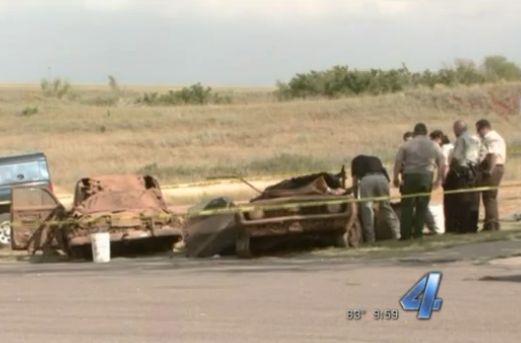
Skeletal remains of six people missing since 1969 and 1970 were found in two cars at the bottom of Foss Lake, Custer County, Oklahoma Tuesday afternoon (Sept 17, 2013) after authorities found their two submerged automobiles with new sonar they had been testing.

The first car pulled from the lake was a 1969 Chevrolet Camaro which contained the remains believed to be  of three teenagers who went missing from Sayre, OK on Nov. 20, 1970. One of the victims from that car has been identified. Police have not released the name yet pending notification of the family.

Reporters checking a Department of Justice missing person website identified the three missing teenagers as Jimmy Allen Williams, 16, Leah Gail Johnson, 18, and Thomas Michael Rios, 18.

Information on the second automobile is less clear. It’s believed to be an early 1950s Chevrolet four-door Sedan belonging to Alvie Porter, 69, who went missing with one other known person in 1969. The remains of a third person were found in the Chevrolet but police have no indications on who that individual might be.

A good, six minute video from KFOR-TV, Oklahoma City, can be Found Here. Other reports can be found at The Daily Oklahoman, and the Tulsa World.


Foss-Lake-Remains


Freshman Hazing Ends in Death, 1918

Home | Rediscovered Crime News | Freshman Hazing Ends in Death, 1918


Re-posted From: New Albany Evening Tribune, Sept. 14, 1918, page 1.

Raleigh, N.C. Sept. 14, 1918 —Upon the charge of murder, four terror stricken youths stood defendants in court, the result of the hazing of Isaac William Rand, Bon of a prominent lumberman of Smithfleld, North Carolina.

The accused are sophomores at the University of North Carolina. They took Rand from his bed and made him sing and dance until he fell from a barrel and cut his throat on a broken bottle. The accused belong to widely known families. They are Robert W. Oldham of Raleigh; A. R. Styron, ministerial candidate, of Wilmington; W.C. Merriman, Wilmington, and A. C. Hatch of Monroe.

The testimony of the court was that after they attended a reception to the freshmen by President Venable. They took Rand from his room and placed him on the barrel and forced him to sing and dance.

Robert Wellons, roommate of Rand, was also forced to dance and sing, and in a fall received slight injuries. Rand dropped from the barrel, fell upon the broken bottle, which pierced the jugular vein and carotid artery, and bled to death in ten minutes.

Two of the sophomores fled, but the other two called doctors. The boy died before a doctor could reach Rand, and at the instance of President Venable the four men were arrested. Governor Kitchin called upon President Venable to go deeply into the matter, and be prepared to give a statement at the special meeting of the trustees called for this purpose.

Unfortunately, I could find no follow-up stories regarding the fate of the four boys who were charged in this case.

—–###—–


True Hollywood Noir: Filmland Mysteries and Murders

Home | New Books | True Hollywood Noir: Filmland Mysteries and Murders


Classic True Crime, Hollywood Style

While viewers were captivated by the drama playing out on the silver screen, the lives of the stars of these film noir classics were often far more exciting. Uncover true stories of mystery and murder in a dozen different chapters featuring William Desmond Taylor, Thomas Ince, Jean Harlow, Thelma Todd, Joan Bennett, Lana Turner, George Reeves, Gig Young, Bob Crane, Natalie Wood, Robert Blake, and mobster Mickey Cohen. Included in the cast of characters of this book are Johnny Stompanato, William Randolph Hearst, Marion Davies, and Charlie Chaplin. Find never before told mob stories about Ben “Bugsy” Siegel, Virginia Hill, and a host of notorious underworld figures.

true-hollywood-noir2From 1922 until 2001, explore some of Filmland’s most fascinating mysteries, scandals and murders …true Hollywood noir lived by the players behind the scenes. From the West Coast mob and city corruption intertwining with Hollywood mysteries on and off the screen, to the plots of noir films pulled from actual happenings in the underworld, get the stories behind the stories. Get the theories behind each case in this page-turner—then draw your own conclusions as to the truth behind some of the most prominent Hollywood mysteries.

While some of this book is retelling of old tales there is new information that has come out in the last twenty years. Deathbed confessions and interviews with those finally willing to talk after the passage of time have provided updated information. Interviews I did with Johnny Stompanato’s son, Mickey Cohen’s right hand man and Gig Young’s ex-girlfriend have offered a new take on stories that films fans and true crime aficionados think they know. Each theory is explored and the reader can make up his or her own mind. I tried to give well-rounded portrayals. No subjects of my chapters are shown as all good or all bad or are portrayed as being one-dimensional.

True Hollywood Noir: Filmland Mysteries and Murders by Dina Di Mambro


Kardashian Murdered in 1916

Home | Rediscovered Crime News | Kardashian Murdered in 1916


In 1916, Newton, Massachusetts tailor Manoog Kardashian was attacked by one of his employees who stabbed him with cutting shears and bit a chunk out of his right cheek over what may be one of the dumbest reasons to assault someone. Kardashian died nine days later, but not necessarily from his wounds. I came across this story while searching another case and thought it noteworthy not just because of the last name, but for all the circumstances that surround it. Beware that newspaper reporters of the day couldn’t seem to agree on the first names of both the victim and attacker, and that the attacker’s last name changed twice.

Kardashian Stabbed, It Is Alleged, by Parmerrian, an Employee in His Newton Tailor Shop.

[Newton, Massachusetts, Dec. 16, 1916] M. Kardashian, proprietor of a tailor shop at 1157 Walnut St. was taken to the Newton Hospital tonight with a deep gash in the intestines, several wounds in the leg and cuts on the hands inflicted, it is alleged, by an employee, M. Parmerrian, aged 24, with large cutting shears. His name is on the dangerous list.

According to other employees, the men quarreled and Parmerrian rushed at his employer and slashed him with the cutting shears. Kardashian, covered with blood, ran shouting from the shop.

Sergeant Clay and patrolman Fuller helped him to the office of Dr. C.A. Thompson who pronounced his condition critical and he was hurried to the hospital.

Parmerrian was arrested by patrolman Fuller for assault with a dangerous weapon. Kardashian is married and has a family.

Source: Boston Globe, Dec. 17, 1916, page 156.

Murder is Charged
Manoog Tarmerian Held at Newton, Charged with Death of Manoog Kardashian

[Newton, Massachusetts, Dec. 27, 1916] Manoog Tarmerian, [name change] 24, was arraigned before Judge W.F. Bacon this morning in the local Police Court on the charge of murder in having caused the death of his employer, Manoog Kardashian, by assaulting him with a pair of tailoring shears on the afternoon of Dec. 16 in his tailor shop at 1157 Walnut St, Newton Highlands. Probable cause was found and he was held without bail for the January term of the grand jury.

At the hearing evidence was brought out that Kardashian died Monday [Dec. 25] from pneumonia, and not from the direct result of the several wounds inflicted by Tarmerian. Medical Examiner George L. West testified that his death was due to pneumonia, as also did Dr. Loury of the Newton Hospital staff. This, both men stated, may have been brought on by giving the man ether, which has been known to happen in medical annals.

Patrolman William E. Fuller testified to the statement made by Tarmerian to the police officials. According to the officer’s testimony, Tarmerian stated that Kardashian made some comment over the way a pair of trousers were pressed, then grabbed him about the throat and bit him on the right cheekbones. All the witnesses bore out the fact that the man had a mark on the cheek after the fracas. Others testified to the fact that Tarmerian smelt of liquor when arrested.

Source: Boston Evening Globe, Dec. 27, 1916, page 5.

Tamerian On Trial in Manslaughter Case

[East Cambridge, MA, January 16, 1917] M. Tamerian of Newton Highlands was placed on trial on the charge of manslaughter in the Middlesex Superior Criminal Court at East Cambridge yesterday. He is charged with having caused the death of employer, Mancoz Kardashian [In the previous story, his first name was Manoog] a tailor of the same city. The case is being heard before Judge Stevens and a jury and will take several days.

It is alleged that Tamerian, who is little more than 21 years of age, attacked Kardashian with a pair of scissors in a dispute over the proper way to press trousers. Kardashian died at the Newton Hospital nine days later from a wound in his abdomen. [It was pneumonia in the previous article.] Two witnesses were called yesterday, one the widow of Kardashian, and the other William J. Cozens, a real estate dealer, who occupied a store adjoining the tailor shop where the alleged assault occurred.

Source: Boston Daily Globe, Jan. 17, 1917, page 3.

Disagree On Tamerian
Newton Man Tried on Manslaughter Charge Growing Out of Kardashian’s Death

[East Cambridge, MA, January 23, 1917] The jury in the trial of Martin Tamerian [I thought his name was Manoog?] of Newton on the charge of manslaughter in connection with the death of Mancooz Kardashian [Manoog & Mancoz in previous stories], a Newton tailor by whom he was employed, disagreed yesterday in the Superior Court at East Cambridge. The case occupied three days of last week and went to the jury on Friday.

Tamerian, it is alleged, attacked Kardashian with a pair of scissors, wounding him in the thigh. The latter, the state contended, contracted inhalation pneumonia during the administration of ether for an operation made necessary by the wound. The alleged attack occurred in Kardashian’s tailor shop in Newton Highlands on Dec. 16, following a quarrel.

Source: Boston Daily Globe, Jan. 23, 1917, page 9.

Unfortunately, there were no more newspaper articles about the Kardashian case after Tamerian’s trial ended in hung jury. Although I’m not positive, I suspect Tamerian (or Tarmerian or Parmerrian) accepted a plea deal which negated the need for a second trial and follow-up newspaper coverage.

—–###—–


The Botched Execution of Eva Dugan, 1930

Home | Rediscovered Crime News | The Botched Execution of Eva Dugan, 1930


The following article might explain why the first woman executed in Arizona also became the last woman executed in Arizona. Let’s just say, it did not go as planned. She was sentenced to hang for the murder of a rancher she was employed with after his buried body was miraculously discovered 11 months after the murder. According to a Wikipedia article, she was married five times and all of her husbands disappeared. Assuming she killed them, a safe assumption, that would make her a serial killer.


[STATE PRISON, Florence, Ariz., Feb. 21, 1930, Associated Press] —Mrs. Eva Dugan, the first woman to be legally executed in Arizona, paid with her life on the gallows shortly before dawn today for the slaying in 1927 of A. P. Mathis, Tucson rancher. The trap was sprung at 5:02 a. m. As the trap clanged and she dropped more than six feet, the noose tightened, severing her head, and the body catapulted to the floor. Dr. L. A. Love, prison physician, pronounced her dead immediately.Eva_Dugan

Warden Lorenzo Wright immediately cleared the gallows room, and turned the body over to the prison physician and an undertaker. Six women witnessed the execution.

Mrs. Dugan, unshaken, calmly climbed the 13 steps to the gallows and smiled as the black hood was adjusted over her head. She said she had no statement to make.

Warden Wright clasped her hand and said, “God bless you, Eva.” Mrs. Dugan smiled and said “good-bye, Daddy Wright.”

A few seconds later the steel trap was sprung and Eva Dugan had cancelled her debt to society for the crime of which she was convicted.

Warden Lorenzo Wright created a sensation a few minutes before the hanging by revealing to newspaper men the discovery of what he believed was a plot by Mrs. Dugan to cheat gallows by taking poison before she was removed to the death chamber.

Acting on a tip that the woman had procured a poison dose, Wright said he transferred her from her prison cell to the condemned chamber about 1 a.m. A search of the abandoned cell, the warden said, led to the discovery beneath a mattress of a 2 ounce bottle of a “deadly poison.”

The bottle, he said, bore the label of a Florence drug store. A search of her person a few minutes later disclosed three safety razor blades. Wright said the woman apparently intended to commit suicide but was prevented from taking it by the vigilance of guard. An investigation has been begun to explore the source of-the poison and razor blades.

The 52-year-oid housekeeper, who was convicted of the murder of Mathis, her employer, in January, 1927 in order to gain possession of his property, spent the hours preceding her execution in the company of the prison chaplain and a few friends. Until after midnight she sat at a card table and played whist with two women friends and a woman prisoner, while outside her cell the death watch paced back and forth.

Occasionally she reached out to caress a telegram which lay on the table—a farewell message form her daughter, Mrs. Cecil Loveless, During the course of the game, Mrs. Dugan requested that her “guests,” be served with orangeade. Several minutes passed before the drink was served, and the condemned woman called to a guard: “please bring on the orangeade. I want it now. Tomorrow will be too late.”

Since early evening the sky had been overcast, and a light rain was pattering on the graveled pathway as the woman was led from her cell to the prison proper across an open-space to the death cell. She smoked a cigarette and joked with guards as she marched along and as they neared the gallows house she laughed and sang “I don’t know where I’m going, but I’m on my way.”

She kissed two of the guards who left her at the door of the death house and said: “I love everyone connected with the prison. You have all been good to me, and I can’t blame you for what the law is going to do to me.” The guards were store visibly affected than was the woman who stood in the shadow of the scaffold.

A telegram delivered to her in the condemned cell revealed a hitherto unknown chapter of her early life. The message, signed “Ada ostapple, (sic) Seattle, Wash., Read: “I sympathize with you and have the greatest admiration for your bravery and grit.”

“Ada is an old friend of the Yukon days,” Dugan said, “Probably you didn’t know it, but I was one of those who followed the gold rush into the Yukon.”

Mrs. Dugan will be buried in the prison graveyard, in a shroud of white silk which she made herself. Several weeks ago she purchased a casket and paid an undertaker to prepare her body for burial.

Her 82-year-old father, William McDaniels, of Ceres, Calif., was unable to grant her wish to be with her during the hours preceding her death. She ref used to disclose the name of her son, and the name of her daughter was not revealed until the message came from her last night.

Mrs. Dugan was convicted of murdering A. J. Mathis, an aged rancher, on the desert near Tucson, about two years ago.

Mathis was last seen alive Jan. 14 1927 about a month after he had employed Mrs. Dugan as housekeeper. A few days previously Mrs. Dugan and a mysterious “Jack,” a 17-year-old boy, left the ‘Mathis ranch and dropped from sight.

“Jack” is just a name as far as the accumulated record of three years is concerned. He appeared on the Mathis ranch a day or two before Mathis’ disappearance and has not been seen since.

Following Mathis’ disappearance, Mrs. Dugan, after attempting to sell a cow and some chickens on the ranch, left in a coupe owned by Mathis, in company with “Jack.” It is believed that this young man, whose last name has never been learned, was employed by Mrs. Dugan to drive the car.

Mrs. Dugan and the boy first went to Amarillo, Tex. where she sold the coupe for $600, signing the papers “Eva Mathis.” The boy signed “A. J. Mathis.” There Mrs. Dugan bought tickets to Kansas City.

After discovery of the body of Mathis on December 11, 1927 by J.F. Nash, an Oklahoma machinist, who had selected the precise spot where the body was buried to drive a tent stake, Mrs. Dugan was arrested at White Plains, N. Y., returned to Tucson and convicted of first degree murder. She was originally sentenced to be hanged June 1, 1928, but obtained a stay of execution upon appeal to the state supreme court Dec. 1929. The supreme court affirmed the judgment of conviction and resentenced her to be hanged Feb. 21, 1920, exactly two years from the date her trial began.

Last month an application was made to the board of pardons and paroles for commutation of the death sentence to life imprisonment. Following a hearing, by a vote of two to one, the board declined to recommend commutation.

After a jury found Mrs. Dugan sane, the board was asked for a reprieve, which was refused.

Source: Associated Press via The Prescott Evening-Courier, Feb. 21, 1930, pages 1 & 4.

eCover-small

Buy it today on Amazon! 372 pages, $3.95, Free with Kindle Unlimited!

—###—


The Blackburn Cult

Home | Rediscovered Crime News | The Blackburn Cult


Although the beliefs and practices of what is now known as the Blackburn Cult are bizarre and border on humorous, they were probably responsible for the deaths of several people for which they were never prosecuted. This included non-prosecution for manslaughter after “baking” one of their disciples in order to cure her from a blood disease.

This story is not without a bit of macabre humor. Two of the cult’s followers, a married couple, preserve the dead body of their foster daughter for almost five years. During the first year of preservation, they moved around a lot with the cult and were naturally obliged to take their daughter’s body with them. In order to transport her from one residence to the next, they propped her up in the back seat of their automobile. “The remains were so well preserved that passers-by thought they saw a living girl.”

There are four stories below which begin with the time that authorities began their investigation into the cult known then as “The Divine Order of the Royal Arm of the Great Seal,” and end with her conviction on fraud charges. After the four stories is a link to a PDF file of a March 29, 1930 Sunday newspaper feature magazine insert about the cult. It’s a little hard to read but the entertainment value is worth it. After the PDF file link, I’ve posted some links to more current information about the cult. There is also a self-published, fact-based novel written by the son of the last surviving member of the cult entitled: “The Blackburn Chronicles: A Tale of Murder, Money and Madness.” The book is available at Lulu.com .

Update on 10/16/2014: A new, non-fiction book about this cult has recently been published and is available on Amazon: “The Cult of the Great Eleven.” The author has asked me to add his comments to each story.


Story #1:

BELIEVE CHILD SACRIFICED IN RITUAL OF CULT

Find Body in Casket at Foster Parent’s, Home In Los Angeles

PRESERVED IN ICE

Expected Resurrection, Authorities Told By “High Priestess”


[LOS ANGELES, Oct. 7, 1929] —Documents of a strange religion cult were examined by the police here today in an effort to determine whether the death of Willa Rhoads, 16-year-old “High Priestess” of the organization, whose body was found in a specially made casket beneath the floor of her foster parent’s home here, was sacrificed as a part of ritual of the organization.

The Great Eleven Club cult leaders, May Otis Blackburn and her daughter, Ruth Wieland Rizzio.

The Great Eleven Club cult leaders, May Otis Blackburn and her daughter, Ruth Wieland Rizzio. Photo Source: UCLA Digital Library Collection

The foster parents, Mr. and Mrs. William Rhoads were held as material witnesses yesterday after the officers unearthed the casket containing the girl’s body and another in which were the bodies of seven dogs.

Mrs. Rhoads tearfully admitted that the girl died more than four years ago and that her body had been kept for more than a year in the hope she would be resurrected through the powers of the cult. For more than a year after Miss Rhoads’ death on January 1, 1925, the corpse had been preserved in ice, the foster mother said.

Although a preliminary examination failed to produce anything indicating the girl had met a violent death. Captain B. W. Thomason, of the police “bunco” squad voiced-the theory that her life had been sacrificed in the operations of the cult.

Police suspicion was directed to the Rhoads home’ after two other members of the cult, Mrs. Otis Blackburn, the “High Priestess,” and her daughter, Mrs. Ruth Angelina Wieland Rizzio, had been held on charges of embezzling about $50,000 from persons who had contributed to the organization which bore “the name of “The Divine Order of the Royal Arm of the Great Seal.”

The dogs had been pets of the dead girl and, according to the story old by Mrs. Rhoads, represented the seven tones of Gabriel’s trumpet, which the cultists expected to proclaim “resurrection morn.”

The investigation was started- at the request of Clifford R. Babney, wealthy Venice, Calif., oil operator, who charges that after becoming a member of the cult he advanced approximately $40,000 to Mrs. Blackburn pending the completion of a book she was writing, to be known as “The Sixth Seal,”‘ and upon which the colony based its beliefs

Mrs. Blackburn’s arrest on an embezzlement charge disclosed activities of the cult, which brought revelations leading to the discovery of the girl’s body.

Her husband standing silently by Mrs. Rhoads told investigators that her stepdaughter had died of diphtheria January 1, 1925. Believing she would be resurrected, the body was placed’ in a copper lined casket made by Mr. Rhoads, packed in ice and for more than a year transported from one dwelling to another as the family changed residences. Despairing of the resurrection that never came, Mrs. Rhoads told officers that the burial took place Feb. 10, 1926.

Source: Associated Press, Oct. 7, 1929

Update on 10/16/2014: Comments & Clarification from author of a book on this cult.

The specially made caskets were cedar and lined with copper.  Willa’s stepfather soldered the joints to make them airtight.  He and a companion spent two days creating what amounted to a compact but reinforced burial chamber beneath the floor of the bedroom, i.e., they didn’t just dig holes and place the coffins in them.  It was a bit more elaborate.

Willa was preserved on ice for 14 months and then interred beneath the floor at the Venice cottage.  It took 600 pounds of ice a week to preserve Willa’s body (no one had household freezers back then). She was only transported once “upright” in a car – the day she died, and then she was wrapped in a blanket.  During every other move she was in her coffin.  The press made up the whole bit about her frozen body being moved around propped upright in a car – it sold papers.

Story #2

Los Angeles,  Oct. 9, 1929 (AP)] —Los Angeles authorities today attempt to ascertain whether four missing women, all purported members of the religious cult known as “The Divine Order of the Royal Arm of the Great Seal,” are dead, and if so what caused their deaths and what disposal was made of their bodies.

The body of 16 year-old Willa Rhoads, [the caption below says 19] described as a priestess of the sect was found Sunday in casket under the flooring of a house occupied by her foster parents Mr. and Mrs. William Rhoads, cult members. Investigation of the circumstances of her death and burial both indicated she died of natural sauces, but a chemical analysis of the body is being made.

Blackburn Cult 1

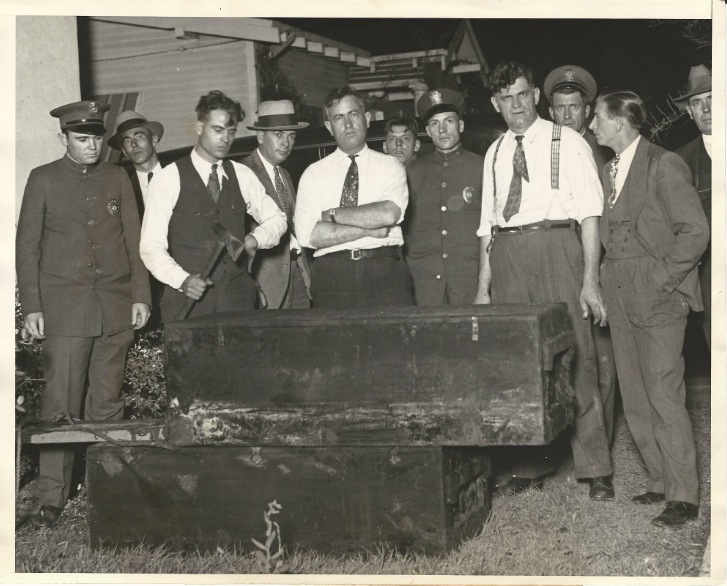
AP photo dated Oct. 7, 1929. Caption: The caskets of Willa Rhoads, 19 year-old princess of The Divine Order of the Royal Arm of the Great Seal, whose body was buried under the home of her foster parents, and of the seven dogs (in the other casket) which were buried in the same grave as part of the cult practices. – Photo donated to HCD by “Deb.” -Click to open larger photo in new window.

Members of a colony maintained by the religious order in the Santa Susana Hills hills north of here, were being questioned regarding the reported deaths of Frances Turner, Harlene Sartoris, Katherine Bolz and Addle McGuffin. Investigators say they have evidence to indicate ‘the women are dead and are attempting to learn in what manner they died and where they are burled.

Mrs. May Otis Blackburn, head of the cult, her daughter, Mrs. Ruth Angeline Welland-Rizio, and Mr. and Mrs. Rhoads wore held In the Los Angeles county jail until completion of the investigation of the reported deaths, the burial of Willa Rhoads, and charges of embezzlement made by Clifford Dabney, Long Beach oil man against Mrs. Blackburn and Mrs. Welland-Rizio.

Source: Associated Press, Oct. 9, 1929

Update on 10/16/2014: Comments & Clarification from author of a book on this cult.

Detective Frank Condaffer, homicide, is the man in the suspenders behind the casket in the photo on your site.  He investigated the Great Eleven and was also one of the detectives Margaret Rowen, another cult leader, turned herself over to in 1927, after arranging for the death of one of her former supporters.

Frances Turner was paralytic and unable to speak.  She died after being “treated” in a cult-created stone oven for two days.  Harlene Satoris had come to the Great Eleven after having been released from an asylum in Oregon, having both medical and mental issues.  She died from either a gastric illness or heart troubles on colony grounds  Katherine Bolz was never found – and may have never existed. There are no records of her anywhere, aside from newspaper articles.  No family, census records, etc.  Addie (not Addle) McGuffin reappeared in the 1930s and rejoined the cult.  No one knows where she was off to, though she was supposedly charged by the cult to hide the only draft of the Sixth Seal from authorities.

Story #3

[Los Angeles, March 3, 1930] Mary Otis Blackburn, organizer and high priestess of the Divine Order of the Royal Arm of the Great Eleven, a religious cult, today awaited sentence on eight counts of grand theft.

The woman, whose “concord” in the cult was that of “the North Star,” was convicted yesterday by a jury which had deliberated since Friday. She was ordered to jail. Her attorney has not revealed whether he will appeal the case. The penalty under California law is from one to 14 year in the penitentiary for each count.

The high priestess received the verdict with compressed lips. Her daughter, Mrs. Ruth Wieland-Rizzo and Mrs. Blackburn’s aged father wept.

The grand theft charges grew out of a complaint by Clifford Dabney, wealthy oil operator, that the cult leader had bilked him out of $40,000. He testified she obtained the money from him to finance the writing of a book to be known as “The Great Sixth Seal,” which she told him was being dictated by the Archangels Gabriel and Michael.

Dabney testified Mrs. Blackburn told him that the book would reveal sources of untold wealth in oil and mineral deposits.

Upon her promise to reveal the secrets of the book to him three years before it was distributed to the public, he said he agreed to finance it.

Dabney made his complaint to the district attorney last October. An official inquiry into the activities of the cult began immediately and resulted in the discovery of the body of a young priestess, Willa Rhoads, buried beneath the floor of her foster parent’s home. The girl had been dead three years, but the body was not buried until 1926 as Mrs. Blackburn told the foster parents the competition of “The Great Sixth Seal” would result in her resurrection.

Miss Rhoads body was preserved with ice, salt and spices. In the grave were found the bodies of seven dogs symbolizing the seven notes of Gabriel’s trumpet. The girl’s parents Mr. And Mrs. William Rhoads testified that burial was made when they lost faith in Mrs. Blackburn. An autopsy revealed the girl died of natural causes and no action was taken.

Source: Associated Press

Story #4:

[Los Angeles, March 14, 1930] Mrs. May Otis Blackburn, cult leader, yesterday was sentenced to one to 10 years in San Quentin penitentiary for the grand theft of $45,000 from Clifford Dabney, oil operator and cult follower.

A writ of probable cause was granted by superior court permitting her to remain in the county jail pending an appeal. A motion for a new trial was denied.

Mrs. Blackburn was accused of obtaining the money from Dabney on false representations that angels were aiding her in writing a book which would reveal the location of vast mineral deposits on the earth.

Update on 10/16/2014: Comments & Clarification from author of a book on this cult.

May Blackburn was released on appeal in 1931 by the California Supreme Court, which ruled, among other things, that the cult deaths and disappearances brought up during her trial were inconsequential to the fraud charge against her, and so prejudiced the jury.  There was also the question of religious freedom, the court ruling that as an American, anyone is free to give away as much money as they want to whatever religious leader they want, and if they are of sound mind, they can’t say they were defrauded.

Samuel Rizzio, May Blackburn’s son-in-law in 1924, disappeared after an altercation with his wife, Ruth.  There was circumstantial evidence he was poisoned during a subsequent cult ceremony, but since a body was never found, no charges were ever pressed against any member of the cult.  His brother, Frank, actually managed to convince May Blackburn to give him a job driving for her, and then spent his free time snooping around trying to collect clues on his brother’s death.  He actually found some, but to no avail.

The cult practiced frequent dog sacrifice, but also sacrificed mules and other animals.  It also sacrificed cars and trucks.  Its ceremonies and beliefs were about as odd as you can imagine.

Story #5

PDF Link: http://www.historicalcrimedetective.com/pdf/Blackburn-Cult-March29-1930-Feature-Story.pdf

Links:

Divine Order’s Tale Smacks of Cult Fiction

Wikipedia – The Blackburn Cult

—###—


1907 Med Students use Fresh Grave for Anatomy Lab

Home | Rediscovered Crime News | 1907 Med Students use Fresh Grave for Anatomy Lab


1907-anatomy-classLike many of the stories I run across, I cringe when I read them because they just seem too  ghoulish or graphic. But then I think, ‘well, this is the way it was and it’s better to be honest with this history than hide it.’ That’s how I came to decide to post this story. As gruesome as this story is, we also have to think in the context of the times since there were no plastic anatomical models, and very few donations made available from local morgues. There were several good anatomy books available, like “Gray’s Anatomy of the Human Body” with colored illustrations, but that was for adults.  It’s apparent from this story that medical students studying pediatrics were DESPERATE. If this work was NOT done by medical students, well, then the whole thing is just something that can hardly be imagined.


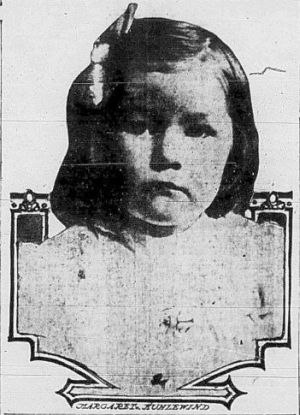
[August 26, 1907, New Jersey] Detectives are working on several theories today with a view to discovering the fiends who desecrated the grave of little Margaret Kuhlewind, eight years old, in the cemetery at Bernardsville, New Jersey and mutilated the body.

The child was killed Aug. 14 in an automobile accident when Grant Schley’s machine, which had been taken out without its owner’s consent by Thomas Clarke, the chauffeur, collided with a pole and killed the child and Clarke and badly injured three others.

A few hours after the burial the grave was opened, the coffin forced out and the body taken out and horribly mutilated. Thrown back into the casket without even smoothing the shroud over the mutilated body, the coffin was lowered into the grave and the dirt hastily piled back.

The police believe that more than one (person) took part in the ghoulish work and lean to the theory that medical students did it.

Superintendent’s Discovery

Margaret Kuhlewind

Margaret Kuhlewind

Margaret was buried on the afternoon of Aug. 17 in the cemetery of St. Bernard’s Episcopal Church, which has a wealthy and fashionable congregation at this season. The cemetery’s superintendent banked on her grave the many floral designs that were sent so the highest pieces were at the head of the grave.

The day after the funeral the superintendent saw that the flowers had been disarranged. Investigation showed that the grave had been tampered with.

He (the cemetery caretaker) summoned William L Bonfield, one of the church’s Cemetery Committee, who agreed that an attempt at least had been made to open the grave. But they decided before going further to await the return to his residence at Bernarndsville of Richard V. Lindabury, a leader of the New Jersey bar, who is chairman of St Bernard’s Cemetery

Mr. Lindabury returned Saturday and Margaret’s grave was opened in the presence of her father, Mr. Mr. Bonfield and Isaiah Power, the undertaker who prepared the body for burial.

Reburied Feet First

The girl’s body was curled at the foot of the casket. Plainly, when the coffin was put in the grave again, it was lowered foot first. There were unmistakable signs that the body had been placed on the casket lid, which was used as an extemporized dissecting table.

The burial clothes had been ripped open in front with a very sharp knife which, it seemed, was in the hand of a man who has knowledge of anatomy.

When the body was returned to the coffin not even an attempt was made to smooth the disordered garments.

Will Hunt Them Down

Mr. Lindabury said today that neither effort nor money would be spared to apprehend the perpetrator.

As no medical men were present when the body was disinterred, it is probable that an examination will be made by physicians for the purpose of having expert testimony in case the culprits are caught.

It is reported that two medical students from New York or Philadelphia were boarding near Bernardsville at the time of the accident and that when they left one carried a mysterious looking jar. The police are believed to be seeking them to ask a few questions.

Source: The New York Evening-World, Aug. 26, 1907, page 5.

—###—


The False Confession of a “Mercy Killer” Nurse

Home | Rediscovered Crime News | The False Confession of a “Mercy Killer” Nurse


 Over-Zealous Newspapers Quick To Play Up Story

2 day Interrogation Leads to False Confession

Police Tactics Criticized

[Note: Versions of the following three stories appeared in 80 newspapers for the newspaper archive database I used in this case. That doesn’t mean that only 80 newspapers published this story, it only means of the newspapers the archive service happens to have collected in their database, 80 of them covered versions of the following three stories. Keep this in mind when you get to Story #5 & 6.]

Story #1: December 16, 1935, Woonsocket, Rhode Island
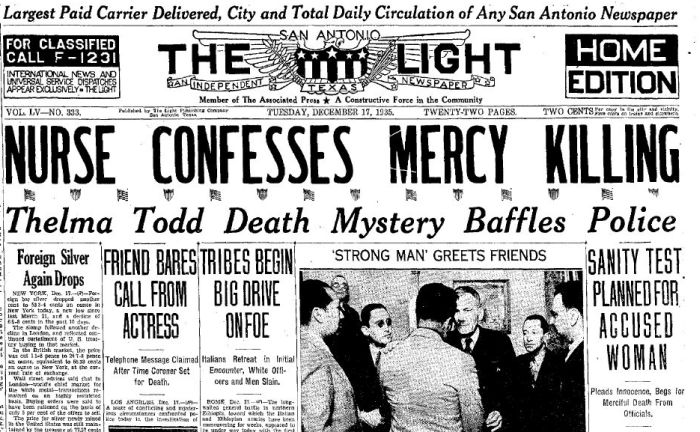
A Manchester, NH practical nurse confessed tonight, police said, to the “mercy killing” last Wednesday of Mrs. J. Valmore Normandin, 47, wife of a former city auditor here.

Marie Simone Sevigny, "The Mercy Killer" Nurse

Marie Simone Sevigny, “The Mercy Killer” Nurse

FACES MURDER CHARGE

The nurse, Marie Simone Sevigny, 26, who had been attending the victim from Dec. 2 until her death, was arrested and will be arraigned tomorrow on a murder charge, authorities said.

Later, authorities disclosed that for three months prior to Dec. 2, the same nurse had attended a Mrs. Frank Prince of East Douglas, Mass., who died December 1, reportedly of diabetes and tuberculosis. Massachusetts state-police hurried here to question, Miss Sevigny regarding her connection with Mrs. Prince’s case.

TO TEST SANITY               

Miss Sevigny, according to police, confessed she gave Mrs. Normandin an ammonia solution because she allegedly wanted to put the patient out of her suffering and because she “considered it a merciful thing to do.”

Authorities said alienists [an old word for psychiatrist] would examine the nurse to establish her sanity.

The nurse had been held for questioning while medical authorities performed an autopsy on the body of Mrs. Normandin, which was exhumed late today after Mr. Normandin became suspicious of circumstances surrounding his wife’s death.

DOCTOR REPORTS SUICIDE

Police said that shortly before her death, the victim was found moaning and in semi-conscious condition by a son who had returned from school.

They revealed that a partly filled bottle of ammonia was found behind a radiator in an adjoining room. In the death certificate, Dr. S. Edgar Tanguay, Woonsocket medical examiner, had reported that Mrs. Normandin’s death was “due to drinking of a solution containing ammonia, causing a lung congestion which brought on death apparently suicide.”

Normandin became suspicious, it was said, because he claimed his wife never had talked of death nor hinted suicide.

Physicians said Mrs. Normandin had been suffering from a natural illness common to women of her approximate age.

Source: United Press

——————

Story #2: December 17, 1935, Woonsocket, Rhode Island

Big Headlines Appeared In Newspapers Across the Country, the story was even bigger than a story on actress Thelma Todd

Big Headlines Appeared In Newspapers Across the Country. The story of the mercy killing nurse was even bigger than a story on actress Thelma Todd.

While she was on the verge of collapsed and unable to appear in court a plea of not guilty was entered today for Marie Sevigny, 26, dark-eyed practical nurse charged with administering a lethal dose to a patient under her care,

Having confessed, according to police who subjected her to a two day grilling, that she mixed a deadly potion for Mrs. Valmore Normandin, 47-year-old wife of a former city auditor, Miss Sevigny was almost carried into the courthouse,

Police Surgeon Myers, called to examine her, said her pulse was so weak she could not be given a stimulant nor permitted to face regular arraignment.

Attorney Louis Galberg entered the plea to a charge of murder. Henry A. Roberge, clerk of courts, accepted the plea and Dec. 27 was set as the date of hearing.

Miss Sevigny was ordered committed to the Providence County jail at Cranston.

Deputy Chief of Police John E, Crowley said Miss Sevigny confessed last night she killed Mrs. Normandin and an immediate investigation of three other former patents, including that at East Douglas, Mass., of Mrs. Frank Prince,

Crowley said the woman admitted she had administered cleaning fluid to Mrs. Normandin, who died last Wednesday.

The officer said the other deaths to be investigated had occurred in families in this city and In East Douglas, Mass., where Miss Sevigny had been employed.

The nurse, according to Crowley, had clippings and a snapshot pictured of the four persons who died, and pictures of members of other households where she had worked. Quoting her confession, Crowley said Miss Sevigny admitted administering knowing the fluid would kill Mrs. Normandin.

Asked why she had administered the dose, Crowley said she replied to ‘calm her down.” Later, he said, she explained to “take her sat of her suffering.”

Source: Associated Press

—–

Story #3: December 17, 1935, Woonsocket, Rhode Island

Reclining on a couch in an ante-room of Twelfth District court, Miss Marie Simone Sevigny, 26, unregistered nurse, today was formally charged with the ammonia “mercy killing” of one of her patients, Mrs, J. Valmore Normandin, 45, wife of an auditor of the division of intoxicating beverages.

Asked to plead, the defendant, who had cried for a “mercy killing” for herself, moved her lips with the words “not guilty.” She sank into the arms of the police matron, Mrs. Lydia Young.

Miss Sevigny, suspected by police of being a second Jane Toppan, ,who in 1901 while morbidly Insane allegedly killed 31 patients in Rhode Island, Massachusetts and New Hampshire, was removed to the state institution at Cranston, to be examined by alienists.

Earlier in her cell at police headquarters, she screamed: “I can’t stand it. I can’t stand it. I want to die. Be merciful to me. Why don’t you let me die? Be merciful to me.”

Extra guards were posted at the cell of the nurse to balk any possible suicide attempt.

One of her sisters is an inmate of the state hospital at Concord, N. H., and another sister died there a year ago.

”I killed her because I couldn’t bear to watch her awful suffering and I wanted to help her.” That, according to police, was the reason the nurse gave for administering ammonia to Mrs. Normandin, sufferer from nervous trouble.

Other death cases being investigated were those of Mrs. Arthur Genlinas, Mrs. Jacob Kane and Mrs. Prank Lancot, all of this city.

Massachusetts authorities were probing the death of Mrs. Frank Prince, of East Douglas, Mass. Police said Miss Sevigny was nurse in these cases. The bodies of the Woonsocket women will be exhumed.

Source: International News Service

——————

Story #4: December 27, 1935, Providence, RI

The District Court hearing of the murder case of Marie Simone Sevigny, 26 year-old unregistered nurse and self-styles “mercy killer” was postponed today until Jan. 10.

Miss Sevigny, accused of killing Mrs. J. Velmore Normandin, 47, of Woonsocket with poison, was to have appeared in court at Woonsocket tomorrow. Attorney General John E. Donley reported he had not completed his examination of the nurse.

Story #5: January 10, 1936, Providence RI

Note: According to the newspaper archive database I used in this case, the following Associated Press story only appeared in two newspapers.

A grand Jury here today refused to charge a dark-eyed young nurse with the murder of her patient.

Police Inspector Leo Vanasse, of Woonsocket, announced a month ago that the nurse, 26 year-old Marie Sevigny told him she administered a caustic agent to Mrs. L. Valmore Normandin, 47, to end her suffering.

The grand jurors said that, in their opinion, the patient, Mrs. Normandin, wife of an auditor for the state alcoholic beverage commission died Dec. 11 of poison which she administered to herself.

And the jurors had this to say regarding the police:

“Apparently proceeding on a premise that there was no question about Miss Sevigny’s guilt, they did not bother to find out whether or not there was any testimony other than that used to build up their own case.

“We deplore the fact that the young woman, whom we all believed to be innocent of any criminal action, has been branded by sensation-seeking newspapers and a careless police department as a murderer.

“We believe that, the methods to gain her ‘confession’ should be not part of the procedure of a civilized police department in these days and we hope that our long and carefully considered action in thus freeing Miss Sevigny from the stigma attached to her, may, in part, at least, bring about a favorable reaction from the public.

Source: Associated Press

Story #6: February 6, 1936, Providence. Rhode Island

The Rhode Island General Court was asked today to compensate Marie Sevigny, formerly of Manchester, NH, in the amount of $5,000 “for damages arising from her false arrest and incarceration” in connection with the death in December of Mrs. J.V. Normandin. Miss Sevigny, a practical nurse, was exonerated last week by a grand jury.

 —–###—–