
True Crime Books by Jason Lucky Morrow

Welcome to HistoricalCrimeDetective.com [Est. 2013], where you will discover forgotten crimes and forgotten criminals lost to history. You will not find high profile cases that have been rehashed and retold ad infinitum to ad nauseam. This blog is the official website for true crime writer Jason Lucky Morrow, author of four books including the popular series: Famous Crimes the World Forgot, Volume I and Volume II. If you would like to send me a comment, Contact Me Here. - Please follow this historical true crime blog on FACEBOOK.

Mug Shot Monday! Theodore Coneys, the Spiderman of Denver, 1941

Home | Mug Shot Monday | Mug Shot Monday! Theodore Coneys, the Spiderman of Denver, 1941
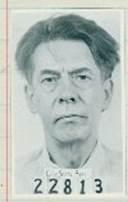

Theodore-ConeysTheodore Coneys was born November 10, 1882 in Petersburg, Illinois to T. H. Coneys, a Canadian immigrant who owned a hardware store in Petersburg, and his wife. After the elder Coneys died in 1888, Mrs. Coneys and her son moved to a farm near Beloit, Wisconsin, then to Denver, Colorado in 1907, where she worked as a housekeeper at the Denver Democratic Club. She died in 1911.

Coneys suffered from poor health and had been told by doctors not to expect to see his 18th birthday, so he did not finish high school. As an adult, he worked as a bookkeeper at the Denver Brass Works and in advertising and sales, yet spent much of his adult life homeless. Coneys resented the way he was treated by others for his frail condition, later expressing that he wanted a place where he could be alone and free from the judgment of others.

Criminal career

In September 1941, 59-year-old Theodore Coneys intended to ask former acquaintance Philip Peters for a handout at his home on 3335 West Moncrieff Place in Denver, Colorado. Coneys broke into the house in Peters’ absence to steal food and money. In the ceiling of a closet, Coneys found a small trapdoor that led to a narrow attic cubbyhole and decided to occupy the small space without Peters’ knowledge. Coneys lived in the house undiscovered for about five weeks.

On October 17, 1941, Peters discovered Coneys standing at the refrigerator looking for something to eat. Peters struck at Coneys with a cane he carried, but Coneys clubbed him with an old pistol he had found in the house. After the gun broke apart, Coneys continued the assault with a heavy iron stove shaker and bludgeoned the 73-year-old Peters to death. Coneys then returned to the attic cubbyhole.

Peters’ body was discovered later the same day after a neighbor, concerned Peters had not come by for dinner, called the police. The police found all of the home’s doors and windows locked, and there was no other sign of forced entry. They noted the trapdoor but believed a normal-sized person could not fit through it. Peters’ wife, who had been in the hospital recuperating from a broken hip during and prior to Coneys’ occupation of the attic, returned to live in the house with a housekeeper. Both women would often hear strange sounds in the house. The housekeeper resigned after becoming convinced the house was haunted and Mrs. Peters moved to western Colorado to live with her son.

Coneys remained in the vacant house with the occasional signs of his occupation written off as an apparition or local pranksters. Police continued to make routine checks, when on July 30, 1942, one of them heard a lock click on the second floor. Running upstairs, the police caught the sight of Coneys’ legs as he was going through the trapdoor and pulled him down. He was taken into police custody and confessed to the crime.

Local newspapers dubbed him the “Denver Spider Man of Moncrieff Place” after police detective Fred Zarnow remarked “A man would have to be a spider to stand it long up there.” Coneys was tried and convicted, then sentenced to life imprisonment at the Colorado State Penitentiary in Cañon City, Colorado.

Death

Theodore Coneys died on May 16, 1967 at the Colorado State Penitentiary prison hospital. He was interred at Mountain Vale Cemetery in Cañon City.

Additional Story

Here is a link to another article about him being featured on the Travel Channel’s Mysteries at the Museum.

http://www.canoncitydailyrecord.com/ci_25547308/travel-channel-shoots-mysteries-at-museum-segment-at

—-###—-


New Book Uncovers Early 1900s Serial Killer

Home | New Books | New Book Uncovers Early 1900s Serial Killer


Cold-Serial

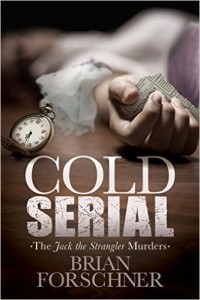
Cold Serial: The Jack the Strangler Murders by Brian Forschner, investigates a century-old series of murders and the deranged offender who committed them.

In the early 1900’s, a string of heinous crimes took place in the town of Dayton, Ohio. Five young girls were raped and brutally killed. In an era when women lacked rights and esteem in society, the victims were blamed and overlooked by police. Sadly, the crimes went unsolved, and the perpetrator was never brought to justice. In Cold Serial: The Jack The Strangler Murders, author and researcher Brian Forschner reopens a century-old case and goes on a quest for the truth.

Using criminological research and forensic evidence, these five murders are strung together and proven to be committed by one of the very first serial killers in the United States. Forschner attempts to solve the case by utilizing modern-day analysis, and simultaneously demonstrates the politics involved in the justice system both then and now. He proposes a suspect, embraces the challenge of placing him at each crime scene, and in turn gives voice to the victims that were tragically silenced in the past.

Cold Serial is a narrative non-fiction that reads with as much intrigue and suspense as a mystery novel. Riveting and fast-paced, this true crime book will appeal to thrill lovers and history buffs alike. With a mission to solve a long-since cold case and bring justice to the victims, the twists and turns and cold hard facts keeps readers on the edge of their seats dying to know what really happened way back then. By telling these women’s stories, Cold Serial: The Jack The Strangler Murders brings justice to victims of the past and lays the groundwork for understanding social issues facing women today.

About the Author: Brian E. Forschner, PhD, has a unique voice that has been shaped by many different experiences in his life, including seminary training, the operation of halfway houses, and university teaching. More recently, Brian has been involved in the building and operation of affordable housing for families and elderly Americans, retirement and nursing homes, home health, and post-acute services for a major health system. During his career his role has spanned from one of minister, teacher, writer, counselor, and consultant, to CEO. His passion is social justice. Today, Brian lives in Cincinnati, OH.

—###—


DNA Evidence in 1984 Murder Leads to Suicide by Criminologist

Home | Rediscovered Crime News | DNA Evidence in 1984 Murder Leads to Suicide by Criminologist


Like everyone here, I’ve read many good crime stories over the years but this one, by James Vlahos for The Atlantic, is one of the best.

Two gruesome murders from 1978 and 1984 are seemingly related and lead police to three good suspects who all go on to commit suicide. There are about five or six left turns in this article and at the end, you will have to make a decision about an unlikely suspect on your own.

It raises good questions about contamination of DNA evidence and law enforcement’s faith in its purity when it serves their agenda. However, DNA experts themselves disagree with that notion and declare contamination, especially in the 1980s and 1990s, was more prevalent than we like to think.

Read Story

—###—


Excellent Police Work Solves 1919 Murder
Nichan Martin Executed in Arizona 1921

Home | Short Feature Story | Excellent Police Work Solves 1919 Murder
Nichan Martin Executed in Arizona 1921


During the late evening hours of October 4, 1919, a shepherd tending a flock east of Seligman, Arizona, discovered the smoldering, badly burned body of a man behind a small hill located one hundred feet from the transcontinental road known at the time as the National Old Trails Road. The following day, he reported the find to his employer who then notified authorities.

When Yavapai County lawmen investigated the scene, they determined the victim had been shot in the back, wrapped in a blanket, dragged behind the hill, and set on fire in attempt to obscure his identity.

Although the clothing was nearly destroyed and the body charred and unrecognizable, authorities found a Canadian military button with the serial number “400754” and determined the unknown male was wearing his Canadian uniform when he was killed. Inside of his puttees, that were tightly wrapped around his ankles and calves, (the easily identifiable hallmark of American and Canadian soldiers during World War I), they found $60 the murderer had missed.

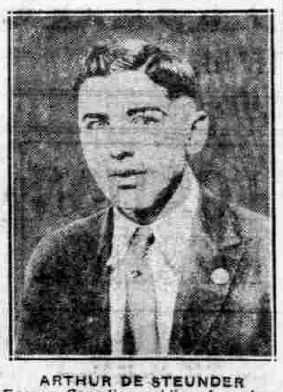
Arthur-De-Steunder2With no identification and only the serial number on the button to go on, Arizona authorities wired the Canadian identification bureau which checked their records and reported that a button with that serial number on it was issued to Arthur De Steunder. According to his Canadian military records, De Steunder had stated that his family lived in Chicago, but he listed no address for them.

Undeterred, Chicago authorities ran advertisements which appeared on movie screens throughout the city. This quickly led to the location of several of De Steunder’s family members, including his wife who was in the process of divorcing him.

De Steunder’s sister-in-law described to a Chicago Daily Tribune the peculiar circumstances by which he had recently left Chicago.

“He answered an advertisement about a month ago and met a man who offered him $10 a week and expenses to make a car trip throughout the western United States,” his brother’s wife reported. “The purpose of the journey was kept a mystery. They spent several days getting ready in Chicago and then departed. We didn’t like the man’s looks. Arthur’s sister met this man and warned Arthur against going.”

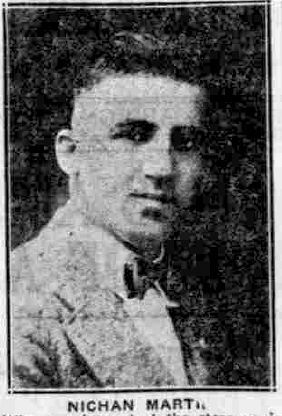
The man who placed the newspaper ad was Nichan Martin, a twenty-five-year-old Armenian immigrant from Turkey who had immigrated to the United States in 1912, and fortified his American citizenship by volunteering as a soldier during World War I.

By interviewing business proprietors along the continental road that stretched through Holbrook to Kingman, near the California border, investigators found witnesses who had seen the two men travelling together. On September 25 both men were arrested near Holbrook and held in jail for observation after a local store was robbed. They were released a few days later for lack of evidence. According to observers, Martin’s face was unforgettable because of his oddly shaped cranium, and a crimson port-wine stain on his cheek.

On the night of October 4, Martin had registered at a local hotel and signed his name, hary Diyer (sic), a clear sign to others the strange man didn’t know how to spell an alias he was trying to use to some unknown advantage. [Common enough first and last names that should have been spelled Harry and Dyer.]

hary Diyer made quite an impression on hotel guests and employees by telling anyone who would listen, and even those who didn’t want to listen, that he had made the journey from Rhode Island in his Hudson automobile alone, and that he could find no one who wanted to travel with him.

“Martin’s talk around the Kingman hotel, according to witnesses, all centered about the impossibility of getting a companion for his long automobile ride across the country, and his standing offer to take anyone along who would pay for the fuel and oil for his machine,” a Prescott weekly newspaper reported. “It is said that his insistence on this topic created some talk among the Kingman hearers, who wondered why the traveler should have found it so difficult to pick up a companion.”

With Kingman located only sixty miles west of where the body was found, authorities calculated that Martin murdered De Steunder sometime during October 4, possibly during the early morning hours. The body was then found later that day by the shepherd.

Nichan-Martin2After he left Kingman, Martin travelled to his home in Yettem, California where detectives tracked him down. He was arrested on October 15, just nine days after De Steunder’s body was first discovered. Besides the victim’s Hudson Six automobile, Martin was also in possession of De Steunder’s luggage, military discharge papers, and a bravery medal. Despite having these items, Martin claimed that he and De Steunder had parted company near a small town 100 miles east of Prescott, Arizona, and that he had not seen him since.

As Martin was being transported by rail to the county jail in Prescott, Arizona, he was able to escape near Needles when the train stopped to allow passengers to dine in a railroad affiliated restaurant. Since it was evening, and the countryside was wide open desert, Sheriff Warren Davis postponed tracking him down until morning, but telegrammed nearby lawmen, railroad personnel, and several local men’s groups to be on the lookout for Martin.

With the help of a local expert tracker, Martin was easily located the next morning twelve miles west of town near the railroad tracks with a bullet in his buttock. He claimed he had been shot by members of the Santa Fe train crew. When the train crew was questioned, they claimed it was an automobile party traveling along the highway near a point where the tracks and the road run parallel.

It was never made clear who actually shot Martin, and from newspaper reports, the authorities didn’t seem to care.

Martin went on trial in Prescott on March 25, 1920. Four days later, he was found guilty of first-degree murder and sentenced to hang. His court appointed attorney filed an appeal which was eventually denied by the state supreme court and an execution date was set for June 10, 1921. Through legal motions in state courts that were all denied, Martin’s execution was pushed to Friday, September 9, 1921.

In his final days, Martin was calm and resigned to his fate. At what was probably two or three o’clock in the morning that Friday, Martin was awakened in his death cell at the state penitentiary in Florence, Arizona, and served a hearty breakfast which he ate.

At five o’clock, Warden Thomas Running appeared at his cell to read the court’s death mandate. Martin was then blindfolded, and led to death chamber where he mounted the steps to the scaffold with ease and took his place over the trap door.

“Straps were placed about his legs and arms and then Capt. Thomas H. Rynning, superintendent of the prison, asked Martin if he had anything to say.

“I am the happiest man in the world,” Martin replied in broken English. “Best regards to everybody, good-bye.”

The prison chaplain embraced the condemned man and bid him good-bye. The black hood was then adjusted and the trap sprung at 5:08. Martin hung there for a full twelve minutes before the prison physician pronounced him dead. He was buried in the prison cemetery.

Several weeks after Martin’s death, an Arizona newspaper confirmed that the two men were financing their excursion across the Southwest by robbing businesses along the way. Martin may have murdered De Steunder over a falling out regarding the spoils of their crimes, or to silence him.

Arthur-and-wife

—###—


Mug Shot Monday, Jimmy Pasta, 1940

Home | Mug Shot Monday | Mug Shot Monday, Jimmy Pasta, 1940


Guest post by Diarmid Mogg.

Diarmid Mogg is a Scottish parliamentary reporter who runs Small Town Noir, a website of old mug shots from New Castle, Pennsylvania, and has launched a crowdfunding campaign at https://unbound.co.uk/books/small-town-noir to publish a book of the mug shots and the true-life stories behind them.

Jimmy Pasta

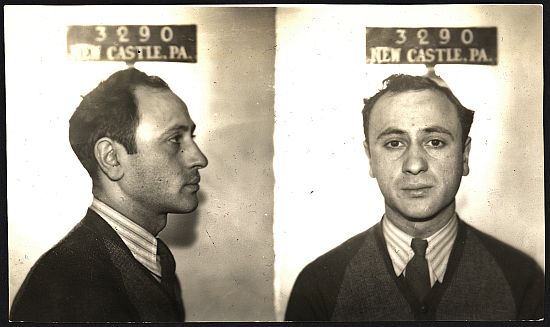
Jimmy Pasta made his money running illegal numbers games. He called himself a bill collector. He was arrested from time to time on gambling-related charges, staying out of jail by paying hundreds of dollars in fines. His mug shot dates from one such incident, in March, 1940.

Six months later—just after three o’clock on the nineteenth of September—Jimmy was sitting in his car in Ellwood City, western Pennsylvania, when he saw the chief of police, Ernest Hartman, stop a car on the bridge over the Connoquenessing creek and open fire with his Tommy-gun when three men got out holding revolvers. One of the men fell to the ground and was dragged back into the car by the other two. They drove off while Hartman was re-loading his gun.

An off-duty police officer, Ed Shaffer, got into Jimmy’s car and told him to follow the men. He did what he was told.

Earlier that month, three ex-convicts who had met in Rockview penitentiary—Virgil Evarts, Albert Feelo and Kenneth Palmer—broke into Rohrer’s gun store in New Castle and stole twenty revolvers, five rifles and dozens of boxes of ammunition. They had already robbed an insurance office in Farrel of $400, and planned to use the guns in a series of heists in small banks across western Pennsylvania.

On the day Jimmy saw them, they had held up a bank in Harrisville, twenty miles away, making off with around $2,300. Police in the surrounding towns had been told to look out for their car, a black 1939 Buick club coupe. They had driven south through Ellwood City, where the chief of police had been waiting with his Tommy-gun. All three were wounded by Hartman. Evarts was the least badly hurt, with just two bullets in his chest. Palmer was wounded in both legs. Feelo’s spine was shattered and his lungs were punctured. His legs were torn up.

Fifteen miles out of town, their car ran off the road. Evarts stopped a passing car and forced the driver and his passenger out. Feelo and Palmer were being moved into the new car when Jimmy and Shaffer, both unarmed, drew up. Evarts ordered them at gunpoint to help them carry the wounded men.

Later that day, Jimmy told a reporter what happened next. “They said all seven of us couldn’t ride in that old car. I’ve read enough gangster stories to be plenty scared by that.” He saw Evarts put the rifle on Palmer’s lap and walk around to the driver’s side. “The car was between us and I figured it was now or never. I grabbed the gun from Palmer and pointed it at Evarts. He made a move like he was going for a gun and I fired through the window at him. He fell over the hill. Then I climbed down the hill where Evarts was moving, trying to get up. I hit him over the head with the gun and he passed out.”

He returned to the road to find that Shaffer had found a wrench and had beaten Palmer over the head until he was unconscious. The chief of police arrived in time to disarm Feelo, who was weakly trying to raise a revolver to shoot.

Evarts died when Jimmy hit him. His skull caved in. Feelo died in the hospital a day later. Palmer was sent back to Rockview penitentiary.

Jimmy was given a plaque and a gold Gruen wristwatch, which never ran. He took it to the jewelers to be repaired, but they said there was nothing wrong with it. He kept the plaque, but got rid of the watch.

Jimmy eventually quit running numbers. He became a sales manager for a furniture store and was elected head of Ellwood City’s Sons of Italy lodge, a post he held for most of the sixties. He died in 1991, at the age of seventy-five.

 —-###—-


August Maternity Leave

Home | Uncategorized | August Maternity Leave


August Maternity Leave (or whatever they call it for men). Paternity Leave?

For those of you that have known me awhile, last November my wife and I tried IVF to get pregnant. With only one good embryo, it worked. Tomorrow evening, our OB/GYN will induce labor and our daughter, Alison, should be born sometime on Tuesday, August 5.

Because of this big event, I will not be researching, writing, or posting any original material on this blog or Facebook. I am going to take off the entire month of August. I may post links to news stories, blogs, or new books, but I will not be working on any original material.

Thank you for understanding and wish us luck.

—###—


Deadly Hero Reviewed on True Crime Reader

Home | Uncategorized | Deadly Hero Reviewed on True Crime Reader


True Crime Reader is a blog dedicated to the genre of true crime – reviews, news and film and television adaptations. It is managed by Australian True Crime author, journalist, wife and busy mom, Emily Webb. If True Crime Reader says your book is good, it means something.

Recently, TCR posted a very nice and insightful review of my book, Deadly Hero. The reviewer, Ellen Wallace, got to the heart of the book.

Thank you to TCR, Emily Webb and Ellen Wallace.

If you have the time, check out TCR. It’s a great resource for TC lovers.

—###—


The Queen of True Crime is Dead. Ann Rule, 1930-2015.

Home | Uncategorized | The Queen of True Crime is Dead. Ann Rule, 1930-2015.


The Queen of True Crime is Dead. Ann Rule, 1930-2015.

Thank you, Ann, for all that you have given us.

Rest in Peace.

Story

—###—


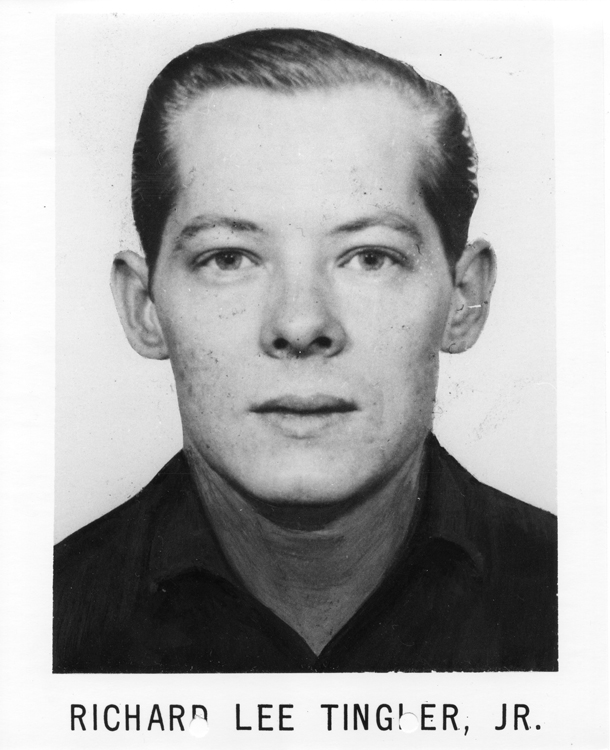
Mug Shot Monday! Richard Lee Tingler Jr., 1968

Home | Mug Shot Monday | Mug Shot Monday! Richard Lee Tingler Jr., 1968


Richard Lee Tingler Jr was a six time murderer who was placed on the FBI’s Most Wanted List on December 20, 1968. He was arrested in Dill City, Oklahoma, on May 19, 1969. The following article is from the FBI’s booklet, Ten Most Wanted 60th Anniversary, 1950-2010.

Scroll down to see Tingler’s slideshow.

On the morning of September 16, 1968, the lifeless bodies of three men and a woman were found in a Cleveland, Ohio, park. Each victim had been shot in the head, some victims several times.FBI-290-RichardLeeTinglerJr

On the night of October 20, 1968, a Columbus, Ohio, dairy store was held up and two teenage store employees were murdered execution style. The victims, a 15-year-old boy and an 18-year-old girl, were bound hand and foot, gagged, brutally beaten about the head, and then shot in the back of the head with an automatic pistol. The manager of the store was also viciously beaten. However, she survived the assault, despite efforts to strangle her with a wire coat hanger.

Through investigation, it was determined that Richard Lee Tingler, Jr., a native of Portsmouth, Ohio, was allegedly responsible for the six brutal murders.

On October 24, 1968, a federal arrest warrant was issued and Tingler was charged with unlawful interstate flight to avoid prosecution for murder and armed robbery was issued in Columbus, Ohio. In December of 1968, the FBI added him to its “Ten Most Wanted Fugitives” list.

Tingler had sought to conceal his location and identity by gaining employment on a farm near Dill City and using the alias of Don Williams. But his attempt to avoid apprehension came to an end on May 19, 1969, when his employer visited the Washita County Sheriff’s Office. There, he observed a Wanted Poster for Tingler and noticed how the photo and description of Tingler strongly resembled his hired hand, Don Williams.

The employer, wanting to be sure of his identification of Tingler before telling the sheriff about his fears, contacted a neighbor. He requested that the neighbor visit the sheriff’s office and view the wanted notices of Tingler. The neighbor did so and agreed with his friend’s observations. They notified the sheriff of Tingler’s location.

On the afternoon of May 19, 1969, an FBI Agent and members of the Washita County Sheriff’s Office arrested Tingler at the farmhouse. At the time of his arrest, Tingler was armed with a .25 calibre automatic pistol.

Noted as a “cold, calculating, and deliberate killer,” Tingler was sentenced to die in the electric chair in 1969, but this was later commuted to life in prison. He died on March 18, 1995, of organ failure in a Columbus, Ohio hospital.

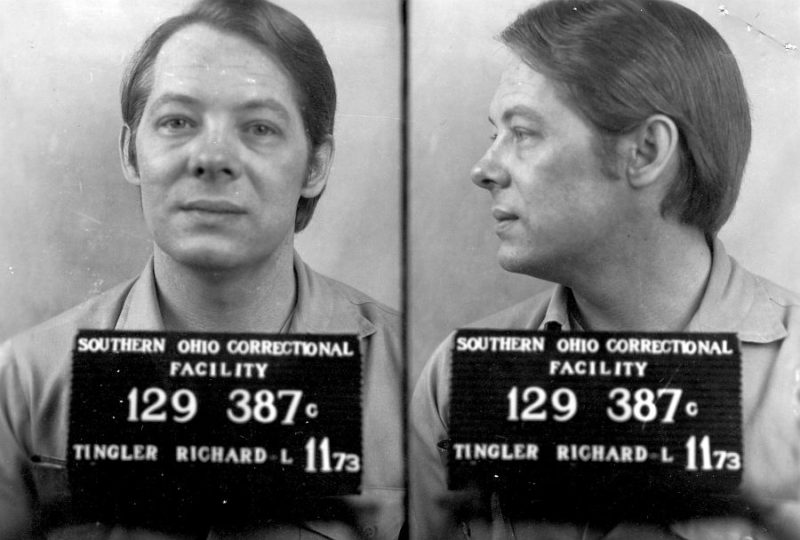
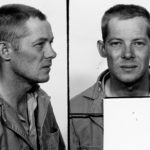
Above, Ohio prisoner Richard Lee Tingler, Jr. He made the FBI's Most Wanted list in December 1968 for the murder of six people. On September 16, 1968, he shot and killed three men and a woman at a park. One month later, October 20, he shot and killed a fifteen year-old boy and an eighteen year-old girl at a park while robbing them. Above, his prison mug shot from November 1973. -Photos Submitted by Robert Lee Cooper, grand nephew of Richard Tingler, Jr.
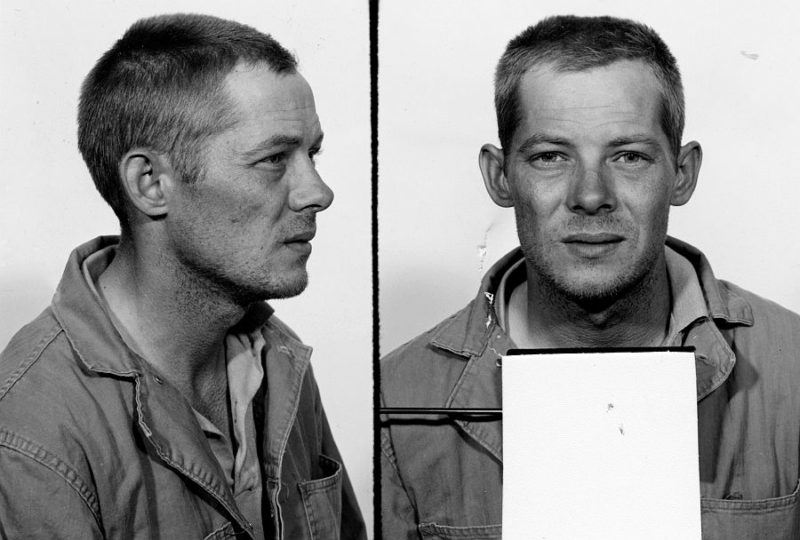
Tingler was placed on the FBI's list in December 1968. Sometime after that, he changed his name to Don Williams and found a cash paying job as a farm hand in Dill City. By mid-May 1969, his employer recognized his face on Wanted poster. The farmer's friend verified Tingler's identity as Don Williams. They notified the sheriff who notified the FBI. -Photos Submitted by Robert Lee Cooper, grand nephew of Richard Tingler, Jr.
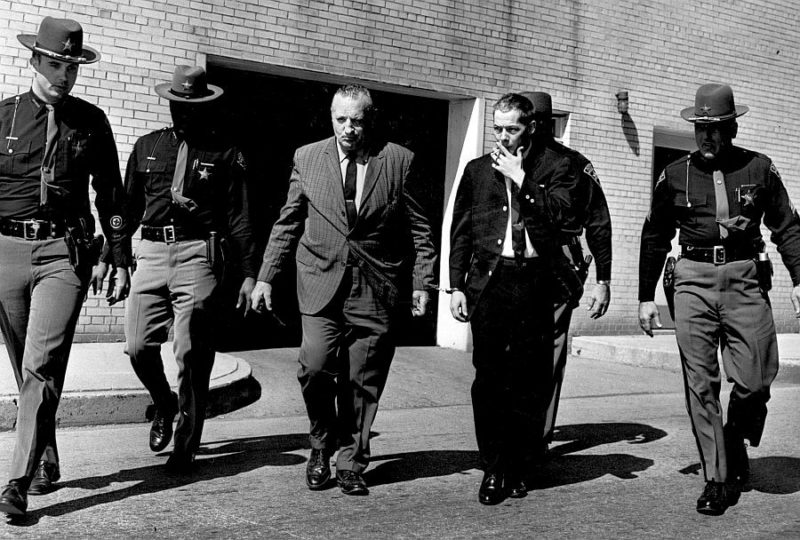
Tingler was arrested on May 19, 1969. He was later sentenced to die in the Ohio electric chair, but his execution was eventually overturned (as were many during the 1970s due to a cosmic shift set by the United States Supreme Court in a ruling that took issue with how some states were issuing death sentences). Above, Tingler is seen under escort leaving a court appearance. -Photos Submitted by Robert Lee Cooper, grand nephew of Richard Tingler, Jr.
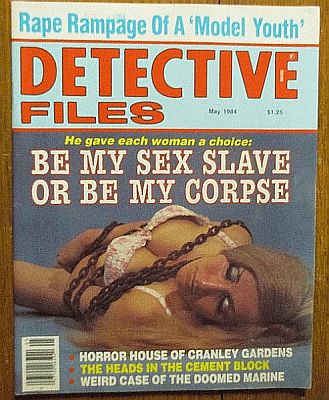
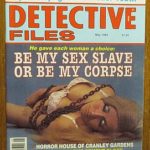
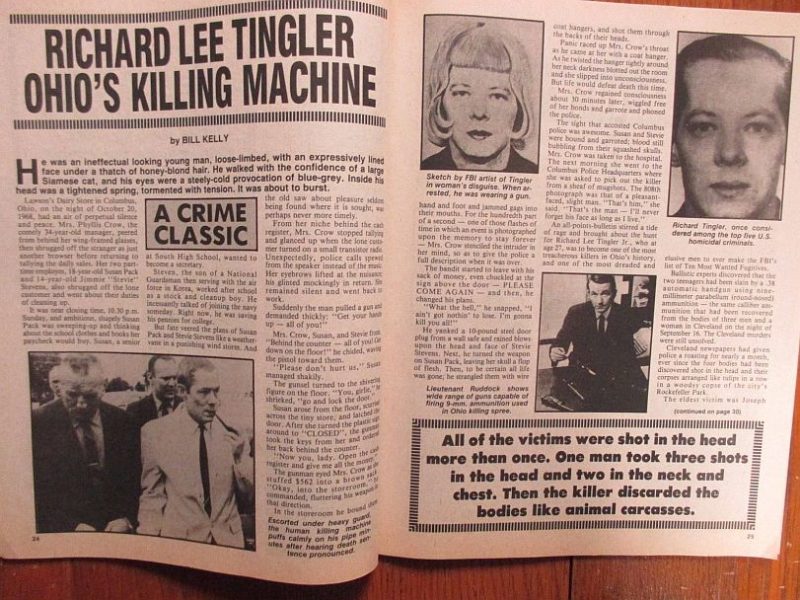
Tingler settled into prison life by the late 1970s. In 1984, his story was told in the May issue of of the now defunct Detective Files magazine. -Photos Submitted by Robert Lee Cooper, grand nephew of Richard Tingler, Jr.
Always looking to connect sex with murder, and murder with sex, the magazine emphasized a non-existing angle to the story with copy devoted to Tingler dressing as a woman. Tingler served thirty-five years in prison and died on March 18, 1995 of massive organ failure. -Photos Submitted by Robert Lee Cooper, grand nephew of Richard Tingler, Jr.


—###—


New Crime Magazine Launched: Real Crime

Home | New Books | New Crime Magazine Launched: Real Crime


Does anyone remember how a trip to the grocery or book store would inevitably lead you to peruse a crime magazine? And then one day, they were extinct. Well, now they’re back. One is, anyway. British magazine publisher Imagine Publishing announced Thursday the release of their new “Real Crime” magazine.

The first issue is a special on serial killers, and in May they invited me to write an article. I chose to write about the unsolved I-70 Killer case from the 90s. Anyone remember that guy?

Even though this magazine is based in the UK, I was told it will be distributed throughout most Barnes and Nobles bookstores in the United States.

Real-Crime-magazine


—###—