True Crime Books by Jason Lucky Morrow

Welcome to HistoricalCrimeDetective.com [Est. 2013], where you will discover forgotten crimes and forgotten criminals lost to history. You will not find high profile cases that have been rehashed and retold ad infinitum to ad nauseam. This blog is the official website for true crime writer Jason Lucky Morrow, author of four books including the popular series: Famous Crimes the World Forgot, Volume I and Volume II. If you would like to send me a comment, Contact Me Here. - Please follow this historical true crime blog on FACEBOOK.

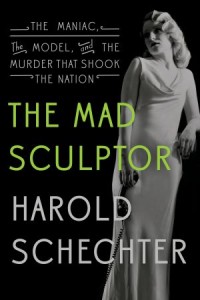
New Book: The Mad Sculptor by Harold Schecter

Home | New Books | New Book: The Mad Sculptor by Harold Schecter


The Mad Sculptor: The Maniac, The Model, and the Murder that Shook The Nation” by Harold Schechter, PhD.

Crime historian and author, Harold Schecter PhD, has recently released his tenth historical true crime book, “The Mad Sculptor,” about the 1937 Manhattan murder of a 20 year-old model, her mother and a third individual by a psychologically deranged artist. Released just a week ago, the book already has a 4.5 star Amazon rating based on 22 reviews. The kindle version is just $5.99. The book is not yet available for Nook Book & ePub device readers but a hard copy can be purchased for as low as $11 or $12.

Book Synopsis

The Mad Sculptor - Final Cover - Hi-ResBeekman Place, once one of the most exclusive addresses in Manhattan, had a curious way of making it into the tabloids in the 1930s: “SKYSCRAPER SLAYER,” “BEAUTY SLAIN IN BATHTUB” read the headlines. On Easter Sunday in 1937, the discovery of a grisly triple homicide at Beekman Place would rock the neighborhood yet again—and enthrall the nation. The young man who committed the murders would come to be known in the annals of American crime as the Mad Sculptor.

Caught up in the Easter Sunday slayings was a bizarre and sensationalistic cast of characters, seemingly cooked up in a tabloid editor’s overheated imagination. The charismatic perpetrator, Roger Irwin, was a brilliant young sculptor who had studied with some of the masters of the era. But with his genius also came a deeply disturbed psyche; Irwin was obsessed with sexual self-mutilation and was frequently overcome by outbursts of violent rage.

Irwin’s primary victim, Veronica Gedeon, was a figure from the world of pulp fantasy—a stunning photographer’s model whose scandalous semi-nude pinups would titillate the public for weeks after her death. Irwin’s defense attorney, Samuel Leibowitz, was a courtroom celebrity with an unmatched record of acquittals and clients ranging from Al Capone to the Scottsboro Boys. And Dr. Fredric Wertham, psychiatrist and forensic scientist, befriended Irwin years before the murders and had predicted them in a public lecture months before the crime.

Based on extensive research and archival records, The Mad Sculptor recounts the chilling story of the Easter Sunday murders—a case that sparked a nationwide manhunt and endures as one of the most engrossing American crime dramas of the twentieth century. Harold Schechter’s masterful prose evokes the faded glory of post-depression New York and the singular madness of a brilliant mind turned against itself. It will keep you riveted until the very last page.

About the Author

Harold Schechter is an American true crime writer who specializes in serial killers. He attended the State University of New York in Buffalo where his PhD director was Leslie Fiedler. He is professor of American literature and popular culture at Queens College of the City University of New York. Schechter is married to poet Kimiko Hahn. He has two daughters from a previous marriage: the writer Lauren Oliver and professor of philosophy Elizabeth Schechter.

QUESTION: Describe what it was like writing about serial killers at the height of their popularity. Why do you think people find serial killers fascinating?

Answer from Harold: To some extent, really by happenstance, I guess I caught the wave.  Certainly there was a period when the public fascination with serial killers was so intense that I found myself being called on as a talking head by the need media with a fair degree of regularity.  Now the boogeyman that haunts the public imagination has shifted from the serial killer to the mass murderer.


The Corpse in Coffee Creek, 1936, Ohio

Home | Feature Stories | The Corpse in Coffee Creek, 1936, Ohio


First Published: “The Corpse in Coffee Creek-Secrets of Ohio’s Tragic Triangle,” by Detective Otto H. Diskowski, Homicide Squad, Cleveland Police Department, as told to R. Rodgers, True Detective Mysteries, May, 1938.

 Want to read this story later on your tablet?
Download PDF File of The Corpse in Coffee Creek

CHARLES SALWAY SLOWLY MADE HIS way home across the small culvert over Coffee Creek. His farm was just outside Mesopotamia, Ohio, and almost daily he walked down State Road 57 and crossed the creek to get to his field.

This afternoon of September 24th, 1936, there was an autumn tang in the air. It would not be long before frost would be on the ground and farming would be over for the season. He, his wife and his father had put in a good day’s work out there—the sort of work that gave a man an appetite and made him think longingly of his fireside and slippers.

Salway leaned for a moment on the rail, waiting for the others to catch up to him. Maybe next day he would bring out his fishing tackle and try his luck. Sometimes a man could get a pretty good string out of Coffee Creek.

The farmer’s eyes focused sharply. Directly underneath was an odd looking object. As the man’s family joined him at the railing, he pointed, wordlessly, to the bobbing horror in the water. Mrs. Salway gasped.

“What is it, Charles?” she asked.

Her husband was still staring. “It looks like a man,” he whispered.

Mrs. Salway shuddered. “A man? But where is the rest of him?”

The farmer gulped. “It looks like it’s just his head down there.”

His father nodded. “Yes, I don’t see anybody.”

The trio noted the closed eyes, and the purple, blotched face. Leaving the older man to keep watch at the culvert; young Salway raced for a telephone. “There’s a dead man out near my farm on Route 57,” he told the police. “I’ll wait there until you come out. He’s in the creek.”

Charles Salway returned to the grim vigil. He studied the face of the man in the water. Folks in that section of the country all knew each other. But neither Salway nor his father had ever seen the dead man before.

Sheriff Roy Hardman and Captain George C. Salen of the Warren police, lost no time getting to the scene. Accompanying them were several officers and Coroner J. C. Renshaw of Trumbull County. The farmer flagged them to a stop and excitedly pointed to his find.

“First we thought it was just a head, Sheriff,” he said, “but now I can see where the body is weighted down with something, so that just the head sticks out

It was a grotesque sight that greeted the officials. The water lapped gently against the dead face, tossing it from side to side. Releasing the body from what held it might prove to be a task.

In a short time, dozens of people flocked to see what the excitement was.

The officers, assisted by bystanders, finally extricated the body and laid it out on the ground for the Coroner’s inspection. While he went about his work, Sheriff Hardman and Captain Salen examined the wire with which the victim had been trussed and the heavy concrete slab attached to the corpse.

“Whoever did it,” the Sheriff remarked, “must have felt pretty sure it would be a long time before this thing rose to the surface. But the weight slipped down around the feet and there was enough buoyancy in the body to let the head float to the surface. No wonder it looked like a head without a body.”

“Looks like the fellow was pretty well beaten before being tossed into the creek,” Salen commented. “It’s the kind of beating gangsters give their double-crossers.”

The Sheriff shrugged. There might be some truth in that theory. The spot where the body was found is not far from Youngstown and only about forty miles out of Cleveland. Perhaps some rival city gangsters had been warring. Or maybe the killing was the outcome of strike trouble in the Youngstown steel area.

Coroner Henshaw estimated that the corpse had been in the water a week. There was not much else he could discover without a thorough examination, and the body was taken to the morgue at West Farmington.

After questioning the neighboring farmers and failing to find anyone who had heard or noticed anything unusual during the past week or ten days, the officers went to the morgue to search for a clue to the man’s identity.

Preliminary examination of his clothing revealed little—a few cents and the usual odds and ends. In a hidden inside coat pocket, apparently overlooked by the killers, the officers found a worn leather wallet.

Eagerly the contents were spilled on the table. The clue they seized upon was an identification card of a common type. Unless the murderers had been clever enough ‘to put it there to throw the police off the trail, it should reveal the identity of the dead man. It bore the name of Charles Steffes, Jr., and an address in Cleveland.

There was a space on the card classified “In Case of Accident Notify . . .” And next to it were the words, “Catherine Bunjevac, 1144 East 76th Street, Cleveland, Ohio.”

“Well, boys, that gives us something to start with,” Captain Salen announced. “We’d better get in touch with the Cleveland police and see what they know of Steffes.” The report of the murder came into Cleveland Headquarters over the wire that evening and Detective Lieutenant Jack Zeman took down the details.

He called in Detectives Carl Ziccarelli and Ralph McNeil, who were working on the four-to-midnight shift. “Just had word of a body being found in Coffee Creek,” he told them. “Check up on Charles Steffes, Jr., at 1328 East 53rd Street. And see what you can learn from a girl named Catherine Bunjevac at 1144 East 76th Street.”

Things began to hum. A quick check with the files revealed a record on Steffes. He had been arrested and charged with auto theft about a year before. He had pleaded guilty and, since it was his first offense, had been placed on probation. Further details disclosed he was an auto mechanic and twenty-six years old.

It was hardly the record of a person who might be involved in gang wars, but in the Police Department we learn to expect anything and consider everything a possibility until proved otherwise.

If he were a Clevelander and had been dead a week, perhaps someone had reported his disappearance to the Bureau of Missing Persons. A check-up here disclosed that on Sunday, September 20th, a call had come into the Bureau. A worried feminine voice had reported a disappearance.

“I’m worried about my friend, Charles Steffes, Jr.,” the caller said over the telephone. “I had a date with him last Thursday night and he said then that he’d telephone me the next day.

“He didn’t call and I thought maybe he was sick.” Her voice broke a little. “Charlie always kept his word with me. And when I found out he hadn’t been at work since Thursday and that no one had seen him at all, I got frightened.”

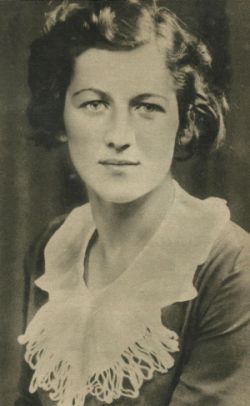
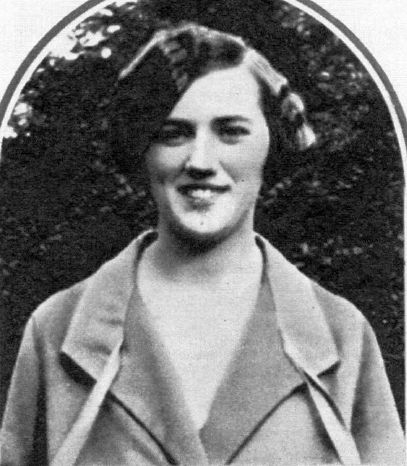
Catherine Bunjevac

Catherine Bunjevac

Be Sure To Follow Us on Facebook for Weekly Updates, New Stories, Photos & More

The officer tried to calm her. People, he told her, particularly men, often dropped out of sight for a time. Ninety-nine out of a hundred turned up again in their own good time. But this girl, who gave her name as Catherine Bunjevac, was sure Charlie Steffes had come to some harm.

“He’d never go away without telling me,” she insisted.

The report had been investigated at the time, but no trace of Charlie Steffes had been found. There was no accident victim who answered his description in the hospitals or the morgue.

That is, no one, until Charles Salway had seen the “body-less” corpse in Coffee Creek. It began to look as if woman’s intuition as to trouble had again proven correct. What Catherine Bunjevac had feared had apparently come true.

But supposing the corpse was that of young Steffes, the identification was just the beginning of the job. All we knew was that a girl named Catherine Bunjevac was to be notified in case of accident and that this same girl had reported him missing.

The department began to get busy in earnest. Detectives Ziccarelli and McNeil went out to check on Steffes, at the address in his wallet. This turned out to be a rooming house, run by Rudolph Zupanic. Here, Steffes had lived with his brother.

Both Zupanic and the victim’s brother, when interviewed, insisted they knew nothing of the garage mechanic’s whereabouts. The proprietor of the rooming house eagerly told the meager facts he knew about his lodger.

“Steffes left the house last Thursday night and we haven’t seen him since. He was rather close-mouthed about his affairs and never said where he was going or when he’d be back.”

Steffes’ brother confirmed this statement. “I haven’t any idea where Charlie could be. He just went out and didn’t come back. Several people have been asking for him since he left.” He shrugged. “He might be anywhere.”

His brother seemed to take his absence rather lightly, apparently confident that in due time he would turn up again. At the garage where Steffes was employed, the proprietor had the same attitude.

“He hasn’t been around for a week. Guess maybe he just decided to quit. A little guy came around a couple of times looking for him. Don’t know who he was.”

Was this “little guy” one of those who had called at the rooming house to inquire about the missing man? That was another angle to be investigated.

The garage owner gave the boy a good send-off. “He was a conscientious worker. Seemed serious-minded and said he was saving his money.”

When a young man who has had a previous brush with the law, settles down and talks about saving his money, experience has taught us there’s usually one reason—a woman. “Find the woman” is the detective’s old adage, and often a very successful one. In this case, the name of the woman had providentially been delivered into our hands.

But, before questioning Catherine Bunjevac, the detectives sought Steffes’ sister, whose address they had obtained at the rooming house. She had new information to give.

“Charlie and Catherine were at my house last Thursday evening (Sept. 17, 1936). We had a lot of fun kidding around, but they had to leave early, as Charlie complained he didn’t feel well. I didn’t think it was anything serious, but it did seem that he was worried about something. Usually Charlie was very happy-go-lucky, but that night he was different—acted a little as if he were afraid of something.

“I thought it was my imagination,” she continued, “but when Kate—that’s what we call Catherine—came over here on Saturday, looking for him, I got kind of worried. It wasn’t like Charlie to miss a date. He was crazy about her. Talked about getting married.”

So the girl, whose name appeared on Steffes’ identification card, was more than just an acquaintance.

Catherine Bunjevac’s parents told the detectives that their daughter was out with her fiancé, a Mr. Miller. The officers concealed the surprise they felt at this announcement. Steffes had talked to his sister about marrying Kate, but she apparently had other plans, or at least, that’s the way it looked.

“Do you know Charles Steffes, Jr.?” they asked the Bunjevacs.

Instantly there seemed to be a chill in the atmosphere. “Yes, we know him. He frequently called on our daughter.”

“Was he in love with her?”

“Perhaps. She’s a very pretty girl. Lots of men have liked her. But we didn’t want her to go with that Steffes. He isn’t dependable. He hasn’t any money. Mr. Miller can give Catherine a nice home and an automobile. He’s the kind of suitor for our girl.”

“Well, when she comes in, tell her the police want to talk to her.”

The parents’ faces showed no emotion at the knowledge that police wished to question their daughter. If there were fear there, it was well hidden.

Very early the next morning, Miss Bunjevac appeared at Headquarters. Her parents had been right when they said their daughter was pretty. It was not hard to imagine several young men in love with her at the same time.

As Sergeant James Hogan questioned her, he noted that she seemed greatly worried about her missing friend.

“The last time I had a date with Charlie, he seemed quite upset,” she said. “I asked him to tell me what was bothering him, but he wouldn’t say.”

As the girl talked on, the background of the case became clear. Here was a fun-loving young girl, torn between duty to her parents and her own heart. Steffes appealed to her romantic tastes, but her family frowned upon him.

Miller, she explained, was a name Joseph Csonka sometimes used for business reasons. He was a wall paper hanger whom she had known for a long time, and her parents thought he would make an ideal husband for her. He was the old-fashioned type, the sort who would never give a girl any worries—nor any thrills.

But Catherine Bunjevac had liked young Steffes. He was full of fun, liked to dance and have a good time. He made Csonka seem old and dull. A common enough tragedy, up to that point. But it didn’t tell us what had been worrying Steffes that last night he was seen alive. Could he have been involved in some racket and forced to “take a ride?” Or was it perhaps another woman, whose jealous fury had spent itself on her betrayer?

We discarded the latter theory at once. The very facts of the crime told us it had to be the work of a man. Women do not transport their victims forty miles, and then dump them overboard, with a slab of concrete to weigh them down.

Detective Gordon Shibley and I went to West Farmington to verify the identification of the victim. We questioned several of the near-by residents, but could find no one who knew anything about the mysterious happenings at Coffee Creek. The killer had taken pains to cover his tracks well, and no doubt darkness had hidden his sinister work.

Delve as we would, we could find nothing to tie the victim with any gang machinations. He had, to all intents and purposes, been paying strict attention to business and behaving himself. It looked as if the explanation would have to be found closer to home.

Officers returned to question Miss Bunjevac once more. Over and over she repeated her story of her friendship with Steffes and the last time she had seen him.

“He left me at my house early Thursday evening, as he said he didn’t feel well. I thought maybe he had another date, but then I felt sure he wouldn’t go with any girl but me. He said he’d call me Friday and when he didn’t I was annoyed. Joe asked me to go out with him that night and since I hadn’t heard from Charlie, I went.”

“Did you tell Csonka about Steffes?” the girl was asked.

“Yes, I mentioned it and said I was worried as that was the first time he had ever disappointed me. Joe said not to worry about it; that he’d probably be able to explain when I saw him.”

“Did you often discuss Steffes with your other suitor?”

“Quite often. He asked me, a couple of times to give up Charlie.”

The detectives’ eyes betrayed no particular interest. “Did the boys ever fight about your attentions?”

“Of course not,” was the quick reply. “Why, Joe helped me try to find Charlie. He went to his rooming house and the garage where he worked to discover what had happened to him.”

The little thin man who had “been making such anxious inquiries for the victim, as described by Steffes’ brother and the garage owner, was Csonka, evidently. He had been trying to find the man who had cat him out, in order to set the girl’s mind at rest.

“It was Joe who made me come right down to Headquarters, when we found out you were looking for me,” Miss Bunjevac continued. “He said it was best for me to go right away.”

“How did Joe act the Friday night after Steffes’ disappearance? Was he nervous or excited?”

“Why, no,” the girl answered, surprised. “He never talks a lot, but I didn’t notice him acting nervous or anything. Why should he?”

That’s what we were asking ourselves at the moment. We had two men in love with the same girl. One brash and forward; the other, from Catherine’s description, shy, meek and self-effacing. And the brash and forward one was now dead, his head battered in. I was convinced from what I could learn around Coffee Creek, that Steffes had been killed elsewhere and his body brought out to the lonesome farm area, probably by automobile.

The body had been returned to Cleveland from the West Farmington morgue and County Pathologist Dr. Reuben Strauss went to work to determine what had caused death. What we primarily wanted to know was whether the victim was alive when tossed into the water, or whether it was his corpse that was weighted down and shoved under the culvert.

On Friday night a detail of officers was sent to Csonka’s home on East 88th Street, to question him. It was destined to be quite a wait, as he was not at home. It was five-thirty in the morning before a short, slight man mounted the steps, to be met by a group of detectives.

Csonka evidenced no surprise. He acted as if it were not at all unusual for a couple of officers to be waiting to take him down to Headquarters. He showed no curiosity as to why he must go. He offered no protest, when the men went through his personal belongings. He evinced no embarrassment when he saw his personal letters being read. These included several written, but never mailed, to Catherine Bunjevac.

Those letters seemed to coincide with the man’s colorless personality. He was admittedly in love with the girl, but there was no hint of passion in his letters. They, too, were shy and bashful.

Downstairs in the basement, Csonka showed the same lack of interest, as officers went through his storage closet. The only thing found of any possible importance was a small amount of old wire.

And when Sergeant Hogan began asking him questions that Saturday morning, he realized he was facing a man who was able to conceal every emotion. He presented a bland, expressionless face and carefully deliberated before replying. We had a suspect, it is true, but we had little more on him than any man we might pick up in the street. He was in love with the same girl as the dead man had been—but that was his only connection, thus far, with the case.

The Sergeant, however, continued his investigation. A couple of detectives went out to find Csonka’s car. While they were gone, the report of Dr. Strauss came in and with it, the first ray of light. Steffes had been struck a hard blow on the head, but that had not caused his death. Water in his lungs indicated that he had been alive when tossed into the creek. He had died from drowning. That meant that the murderer, if and when we caught him, would be tried in the district in which the victim died—and those country juries are tough.

We decided to use a little old-fashioned psychology on Csonka. Detective Shibley and I brought him to the garage, and, with Sergeant Hogan and Coroner Arthur J. Pearse of Cuyahoga County, in which Cleveland is located, we started out on the ride to Mesopotamia and Coffee Creek. We were heading for the spot where Steffes’ battered body had been found. We had a little plan in mind and were eager to find out if it would work. The coolest, the calmest, the most collected criminal will often go to pieces when he is forced to revisit the scene of his crime. Dreams often will hound a guilty man into clearing his conscience, but a compulsory viewing of the spot will usually do it more quickly.

We did not do a lot of talking on that ride. Csonka continued to answer politely all questions put to him. Sergeant Hogan encouraged him to talk about himself. He nodded sympathetically when Csonka complained of business being slow. Csonka mentioned that he usually carried his tools—brushes and pails—in his car. Was he in love with Catherine Bunjevac? Sure, sure.

“You know, Sergeant,” he said to Hogan, “I think some gangsters got after Steffes. Probably took him for a ride. You know he was mixed up in some bad company for a while there.”

We did not answer. We were waiting for the psychological moment to outline to him what we thought had happened. But that time had not arrived as yet.

Coffee Creek looked far from sinister in the bright daylight. The foliage was just beginning to turn and the countryside was rich in autumnal hues. Everything spoke of peace, and quiet, restful living. It seemed hardly the spot for violence and death. Yet a man’s badly beaten body had been tossed into that creek and its calm water had taken his dying breath.

I took Csonka over toward the east rail and waited with him while the Coroner and Sergeant Hogan talked things over. I knew what was coming and encouraged the man’s nervousness by a complete silence and apparent indifference as to what was going on.

As the two officers conversed, their voices carried clearly on the still air. Hogan was outlining to Pearse what had happened. Csonka was the only one there who didn’t know that the Sergeant was putting on a little dramatic act.

“I think we’ve got this fellow,” Hogan was saying. “It all links up. Two of my men found his car, took a look in it and what do you suppose they found?”

“What ?” asked Pearse, all interest.

“Blood on the upholstery.”

“No!”

“Yes! And one of the windows was smashed. I think that happened when this bird Csonka swung at him with the brush and missed.”

“Brush?” asked Pearse.

“Didn’t you know we found a heavy paste brush in his car with blood on it? He hit Steffes over the head with his paste brush,” the Sergeant went on. “Again and again he struck him. Then when he thought he was dead, he drove out into the country and tossed the body overboard. He weighted it down to make sure it wouldn’t be discovered.”

Hogan paused dramatically as they came over to where we were standing. “Is that the way it happened, Csonka?” he asked suddenly.

I watched the man who was standing so close to me. I had thought of him as meek and mild—hardly the type to become involved in a murder case. But before my eyes I saw an amazing change take place. As he listened to Hogan’s outline of what might have happened that fatal September 17th, Csonka s eyes glittered. It was almost as if he were reliving the crime, and enjoying it. The meekness was gone and replaced by an expression of burning hate.

Abruptly he turned and faced us. “Sure, I killed him. I did it.”

The confession, unexpected as it was, did not give us all we wanted. We had to have details—proof to stand up in a trial. It was not a Cleveland case, but it was up to us to get Csonka talking.

Once he had started, the paperhanger seemed eager to tell the whole story and get it off his mind. I marveled at this shy little man, who, for more than a week had gone about his affairs as usual, but with a horrible secret hidden behind his meek, colorless face. He had even joined in the search for his victim, apparently seeing this would ingratiate him into the favor of Miss Bunjevac. And all the time he had known that the man she loved and waited for was lying in the cold waters of Coffee Creek, a heavy slab weighting him down.

Csonka opened up in earnest on the ride back to Cleveland. The story was even more grim and cold-blooded than we had conceived.

“I was ready to marry the girl. I wanted her. I was getting along fine and had a good business and good prospects. I could have given her things. I was in love with her and she seemed to like me well enough,” Csonka added, “until that Steffes fellow came along last April. Then things changed.”

I could picture this little paperhanger paying his court more to the parents than the daughter, much as they did in the old country. He loved the girl, in his fashion, and a great rage began working in his slow mind, when he found himself being cut out.

“That Steffes was just a no-good, a bum. I used to follow the two of them around and spy on them. A couple of times I met him and begged him to give up the girl. But always he just laughed and told me to beat it.

“And once,” his voice dropped to a whisper, “he told me Catherine wanted to marry a man. He insulted me.”

Steffes, knowing that the girl preferred him, and with the confidence of youth, had laughed tormentingly at the other man. And with that laugh he had sealed his doom.

“I met Steffes early in the week and told him I knew he had been in jail,” the paperhanger went on. “I threatened to tell the Bunjevacs what I knew, so they’d make Kate give him up.

“Steffes tried to laugh it off, but I told him it was time for a showdown. I told him to meet me Thursday night and he said he’d try to get away early enough to make it.”

That meeting, then, was what the garage mechanic had on his mind the last night his sister and his sweetheart had seen him. The story of feeling ill had been invented to make sure he would get away in time for the meeting he dreaded. The girl’s intuition that something was worrying him had been correct.

The men met by appointment at a beer parlor on East 53rd Street. Csonka began pleading with him to step out of the picture. Steffes drank stein after stein of beer and quickly lost his former dread. The oddly matched couple moved on from one beer place to another. At each they consumed several drinks, Steffes switching to liquor as the night wore on.

Once again in Csonka’s car, they continued the discussion, the murderer said.

“Sitting in the car at East 70th and Quincy. I told Steffes he’d have to give up the girl. He got mad at that, and took out a whisky bottle he had in his pocket. He swung it at me and I got scared. He was bigger than me and I reached in back of the car for my paste brush. I grabbed hold of it and hit him over the head.”

Csonka stopped a moment, as if remembering. A shudder shook his slight frame. He was thinking perhaps of the sickening thud each blow had made on the victim’s head. Then he continued:

“I had to hit him a lot of times before he became quiet. Then I got panicky and pushed his body into the back seat.”

It was evident that Csonka had believed his victim dead after the first blows. He even stopped to change a tire on his car before driving into his own garage.

“I stayed in the garage a while, not knowing just what I ought to do. I was scared someone might come’ in while he was there. And then—” his eyes widened with horror—”Steffes came to life again and started to fight some more.”

I could visualize the terror of the man, as his victim suddenly showed signs of life, when he believed him dead.

“This time I hit him with a heavy iron clamp and he lay still.”

Poor Charlie Steffes. His vitality must have been great, indeed, to withstand a series of such blows. The report showed without any question that he had been still breathing when tossed into the creek.

“I went around the corner to my house and got some wire and a big chunk -of concrete from under our garbage can. I tied him up and then started out to find some place to dump the body.”

And then came the most amazing part of this gruesome story. The killer had driven nearly fifty miles through the night, with the trussed-up body of his victim in the back of his car. And at each bridge and culvert he had stopped. With his flashlight he had peered into the water, trying to determine its depth. Joe Csonka was looking for water deep enough to-cover all evidence of his crime.

“The water under that concrete bridge seemed to be deep enough, so I dragged the body out of the car, made sure the concrete was securely fastened to it and pushed it over the rail. It made a loud splash and disappeared. I stood there watching for a few minutes, until the water was quiet again. Then I got in my car and drove home.”

In a dispassionate tone, Csonka ended his confession. Later, he willingly repeated it at Headquarters and signed it. He seemed glad that the matter was off his chest; but showed not the slightest regret for his crime. Over and over again, as if in self-justification, he repeated the words, “He was just a bum.”

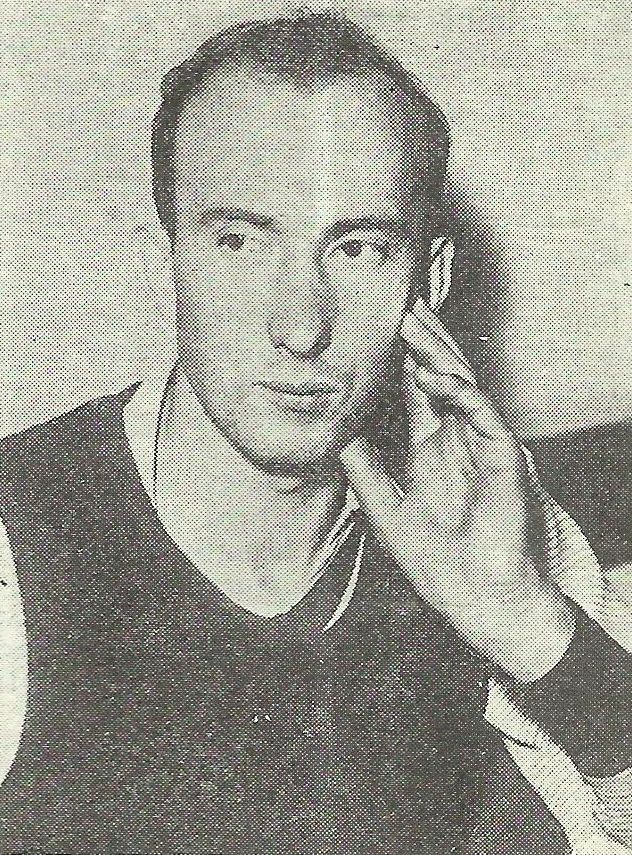
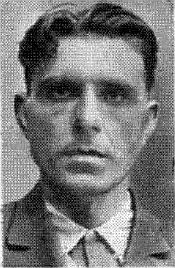
Killer Joe Csonksa

Killer Joe Csonksa shortly after he confessed.

We found it hard to believe that on the night after he killed the young man she loved, he went out with Miss Bunjevac, to all appearances, the same shy, harmless man whom her parents wanted her to marry.

“Sure I saw her,” he told me. “We had a date together. I knew she wouldn’t be busy, so I called her. But she didn’t know a thing about any of this. She’s a fine girl. He was just a bum, just a bum.”

We turned Csonka over to the Trumbull County authorities for trial. On April 16th, 1937, after seven months. Prosecutor Paul J. Regan accepted a plea of guilty of second degree murder, and Joseph Csonka was sentenced to life imprisonment at the Ohio State Penitentiary.

The case of the two men who loved one girl became history. But to this day, Farmer Salway and his family rarely pass the culvert of Coffee Creek, off Route 57, without an involuntary glance into the still water, where one fall day they saw a “floating” head.

 Download PDF File of The Corpse in Coffee Creek

Be Sure To Follow Us on Facebook for Weekly Updates, New Stories, Photos & More

—###—


Badge of Dishonor, by Jere Joiner

Home | New Books | Badge of Dishonor, by Jere Joiner


Badge of Dishonor, a new book by retired Shreveport detective captain Jere Joiner, recounts the murder and cover-up of a young advertising executive and former Shreveport Times reporter by a hit man hired by the city’s commissioner of public safety.

Project2The book describes in chilling detail events leading up to the 1976 shotgun slaying of 36-year-old Jim Leslie shortly after he stepped out of his car in a Baton Rouge motel parking lot, and how Joiner became the next target of the commissioner’s veiled threats and intimidation. Leslie had exposed Commissioner George D’Artois’ misuse of public funds, sparking a scandal that tore Shreveport apart, burned its way into the collective conscience of its citizens and shook the political foundations of the state.

Badge of Dishonor takes place in a Deep South city of 164,000 residents, evenly divided between whites and blacks, where police and the white establishment ruthlessly enforced segregation.  Blacks had few rights and little hope of a better life, and retribution was swift and fierce for those who crossed an invisible racial line.

First elected in 1962, D’Artois conducted a one-man reign of corruption and terror during the latter part of his 14-year reign as commissioner of public safety, shaking down local businesses, associating with mobsters and threatening to kill those who crossed him, including other police officers. The white establishment looked the other way and tolerated D’Artois’ excessive gambling and drinking as long as he kept the black population in check.

Leslie had managed D’Artois’ third reelection campaign in 1974, and a grand jury probing his corrupt activities wanted firsthand information about $6,000 in city checks issued to cover these personal services. He was scheduled to testify as a star witness, but the commissioner made sure that never happened.

Joiner, who served 20 years as a Shreveport patrol officer, captain of detectives and unofficial pilot for the city, became ensnared in a web of corruption when the commissioner ordered him to charge three personal flights to the city. He feared for his life when D’Artois initiated a series of menacing phone calls strongly intimating that he should lie to the grand jury about these trips and practically promising him the police chief’s job if he did.

The book’s climactic moment occurs in a tense confrontation between the commissioner and Joiner, neither one knowing what the final outcome would be. Joiner was prepared to shoot his boss if meant saving his own life.

Badge of Dishonor paints a portrait of a police officer’s life in an environment of racism and corruption through stories harrowing and heroic. Among them the tragic death of a young officer shot and killed in the line of duty, the deliberate, cold-blooded murder of an innocent black man by a racist cop who pulled him over on a bogus traffic violation, and a bank holdup where the robber systematically went down the line shooting tellers in the back as they lay on the floor.


The Murder in Room 406, 1925, Boston

Home | Feature Stories | The Murder in Room 406, 1925, Boston


Originally Titled: “The Crime in Room 406,” by Sgt. Thomas Harvey, as told to Fred H. Thompson, True Detective, Sept. 1930.

Want to Read This Story Later On Your Tablet?
Download PDF file of The Murder in  Room 406

.

“Something terrible has happened over at Hotel Hollis!”

These were the words that greeted me when I reported for duty on the morning of May 31st 1925, at Division 4 Station House on Lagrange Street [Boston, MA]. The speaker was a youth I recognized as one of the bellboys at Hotel Rollin, located nearby on Tremont Street and patronized by theatrical people. His face was ghastly, and he was trembling like a poplar leaf in the breeze.

“What is it?” I questioned

“It—it looks like murder!” gasped the bellboy.

I called a patrolman to accompany me and took the frightened youth back to the hotel. At the entrance encountered the room clerk, and the manager, James Reagan. They too, appeared white and shaken. After what I saw a few minutes later I felt a little pale myself. In my years of police work I have seen and investigated many strange and horrible crimes, but the “Hotel Hollis Mystery,” as this case became known in the trying days that followed, stands out in my memory as one of the most brutal and difficult of my

A few quick questions and I had learned enough to order the officer with me to hold everyone in the hotel. Then I went up to Room 406. Clustered in the hallway around the door was a group of frightened employees and guests. I stepped into the bedroom.

Face-down on the bed was the body of a woman. Her arms were drawn behind her back and bound together with strips torn from the bed sheets. The disarranged bedding suggested a fearful straggle. Above her rent and die.-beveled night-dress I saw on her neck dark discolorations and scratches. Blood from her mouth stained the pillow; into which her face was deeply pressed.

I touched the body. It was cold. I knew then she had been dead several hours. Obviously, she had been murdered. My job was to find the murderer, but first there were certain routine things to be done. Nothing could be disturbed until the medical examiner had made his inspection.

I telephoned a brief report to the station house and arranged for Inspector James A. Dennessy, head of the homicide squad at police headquarters, to be notified. I then telephoned the district medical examiner, Doctor Timothy Leary. Other officers were hastily sent over front the station house and I placed them and ordered everyone in the hotel held. While awaiting the med. kal examiner and Inspector Dennessy, who soon arrived with a police stenographer, I learned these facts:

The dead woman was Mrs. Mae Prior, wardrobe mistress of the “Brown Derby” theatrical company, which had closed its run at a Boston theater the previous evening—it was now Sunday morning. She had retired to her room alone around midnight, or shortly thereafter, planning to go to New York with other members of the troupe on the noon train Sunday. When she did not respond to repeated telephone calls to her room that morning, a bellboy had been sent up to awaken her. He found the door ajar and looked in. What he saw sent him racing back to the hotel desk with the alarm, and then over to the police station to get me.

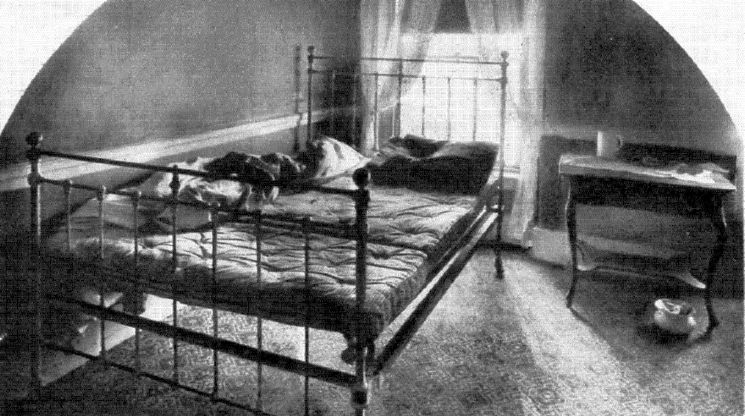
murder-scene

The deep indentation in the pillow where Mrs. Price face was pushed into can clearly be seen in the above photograph. With blankets over the mattress, the killer hid under the bed until the victim returned and waited for her to fall asleep.

Be Sure To Follow Us on Facebook for Weekly Updates, New Stories, Photos & More

Cool, skillful, experienced Doctor Leary began his expert examination. His keen eyes seemed to take in everything at a glance. “She certainly put up a good fight,” he told us.

When he turned the body over, the face and chest showed that the woman had received a fearful beating. Some of the ribs were fractured. Wide bruises on the throat and the protruding tongue told that the unfortunate woman had been strangled. After a thorough examination of the marks on the throat, the medical examiner said: “Look for a person with extra large hands.” That was the first real clue we had found. Then he made what seemed to be an important discovery. Under the dead woman’s well-manicured fingernails was what appeared to be bits of human skin and dried blood. Laboratory examination later confirmed this.

We now believed we had two clues of the greatest importance. The face or hands of the murderer would be marked by fresh scratches. And, the murderer had unusually large hands.

Mrs. Price’s clothing, toilet articles and other belongings were placed about the room in a natural manner, evidently as she herself had left them. On the floor near the bureau, was a small envelope, the sort used as a pay envelope, one end torn off and dropped nearby. The envelope was empty. In a box we found a similar envelope containing a five dollar bill and some change. The only signs of a struggle were confined to the bed, and we agreed that the murderer had surprised the victim while she was asleep or there was another possibility.

The bellboy who reported the crime that morning about 9:30 claimed that he had found the door of the room ajar. Was the murderer someone Mrs. Price knew and trusted; someone that might be permitted to enter her room after she had retired for the night? Was the motive jealousy or revenge, or was it robbery? Or was there something behind this sordid crime we had not yet guessed?

Under the bed I saw a partly smoked cigarette. This might be a clue. Had the murderer been hiding under the bed while waiting for the moment to strike?

Every person in the hotel was questioned before anyone was permitted to leave. Some of the guests protested against their detention, but it was necessary and we didn’t intend to take a chance that the murderer might slip out of the police net we had thrown about the entire establishment.

Some of the members of the “Brown Derby” company were at other hotels, and the manager of the show was registered at the Arlington Hotel. We rounded them all up. After our thorough questioning of everyone who might have any helpful information, we bad found no one who admitted seeing any person enter or leave Room 406 between the time Mrs. Price retired and the discovery of the crime by the bellboy that morning. No one admitted having heard a sound of the frightful struggle we believed had occurred after mid-night and before 2 A. M. The medical examiner assured us that Mrs. Price died about 2 A. M.

The condition of the body and the mute evidence of the bed fairly shouted the story of the desperate battle for life the unfortunate woman had made. Yet none of the guests in adjoining rooms, none of the hotel staff, had heard a sound to arouse suspicion!

We found something to strengthen the robbery theory. The show manager said the torn envelope had contained $80, Mrs. Price’s pay given her the previous evening.

Members of the company said Mrs. Price was the “mother” of the show and took charge of small sums of money for the younger girls. A Jewish boy in the cast had been befriended by her, I learned, and he had given her $60 to save for him. In all, it appeared, Mrs. Price had about $200 in her possession. But we had found in the room only the five dollar bill and some small change!

This young man who had given Mrs. Price $60 for safe-keeping aroused my particular interest.

He felt for her the affection of a son, he insisted. I also was interested in the information that the murdered woman’s husband was a stage carpenter, employed in New York City. He was Bill Price, we learned, and worked in a theater at Broadway and 91st Street. This information was telephoned to the New York Police, with the request that the husband be located and the news of his wife’s death broken to him.

We soon had word from New York that Bill Price had been working there Saturday evening until nearly midnight. News of his wife’s terrible death was a great shock to him and he was coming to Boston on the first train Monday morning to aid in the search for the murderer and to claim the body.

I liked Bill Price on sight. He took his wife’s death hard, and I felt mighty sorry for him. But I learned nothing that brought me any nearer the moment I was yearning for, the chance to slap the handcuffs on the murderer.

Well, several days passed” and the police investigation seemed to be getting nowhere. Inspectors from headquarters, plain-clothes men, an army of newspaper reporters and plenty of others were looking for clues, and, there were plenty of alleged clues turned in, but all proved worthless after a painstaking investigation.

Anonymous letters came telling us to look up this person or that one. Several characters who hang around the South End were named to the police in this way as the wanted murderer. Not one of these possibilities was overlooked. Every lead we followed led us to the same thing – exactly nothing.

One by one the inspectors were taken off the case for other jobs, but my superiors kept me plugging away. I was working night and day, going over the same ground again and again, racking my brains for the solution of a crime that at the start-off had looked like an ordinary, routine case. Nothing seemed to break.

“It’s just one of those cases that can’t be solved,” an Inspector told me.

I spent a lot of time around the hotel, talking with the guests who were still there and with the employees, searching for the lead I kept telling myself must be somewhere if I could only find it. Some of the folks who were there the night Mrs. Price was murdered might be–well, surprised to put it mildly, if they knew what a lot of miscellaneous information I casually picked up about them in the course of my intensive inquiry. On Tuesday, June 2nd, I recall, I heard that a theatrical man occupying Room 606 with his wife gave a birthday party after the performance on the evening of May 30th, and was making merry with his friends at the very time that Mrs. Price was fighting for her life in the corresponding room, just two floors below. I found out who attended this birthday party and interviewed every one of them, on the off chance that something was seen or heard by somebody that would give me a clue. The man who gave the party told me about an odd thing that happened that night, but which apparently had no connection with the murder.

He said that when he ushered his friends into his room after the theater, he left his door key on the corridor side of the lock. When the party broke up and he and his wife were preparing for bed, he couldn’t find the key and decided it must have fallen out, and that someone had picked it up and turned it in at the hotel desk. So the door was secured with the inside bolt. Sunday morning he told the room clerk about it, but the key had not been turned in and he was furnished with a duplicate.

Miss Mae Jensen, a vaudeville actress who had a room on the top floor, was the only person I found who remembered seeing anyone acting in what might be a suspicious manner in the hotel the night of the murder. She told me that around mid-night she was on the way to a friend’s room to borrow a razor, and was accosted in the corridor by a large, rough-looking man. Miss Jensen said she supposed it was a would-be masher [a man who is aggressive in making advances towards women], but something about the man’s manner so frightened her that she dodged back into her room and locked the door. Mrs. Price’s room was down on the fourth floor, so Miss Jensen’s adventure looked like a rather remote possibility as a clue.

Saturday afternoon, June 6th, I decided to try something new. I believed I had exhausted every possibility in the hotel and among the guests and employees, and the crime was still unsolved. Room 406 and everything in it had been thoroughly examined for fingerprints without producing anything of value. I considered the possibility that one of the questionable characters frequenting the district might be able to give me a good tip. It was a thousand to one shot, but the case had been getting more discouraging every day and I was ready to try anything. If the motive for the crime was robbery, the murderer had made away with around 200. I wondered if I could find some tough egg around the district who had become suddenly affluent.

Near the hotel I saw a young fellow I knew. He was a bum actor who associated with underworld characters of the cheaper sort.

“I want to see you,” I told him. “Meet me on Dillaway Street in ten minutes. Be sure to be there.”

I rather doubted the possibility of his showing up, but I knew it would be useless to try to get anything out of him I saw the young fellow was getting nervous and trying to edge away. I guessed he-was afraid-Someone would see him talking with me, and he didn’t want the gang to think he was a “stool” there in the main street, where his questionable friends would see him talking to a police detective. So I acted as if I were merely passing the time of day with him and kept my voice too low to be overheard by any bystander.

In ten minutes I walked through Dillaway Street, a quiet, side street, and found the young fellow in a doorway, waiting, where he was screened from observation.

“I’ve always been on the level with you,” I opened up. “Give me the office. Who bumped off that woman in Hotel Hollis?”

“Look for that big gorilla that was hanging around the hotel last week,” he blurted out, after hesitating a moment.

“Who is he?” I asked the fellow. “Where does he hang-out?”

“Don’t know anything about him.”

“How do you know this gorilla did it?”

“I don’t. You wanted the office and I thought of this big gorilla, so I just told you about him.”

“Who’ve you seen this big gorilla talking with?” I persisted. “Come on, you must have seen him speak to somebody? Who?”

“Well,” the fellow told me, “I remember one night last week I saw him stop to speak to a man I know. It was in front of the hotel. Benny Perretti was the man he spoke to. Benny was doing a tum at the theater here until Thursday, and now he is playing down in Newport, Rhode Island, and commuting back and forth to Boston.”

This tip looked pretty slim, but I was desperate and I couldn’t afford to pass anything up. So I went to work to locate Benny Perretti. I learned he was staying at the New Tremont House and usually got in around mid-night. But before he left for Newport, I heard, he might be found sitting around Boston Common. I failed to find him around town, so I went to the New Tremont House to wait for him.

He came in late with his partner. I wanted a chance to talk with him alone, so I arranged for him to meet me at the police station Lagrange Street at 7:15 -the following morning. The rest of the night I spent hunting around to find out something more about the man described to me as a “big gorilla.” ,

Benny Perretti met me at the station house on time. In answer to my questions he finally told me he knew the man I meant. He said the fellow tried to borrow some money from him sometime during the evening of Memorial Day.

“I was with some fellows in front of Hotel Hollis,” he told me. “I don’t know the man’s name. I only know him by sight.”

“Where did you meet him first?” I persisted. “How did you get acquainted with him?”

“It was once when I was putting on a show for the prisoners at the Federal Penitentiary in Leavenworth,” Benny Perretti told me. “They called him ‘The Wop’ out there.”

That didn’t sound just right, so I went after Benny pretty hard, and he finally told me he was a prisoner himself when he, met this big gorilla he called “The Wop.”

The story I finally got was this: Benny and his stage partner were young, fellows just getting started at the time they got into trouble. A trunk was delivered by the express company to their room by mistake, but they didn’t say anything and when the mistake was discovered they were arrested and prosecuted in the United States Court because the trunk came from another state and so it was an interstate affair. The two boys had no money for a lawyer, and were so frightened and inexperienced they pleaded guilty, thinking they would get out of it. However they were both given terms at Leavenworth.

Benny Perretti said the man he knew only as “The Wop” was in Leavenworth, and was such a bad actor he was kept locked up most the time. Benny told me that one time “The Wop” escaped from Leavenworth by crawling through a sewer pipe, and was caught and brought back in a few days. He said he hadn’t seen or heard anything of him until a week before, when the ex-convict accosted him and asked for money.

Superintendent of Police Michael Crowley rushed a special delivery letter to Leavenworth for a picture and all available information about the prisoner who had escaped through a sewer pipe at the time Benny told me the incident occurred.

The answer came June 14th. In the meantime, I had been hustling on the investigation as hard as ever, but didn’t turn up any other lead.

The letter from Leavenworth said the man known as “The Wop” had served a long sentence for robbery under the name of Frank Corey. I took the Leavenworth picture to the Rogues’ Gallery at police headquarters and picked out half a dozen more pictures that were as similar as possible. This bunch of pictures I showed to Miss Jensen. I spread them out on the table and asked her if any of them was a picture of the man who accosted her the night Mrs. Price was murdered and frightened her so badly she ran into her room and locked the door.

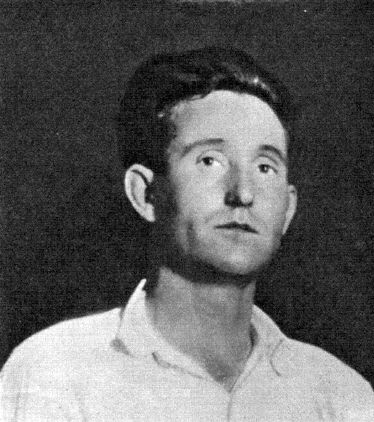
Frank Corey

Frank Corey

“That’s the man. I’m sure of it,” the pretty vaudeville actress told me. She was pointing to the picture of Frank Corey from Leavenworth.

Benny Perretti had left Boston in the meantime to play an engagement in New York. I took the pictures to New York and snowed them to Benny. He picked out the same picture Miss Jensen had.

“That’s “The Wop,'” Benny told me.

I hadn’t a thing to connect this federal ex-convict with the murder. I was just playing a hunch. I hadn’t any idea where he lived or what had become of him, either. Superintendent Crowley was backing me to the limit and he expected me to make good. He sent another rush message to Leavenworth and asked for the names of anyone Frank Corey had written to while serving his sentence.

We knew that such records are carefully kept at modern prisons. We were given three names and addresses, in Yonkers, New York, in New York City and in Worcester, Massachusetts.

I went to Yonkers first and found the person “The Wop” had written to from Leavenworth was dead. Then I looked up the New York City address. It was on West Forty Second Street and I found it was a maternity hospital. No one in this institution knew anything about the man I was hunting for.

I got a New York police detective to help me, and we started checking the number Leavenworth officials had given on every street on the West Side from Thirty Second to Fifty-Second. We hunted up the letter carriers too, but nobody had ever heard about any Frank Corey or the person whose name had been supplied by Leavenworth as that of someone the convict bad written to in New York.

Then we tried the East Side as a last resort. It was mighty hot and muggy in New York that week. I was nearly worn out by the long grind and lack of sleep. The detective with me finally quit to get some rest. I decided to try one more street and then knock off for a little while myself. A kid was eating a banana in a doorway. I started in there and slipped on the banana skin, fell and nearly broke my back.

This was on East Forty-Second Street. I was sweltering and my hurt back was throbbing, but I forgot my discomfort a few minutes later when I bumped into a woman who said she recognized the picture of Corey as a man who had been living next door with a Polish blonde. The woman said the couple were there several years before and that they had “cleaned out” the landlady and escaped with the loot.

The way I got the story it appeared the Polish blonde was the woman Corey wrote to from Leavenworth and he had joined her in New York after he was released.

WELL, the breaks were still against me, for the house next door had just been razed! I located the realtors and got the name of the trustee in a bank who had handled the sale for the landlady. I saw him and learned the landlady had just died. This looked like the end of the trail in New York. I couldn’t find anything more there, and so I came back to Boston on June 21st, and went to the station house to write my reports, feeling pretty discouraged. .

The Superintendent had a talk with me. I told him there was still one more possibility-the address in Worcester. He told me to keep at it; he thought my hunch looked good. So I went to Worcester the next morning and called at the Worcester Police Headquarters to tell my story and get a detective to go with me. The address I had was “Corey, 934 Grafton Street.”

On the way out there we met a motorcycle officer who told us the family at this address was named Krecorian and used the American name Corey. I showed him the Leavenworth picture and he said: “Sure, I know that felllow. That’s Frank Corey. I was talking with him this morning. There’s sewage draining into the road from the Corey place and I told them it must be fixed.

THIS gave us an idea. We arranged for the detective to take me into the house as an inspector from the Health Department, so I could talk with Frank Corey and get him down to Worcester Police Station for questioning without arousing his suspicion.

There was a crippled girl in the house who said her brother Frank Corey had gone in town and would soon return on the trolley car. While the detective with me was talking about the sewage complaint, I saw a picture on a table of the same man I knew to be Frank Corey, ex-convict from Leavenworth. I slipped it into my pocket without anyone noticing, and then we left the house.

It was arranged, for the motorcycle officer to go up the road to wait for the trolley, and see if Frank Corey was on it. I hid in the woods where I could watch without being seen, and the Worcester detective went to telephone. If Frank Corey was the man who killed Mrs. Price, I knew he would be on his guard and I didn’t want him to slip away from us.

Presently, the motorcycle officer came back and said the man we were after was on the trolley and would soon be home. We started walking along the road and just as we got to the Corey house a big gorilla-like man turned into the yard. It was Frank Corey, the man I had been hunting for more than two weeks.

We used the Health Department gag and it worked. Frank Corey agreed to ride down to Worcester Headquarters and get the sewage complaint fixed up.

On the way he said: “Gee, you fellows hound a guy.”

When he was safely in the police station, I asked him: “‘When were you in Boston last?”

“I was never in Boston in my life,” answered

“Do you know the Hotel Hollis?” I asked him then.

“Never heard of it,” Corey declared. “I was never in Boston in my life.”

“You know the ropes,” I told him, “you don’t have to talk if you don’t want to. Do you know Benny Perretti?”

“Over in Leavenworth Penitentiary,” said Corey.

I showed him his police picture and asked him: “Is this your picture?”

“That’s not my picture,” the man denied.

I told him he was under arrest charged with the murder of Mrs. Mae Price.

Everything he had said and our questions had been written down and I asked him to sign the statements he had made.

Corey told me: ”I’ll talk but I won’t sign anything.”

He was locked in a cell and I telephoned a report to Boston police headquarters. I was told that Captain Goodwin, my “skipper” at the Lagrange Street Station, would come to Worcester in a police car and get the prisoner.

In the meantime, Worcester police discovered they had a record of Corey. I learned he had been arrested a short time before on a charge of stealing a check and a bracelet. He agreed to make restitution to the plaintiff and was released. I found he had made restitution shortly after Mrs. Price was murdered.

While Corey was locked up in Worcester after I had questioned him he succeeded somehow in getting word out, and a lawyer came and told him not to talk. It was the same lawyer who represented him in the case where he had made restitution. The prisoner wouldn’t say another word after that. He was as mum as an oyster when we took him to Boston for arraignment in court. The grand jury indicted him for murder in the first degree and I worked up what I thought was a pretty convincing case for the trial.

I recovered the bracelet he had in stolen in Worcester, getting it from a man he had pledged it with for a loan. A Polish boy in Worcester told me that Corey had a big roll of bills when he came home early in June, and sent the boy to the store to buy a Boston newspaper. A clerk at Hotel Hollis identified Corey as a man who paid $1.50 in advance for room 512 on the night of May 28th.

The clerk said he used the name Frank Mulleono and registered again the evening of May 30th, but was not assigned a room because he attempted to pay for it with a check for $5 written with a pencil and which the room clerk refused to accept. Miss Jensen identified the prisoner as the man who accosted and frightened her on the top floor of the hotel the night Mrs. Price was killed and robbed.

The district attorney was satisfied with the theory of the crime we worked out, and it looked mighty good to me. I believed Corey had been lurking on the sixth floor of Hotel Hollis, where he accosted Miss Jensen, and that he took the key from the door of room 606 and used it to get into room 406, where he hid under the bed to wait for Mrs. Price. When we arrested him he had a package of cigarettes of the same brand as the partly smoked cigarette I found under Mrs. Price’s bed.

My theory was that Corey started to light up while waiting under the bed, and realizing that the smoke might betray his presence when Mrs. Price came in, he hastily extinguished it after one or two puffs. I believed he was there under the bed when Mrs. Price entered the room, put her money on the bureau, undressed and got into bed. Then when he supposed from her breathing the woman was asleep, he crawled out and was detected while securing the money. My evidence indicated that Corey grabbed Mrs. Price by the throat to prevent her from screaming, and was severely scratched on the hands and face during the desperate fight the unfortunate woman made to save her life.

A man answering Corey’s description, I eventually discovered, had visited a nearby drug store the day after the crime to get something for several severe scratches on his face. Worcester witnesses said Corey’s face and hands showed some marks when he came home early in June.

There was one mark on his face when we arrested him, almost healed, that he said was a cut from shaving.

Corey’s family spent about everything they had in his defense. He had a smart criminal lawyer, and there was a long-drawn-out trial. The jury was out for hours and finally came in with a verdict of acquittal.

I was amazed and bitterly disappointed, for I felt certain the man was guilty. So did the district attorney. We had learned that Corey had once deserted Iron the United States Army. This gave me the chance for another effort.

I arranged for the Federal authorities to lock Corey up as a deserter while I did some more work on the case. A curious thing had happened during the trial. A conversation I overheard in the courthouse between two men indicated that Corey had gone to a room on Hanover Street after Mrs. Price was murdered.

AT the murder trial we had not been able to show any of Corey’s movements after the murder until he arrived in Worcester two days later. I succeeded in locating the room in the Crawford House Annex where Corey had gone shortly after the crime, following the clue from the conversation I had overheard at the courthouse. I found he had appeared there early in the morning of May 31st with money to pay $2.50 for a room. Corey wasn’t satisfied with the $2.50 room and after seeing it he changed to another room for which he paid $3.50.

I discovered he was wearing a raincoat when he came in, and had left it there. I recovered the raincoat, and this coat was later identified by Miss Jensen and others as the one he was wearing at Hotel Hollis.

For a long time the trail seemed to end at this Hanover Street room, but I wouldn’t quit. Finally, I placed him the next night at Boston Tavern, the night of May 31st, 1925. The register confirmed the other evidence I secured, that Corey came there the night of May 31st with a woman companion and paid $6 for a room.

The case now seemed ready for the next step we had been secretly planning. The evidence was presented to the grand jury and a secret indictment was returned against Frank Krecorian, alias Corey, alias Costello, alias Mulleono, charging him with robbery of Mrs. Price in Hotel Hollis.

I went to Camp Devens, Massachusetts with the indictment warrant, and the Federal authorities delivered the prisoner to me.

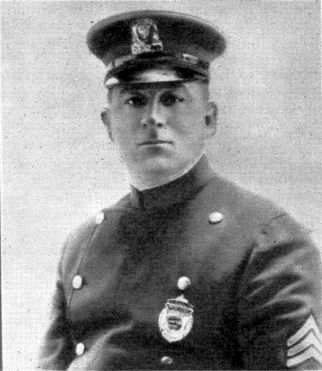
Sgt. Thomas Harvey

Sgt. Thomas Harvey, the man who solved the crime and co-wrote the article above.

There was a sensational trial.

Frank Corey was defended by the same astute criminal lawyer, but this time the jury found him guilty, guilty of robbing the woman of whose murder he had been acquitted. The defense lawyer claimed Corey was being placed in double jeopardy and appealed to the higher courts, but was overruled.

Judge Lourie sentenced Frank Corey to life imprisonment. He declared the crime was one of extreme atrocity, praised the jury for its intelligence, and intimated he was imposing the unusually severe sentence for robbery because of the unexpected outcome of the previous trial for murder.

Download PDF file of The Murder in Room 406

Be Sure To Follow Us on Facebook for Weekly Updates, New Stories, Photos & More

—###—


The Last Rendezvous of a Ladies Man, 1928, Indiana

Home | Feature Stories | The Last Rendezvous of a Ladies Man, 1928, Indiana


Original Title:
“The Truth about Evansville’s Infamous ‘Bohannon Crime,'” by Harry R Anderson, former Evansville Police Chief, as told to Warner O. Schoyen, City Editor of Evansville Courier, True Detective Mysteries, Oct. 1930.

Want to Read This Story Later on Your Tablet?
Download PDF file of The Last Rendezvous of a Ladies Man

.

BILL BOHANNON’S STUD OF WOMEN began early. He went through numerous volumes; and he was busily engaged in turning the pages of an unauthorized edition when he was interrupted by the stabbing flames of a revolver in the dark.

Even in his college days, when he was preparing for a .successful career in law, Bill Bohannon had acquired a reputation of “having a way with women.” To this very day, near the campus of Indiana University at Bloomington, there is a trysting place that is known as “Bohannon’s Hollow.” There he had a love nest where he wooed ardently on spring nights when the full flush of youth was upon him.

Out of school, Bill Bohannon married. But he could not be a one-woman man.
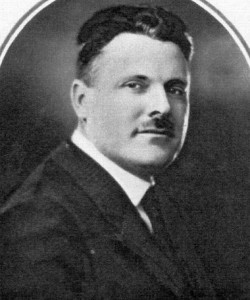
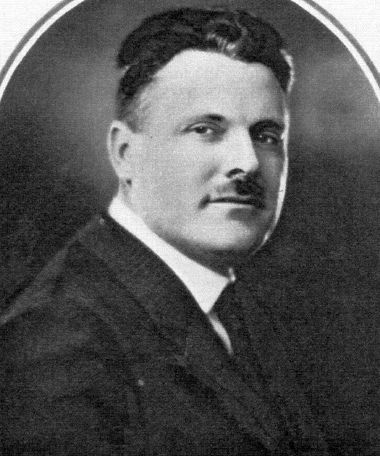
Bill Bohannon

Bill Bohannon

So when he came home one cool September night with two mysterious bullets in his body, the city was stirred by the buzz and hum of voices whispering, “Who is she?”

As Chief of Police of Evansville it was my business to find out the answer.

It was the night of September 14th, 1928. There was a lull at headquarters. Nothing was happening. Probably nothing would happen. But, police know, these quiet moments of cribbage games or checkers shift suddenly into gun play and startling death the next. Hours of calm change in a twinkling into swiftly lived minutes of violence or tortuous days of turbulence and unrest.

It might be such a night.

Suddenly, at 9 o’clock, words that were to stun a city crackled from the telephone. “Bohannon’s shot!”

From that moment on, for forty-eight hours, there came tense activity that fll1ds its echo even now in everyday conversation.

“Bohannon’s shot!”

Albert Felker, police reporter for the Evansville Courier, who was to play an important part in the case later, flashed the news to his city editor. His words exploded into tile mouthpiece.

That was all Felker knew then and that was all, with the exception of unimportant details, that the newspaper knew when its final edition reached the streets five hours later. The Courier, in announcing the shooting of Bohannon, told of his wounds, his pre-delirium statements, his physical condition. But it could not tell where the shooting occurred, nor why.

Nor could it tell that three other lives that night had been swept into a swirling vortex of tragedy.

William O. Bohannon, the central figure in this drama of passion and sudden death, was a successful Evansville lawyer. Well educated, well groomed, courteous, suave, he was a polished man of the world. His practice was good and growing.

He dealt in divorces mostly. Women. Bill Bohannon liked women. And-women liked Bill Bohannon.

And why not? Broad-shouldered, handsome, virile, he was at the same time mild-mannered, and had learned many soothing words and phrases in his years of dealing with women who· poured out their marital sorrows to him in the privacy of his office. And he had that appeal of near swagger, born of confidence.

Too, he was always the gallant. Had not gallantry and chivalry meant so much to Bohannon, he might still be carrying on his intrigues today.

September 14th, 1928, was a Friday. Friday nights were Bohannon’s “club” nights. His club, his wife understood, was political in nature and was secret unto holiness. Only those within its select inner circle were permitted to attend.  He could not even breathe the names of its members to his wife.

At a quarter of 9 o’clock that night Mrs. Bohannon was seated in the living room of her comfortable home at 1201 Blackford Avenue enjoying a quiet chat with a friend, little knowing that tragedy at that moment was stalking at her door step.

Suddenly she thought she heard her name called. The voice, it seemed, came from afar. Surely she was mistaken. Names come that way, hauntingly, in calm, peaceful hours.

But again “Lillian!” There was no mistake this time. She opened the door and peered out.

At the curb stood her husband’s automobile, lights burning and motor idling. She thought she saw him slumped in the seat behind the wheel.

Then she heard her name called again, not more than a hoarse whisper this time. There was calmness in the tone. The gallant William Bohannon would not alarm his wife.

With a shriek, she ran to the automobile.

“Honey, I’ve been shot,” he whispered, “two hold-up men-” and his voice trailed away into incoherent mumbling. There was only to be the words, “Honey, forgive me, you have been so kind,” uttered in a lucid moment in the hospital, and then-silence.

Friends of Mrs. Bohannon came at her call and the attorney was taken to the Deaconess Hospital where I sent detectives to await any word that might issue from the operating room. Reporters also stood in restive inactivity in the silent lobby patiently waiting for a break.

All they learned was that Bohannon had been shot twice and probably fatally. One of the bullets had entered the abdomen and had emerged at the back. The other had penetrated the chest. Either was a mortal wound.

I went into consultation early. With Prosecuting Attorney E. Menzies Lindsey and Edward Sutheimer, then Chief of Detectives, we groped blindly for a lead.

Mrs. Bohannon, questioned, knew nothing. All we were sure of, with what meager facts we had been able to glean, was that it was to be a sensational case.

The shooting of a prominent, respected attorney, no matter what the circumstances, promises sensations. Especially so if that attorney is not unattractive to women, nor blind to their charms. Through the remainder of the night the real story behind the shooting was purely conjectural. Where had the shooting occurred? Surely, not far from his home. For how could any man, we reasoned, drive his automobile any distance, being so badly wounded?

We were not satisfied that in his meager explanation to his wife he had told everything. Or even the truth. Someone had cause to shoot him. But who? And why?

With the coming day, as the attorney, unconscious, fought with his powerful physique a losing fight with death at the hospital, I set the entire police department to work in solving this puzzle.

His automobile, examined as soon as we got the report, revealed no due. There was nothing to work on. Yes there was. Bohannon had come home with his vest buttoned and his coat on. Two bullets had pierced his shirt. Yet neither his coat nor vest showed any bullet holes.

He had been shot while his coat and vest were removed! Was it not a normal conclusion that he had been surprised with a woman?

Had Bohannon become too friendly with another man’s wife? Had some sweetheart of another listened too attentively to his pleadings, and then told? Had some hired assassin “taken him for a ride?”

Coroner Max Lowe, an able investigator, interested in the case, was the first to issue a postulate.

“Bohannon was out with a woman whom he wants to protect,” Lowe said. “They were parked along some lonely road near the city and were surprised by hold-up men. Bohannon resisted because he did not want the identity of the woman learned. He was shot.

“It was reasoned that the shooting occurred near the city, because of Bohannon’s physical condition. It could not have been within the city limits or someone would have heard the shots. No reports of shooting had been received at Police Headquarters.

He arrived home alone after driving-how far? Could his strength be measured in miles? Not many. We were at a loss where to attack. But we were reasonably sure that at the bottom of it all could be found a woman.

“Find that woman,” I ordered. It was a harsh assignment.  It had long been whispered about and now spoken openly, that this attorney had not been a model of constancy. Surely someone must know the woman –or some woman. If anyone did, he did not come forward that night, openly.

We questioned several women who, we thought might be woven into the plot. One of these left on a train for Chicago an hour after being quizzed. All gave satisfactory accounts of themselves for the night.

As the morning wore on it became increasingly evident Bohannon was not to reveal more than he already had when he said ”I’ve been shot by two hold-up men.” His strength was leaving him rapidly. It was known that he would not survive. It was a matter of hours only, his physicians said.

At 9 o’clock that morning we got our first clue.

Detectives looking over Bohannon’s automobile on the night before had missed a clue that was to help them piece the story of the shooting together. They found, clinging to the framework underneath the car, some cornstalks.

Bohannon had been on or near some highway where he must have driven through a corn field. That meant little, then. Every highway about the city lay through corn fields. And corn stands high in Southern Indiana in mid-September.

It was baffling. It appeared that there was to be no solution unless the woman herself came forward in an effort to help identify the bandits, or the bandits themselves would tell. I t was extremely improbable that either should happen.

Detectives were sitting about mentally building up theories and blowing them to pieces again when at 10 o’clock in the morning the first real “break” came. The body of a dead man was found at the edge of a corn field about four miles from the city.

Coroner Lowe, Sheriff Shelby McDowell and I were notified. The man had been shot twice, once through the right shoulder and once squarely through the heart.

The body was found by Henry Schwartz, a farmer, at the edge of his corn field. He was driving by with a horse and wagon when he spied it, partially hidden in a ditch. It would not have been noticeable from a speeding automobile.

The road along which the gruesome find was made is known as the Lynch Road. It is four miles from the city and at that time was a popular trysting place for couples who carried secrets in their hearts. It was out of the way and not often patrolled by deputy sheriffs.

We immediately, of course, linked it with the fata wounding of Bohannon.

Bohannon always carried a gun. He was an expert in the use of firearms. I t was his hobby to collect weapons-and shoot them. Not far from where the dead man was found Bohannon had a summer home on a tract of land where he also maintained a private rifle range. Here he spent many idle hours alone, coaxing vicious barks from a revolver or automatic with a teasing trigger finger.

Did he know, perhaps, that some time he was to be in desperate need of speedy action and deadly aim?

He never was known to drive his car without a gun handy. A specially constructed holster had been built into the driver’s seat of his automobile where he could reach it easily with the minimum of suspicious movement.

Had he engaged in a gun fight with bandits, then it was almost certain that this dead man had tasted the fruit of Bohannon’s hours of pistol practice.

The body found in the ditch was that of a young man, probably twenty, probably twenty-five years old. He was of powerful physical make-up, with broad shoulders and bull-like neck.

A wrestler, perhaps, or boxer. His face, with its strong set jaws, broad ‘stub nose, and dark complexion, gave every appearance of a foreigner.

A foreigner, perhaps, of some Southern European extraction.

There are a meager few of those in Evansville.

Clutched in the dead man’s right hand was a rope. A search of the immediate vicinity revealed a flashlight and a billfold. There also was evidence of a struggle. Not far away there was a wide swath cut through the field of corn, wide enough for an automobile to pass through. The com was broken thoroughly and the path was fairly straight, indicating that the car must have been driven at an exceedingly high rate of speed.

There was no gun to be found. Bohannon’s gun had not been located although it was known that he had carried one on the night before.

But who was the dead man? Papers or letters that he might have carried were missing. There was not an identifying thing about hint.

The body was brought to the undertaking parlors of Klee and Burkhart in Evansville. Here the clothing was carefully guarded by officers who looked it over minutely for any trace of identity. His cap, a trademark revealed, had been purchased in Detroit. His suit had been bought in Chicago. A painstaking search finally revealed, indistinctly, a laundry mark.

This laundry mark was simply the letters “F. M.” While we looked upon them as being of some value, Felker, always an enterprising reporter, took it upon himself to trace the letters through the city’s laundries.

Of the more than a dozen, there were only three that used the initials of a patron’s first and last names as identification.

The first of these, Felker learned, had no customer whose name corresponded with the initials “F. M.” The second, he learned, with hopes rising, had one.

“But I know him,” the bookkeeper said. “He lives at —.” That left only one.

The last proved more promising. The letters were used for one customer. His name?

“Well, he always brought his laundry and always called for it.” They did not know his name nor his address. But he was “middle-aged, dark, and of a slightly foreign cast.”

“Middle-aged.” Felker walked away from the telephone, beaten. The man on the morgue slab still held his secret.

We were definitely certain, however, that the dead man and the wounded Bohannon had met on that Friday night. There could be no other conclusion. The tracks of the automobile that had driven through the corn field corresponded to the tread of the tires of Bohannon’s car. There were cornstalks on the framework of the auto. And a little later we learned from Mrs. Bohannon that the billfold found was the property of her husband.

Mrs. Bohannon also brought, out another fact that was to clinch the theory that her husband and the unidentified corpse had fought a duel to death. She brought forth the gun that Bohannon had carried the night before. She had found it in his automobile and had hidden it.

The gun was of the caliber that was used in the killing of the stranger. Three shots had been fired recently. Then the gun had jammed.

Bohannon’s billfold was empty. There was no money in the pockets of the dead man. In fact, they had been turned inside out. There was no money on the ground about the scene of the struggle. The absence of this important evidence pointed unmistakably to the presence of a fourth person at the trysting place, a companion of the dead man. And had not Bohannon said there were “two hold-up men?”

So, instead of one mystery that faced us when that Saturday morning broke, we now had three. Who was the dead man? Who was his companion? Who was the woman in the case? We knew that at least two of the questions had to be answered before we could hope to learn the third and last.

Meanwhile, hundreds of persons, in an endless line, the morbidly curious and those who thought by chance they might be able to recognize this mysteriously silent person, passed through the morgue. They looked at his face, shook their heads, and passed on. They paused outside to stand in sombre groups and speculate on his identity.

He looked like a wrestler, they said. Then someone remembered that there had been a wrestler with a carnival in Evansville the week before. His name was Frank Martin. “F. M.” Lorin Kiely, an attorney and a wrestling promoter, was called in.

“Well, he looks something like him, but I wouldn’t be certain.”

The carnival at that time was appearing in Hickman, Kentucky, and a long distance telephone call was placed in an effort at solution. The hopes of the authorities were doomed to failure. They were informed that the wrestler was still with the carnival and was not, so far as anyone knew, carrying any bullets in his body.

The sands of Bohannon’s hourglass of life were running low with the passing of the day and his lips remained silent. Toward dusk it appeared that the stranger was to lie unidentified throughout the night and possibly for all time.

Shortly before 5 o’clock in the afternoon Arthur B. Burkhart, the undertaker, was standing beside the form of the dead man when he heard a girl of about eighteen gasp and say. “Poor Frank.”

He seized the opportunity.

“Did you know him?”

“Yes!” She caught her breath. “He roomed with the Meadors on Harriett Street. I knew him. Frank was a good boy.”

Burkhart in his excitement failed to get her name.

At about the same time Patrolman Collison received a “hot tip” from a friend who visited the morgue.

“I didn’t know him,” Collison was told. “But I know where he lived. He has a friend at 1314 Harriett Street and lived there.”

Collison immediately relayed his information to headquarters. An investigation was under way at last with something tangible to work on.

Strangely enough, the man they were about to arrest had passed through the morgue that afternoon and had spent many minutes gazing in silence at this puzzling corpse.

His face, those who later recalled having seen him at the morgue said, revealed no clue as to the turmoil that must have raged within. As the face on the slab yielded no trace of the grimness it had known in the few tragic moments before life was snuffed out, so that face of his buddy bore a mask that was impenetrable.

Police officers going to 1314 Harriett Street were informed that the Meadors had moved that day. They now lived at 1102 Harriett Street just two blocks away.

Frank Paisley was the man arrested at the Pearson Meador home. He was twenty four years old and came from Essex, Missouri. He had, so far as we then were able to ascertain, no police record and the story he told of his connection with the dead man was not incriminating. Instead, convincingly believable.
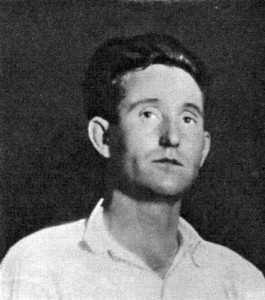
Frank Paisley

Frank Paisley

The dead man was Frank Mills, Paisley said. Mills was only nineteen years old. He came from Chicago, where he had a wife from whom he was separated. His real name was Milchunas and he was of Lithuanian parentage.

Mills and Paisley had worked together in Detroit and had come to Evansville about six weeks before, where they obtained work in a furniture factory. However, business was dull, and they had been laid off. They had not worked in two weeks.

He and Mills, he said, started out the evening before in Paisley’s automobile. In Garvin Park Mills saw a girl acquaintance and left Paisley. The latter, after riding about for a few minutes, returned to his rooming place.

There was no flaw in his story. There was nothing to attack. Paisley, the elder Meador and his son, Lee, told officers, had returned early the night before and had played cards with members of the family. There was nothing in his demeanor, they said, that might indicate any fierce mental unrest. He acted as usual, they said.

Paisley, as well as Mills who roomed with him, was a well-behaved young man, sober and industrious. Surely the police couldn’t suspect that Paisley had had anything to do with the crime, even if Mills had, which they also found it hard to believe.

Be Sure To Follow Us on Facebook for Weekly Updates, New Stories, Photos & More

We were not satisfied. Paisley was taken to Police Headquarters for further questioning. While he was there Detectives Charles Freer, Paul Newhouse, and Opal Russell went to his room, where a search revealed a revolver. With this they returned to headquarters. An examination proved that it was of the same caliber as the one with which Bohannon was shot. It had been fired recently.

Confronted with the gun, Paisley still maintained that he knew nothing of the crime. Questioning was continued, intensely, unabatingly. Within an hour he blurted out a confession.

“About 6:30 o’clock in the evening of September 14th,” Paisley’s confession started, “Frank Mills and I left our Harriett Street home in my car. We drove out State Road No. 41 and turned east about a mile north of Pigeon Creek and went east about one mile. Mills directed me to stop by the side of the road near a woods.

“Mills told me he wanted to catch a couple parked on the road and take the man out of the car and get the girl. Mills had a gun in his possession and showed it to me.

“After I had stopped the car as Mills directed he took a window cord rope about ten feet long out of his pocket. We got out of the car and down in the ditch on the south side ‘of the road. Mills cut the window cord, gave me half and kept half. Mills had his gun with him and told me to bring along the flashlight that I always carried in the car.

“We waited in the ditch one and a half or two hours and then a car drove up from the west and stopped at the side of the road near the ditch in which we were hiding and about two hundred feet west of my car.

“When Mills saw this car he said to me, ‘That’s it now.’ I do not know whether he knew the occupants of the car.

“Mills told me that he would hold the gun on the man and that I should cover him with my flashlight and tie him with the rope.

“We stooped low on our hands and feet and crawled down the ditch to the parked car. When we got to the car I went up on the right side and Mills came up from the right rear. I flashed a light in the car and saw a man and girl in the rear seat.

“They were in an embrace. I asked them what they were doing. Mills then was at the back of the car. I ordered the man to get out of the machine, saying, ‘Buddy, come out of that car.’

“The man did get out of the car on the same side I was on and next to the ditch and stood near me.

“I ordered him to put his hands behind him so I could tie him. Instead of putting his arms around behind him he started arguing with me. Mills came around from behind the car and the man turned around and faced Mills, who had him covered with a revolver. The man started arguing with Mills and Mills ordered him to face away from him so he, Mills, could tie his hands. The man started to turn around and just then it looked like he fell partly into the front door of the automobile. I think it was then that the man with the girl got his gun.

“Mills dragged the man out of the car and they both fell in the ditch. The man landed in the ditch on his back and right side. Mills landed on his feet, standing almost over him.

“Mills shot the man with his revolver while in this position and the man in the ditch shot twice at Mills and once at me. I jumped in the ditch and ran east. I heard Mills fall. I ran about ten feet in the ditch and lay down on the ground and the shot passed over me as I did so.

“I looked around and saw one man get out of the ditch and get in the car and drive away east. The car passed on the road near where I was hiding in the ditch.

“As soon as the car passed, I went back to where Mills was on the ground in the ditch on his left side. I called to him, but he did not answer. I couldn’t hear him breathe so I thought he was dead.

“I picked up Mills’ gun and started back to my car, walking along the ditch. The man with the girl had given Mills his pocketbook while he was arguing before the fight.

“He wanted to buy off Mills so he would not touch the girl. Mills gave this pocketbook to me. As I was walking down the ditch to my car I passed a culvert and threw the pocketbook and flashlight under it to get rid of them.

“Mills told the man that he wasn’t after money but wanted the girl. He had told me that he pulled these tricks before. He said it was safe because most of the time these people caught along country roads at night wouldn’t raise a yell about it for fear of publicity.”

Paisley said that he then drove to his home where he put the gun in a dresser drawer without removing the shells. The confession was signed in the presence of Coroner Lowe, Ira C. Wiltshire, now Chief of Detectives, Philip C. Gould, and attorney and friend of Bohannon, and myself. It was obtained a little after 7 o’clock, Saturday night.

At 8:55 o’clock word came from the hospital that Bohannon had died. With Mills and Bohannon dead and the identity of the woman still unknown, we had only the words of Paisley for the story of the tragedy enacted along the Lynch Road on that fatal Friday night. Paisley disclaimed knowledge of the identity of the woman. It seemed certain then that her identity would never be known.

But within the next twenty-four hours the city was to be rocked by another sensation. What happened to Bohannon and his girl companion after the shooting we pieced together in the light of evidence gathered.

Badly wounded, but with a sense of honor that probably saved the girl from shameful violence at the hands of Paisley and Mills, Bohannon drove from the scene at a furious rate of speed. He started down the road toward the Oak Hill Road. Then as he saw the Paisley automobile parked on the highway, he veered desperately to the left and cut through the corn field belonging to Schwartz.

Schwartz, who had heard the shots, had come to the field. He said Bohannon’s car cut a swath through a quarter of a mile of high corn. Then, entering a hay field, it stopped. Here Bohannon got out and removed the corn stalks that had gathered on the fenders and bumper of his automobile.

Thinking the car contained corn thieves, Schwartz called to the driver. The motor roared again and the car shot out at a breakneck pace. Schwartz fired twice with a shotgun over the car, he said.

Picture Bohannon. Already in a state of intense fear, mortally wounded, fleeing for safety, two more shots were fired at him. Had he fallen into a trap from which there was no escape? He answered the latest volley with a furious burst of speed. He turned to the right and continued through the hay field until he struck the private road leading to the Schwartz home. He drove along this road until he emerged on the Lynch Road again, some distance ahead of the bandits’ car. then, turning to the left, sped on to the Oak Hi!1 Road. Then home.

THE city was tense with excitement Sunday. On the lips of all were whispers of conjecture as to who the woman might be. There were many names mentioned. Too, there were other theories advanced in the privacy of homes and in the gossip on street corners. Had Bohannon’s slayer been paid to kill him? Did Mills know when he said, “That’s it now,” who the car’s occupants were? Was Mills a hired assassin paid by some wronged husband or outraged lover?

On the theory that Mills may have been in contact with Bohannon at some previous time, we brought Miss Norma Feuger, Bohannon’s stenographer, to the morgue to look at Mills. She had never seen him in the lawyer’s office, she said.

Norma Feuger

Norma Feuger

We were inclined to believe Paisley’s story that Mills had gone out for the purpose of rape, with robbery as a secondary motive, and that Bohannon had merely been a victim of chance.

But even to-day in Evansville when the famous “Bohannon case” is mentioned there are many ‘who believe that Bohannon died, not for what he did that night, but for previous philanderings.

Late Sunday afternoon, Felker, a reporter, hammered away at Captain of Police August Heneisen for permission to talk to the prisoner.

“He hasn’t told all,” Felker argued. “We can get a new confession out of him.” So persistent was he that finally Captain Heneisen and Felker went to the prisoner’s cell. Felker had studied the case and had convinced himself that Paisley’s confession had not been the truth.

Felker is a smooth worker. He started in on Paisley, quietly, with an assumed air of hero worship. He wanted an interview for his paper, he told Paisley, from Paisley’s own lips. Paisley listened. For the first time since his arrest he heard sympathetic words. He fell quickly into the confidential tenor of the conversation. Felker’s questions were penetrating. Carefully he noted the answers.

“But how,” Felker asked, “did it happen that Mills did the shooting when he had the rope in his hands? How could he handle a gun with both hands occupied?”

“Well, he did it,” Paisley said, hesitatingly.

Felker continued, with Captain Heneisen now and then interspersing questions.

Paisley was weakening.

“Paisley, come clean,” Captain Heneisen spoke softly, but imperatively. The prisoner hung his head.

“I killed Bohannon.”

The words were quietly spoken, but neither Captain Heneisen nor Felker doubted for a moment but that the truth was on its way out.

“I couldn’t sleep last night,” Paisley started. “I won’t be able to sleep until I get this off my chest. They might hang me, but I guess I’ve got it coming to me.”

Then his confession came, freely and without effort at concealment. He was unburdening his soul. Then he could sleep. On the whole, his story was the same that he had told the night before, but varied in its essential details.

Paisley said he wanted to commit robbery only but that Mills insisted on “getting the girl.” Paisley argued vainly against it and when Mills ordered him to tie Bohannon’s hands behind his back, he refused.

“Hell, I’ll do it myself,” he quoted Mills as saying. Mills then handed the gun to Paisley and grappled with Bohannon, with the result that they both fell into the ditch. As they got up Bohannon fell against the door of the automobile.

“I thought he was reaching for a gun,” Paisley said, “and just then Bohannon fired. Mills reeled and fell as Bohannon ‘shot again.”

Paisley then fired twice at Bohannon, he said, and then ducked, he said, just as Bohannon’s gun barked for the third time.

During the argument and shooting, Paisley said, the girl in the car was screaming at the top of her voice.

Paisley did not believe he had hit Bohannon, as the latter entered his automobile and drove off without apparent effort.

The prisoner had served in both the Navy and the Army and had become an expert pistol shot. But it was dark and his target was not clear. He fired more in self-defense than anything else, he said.

Mills, Paisley said, had engaged in numerous other cases like the one he had planned for that night, when he lived in Springfield, Illinois. He told Paisley that he and a buddy would hold up a car at some trysting place, tie the man and then attack his girl companion. He never met with much resistance, he said.

This second confession was a “break” for the newspaper. But there was another, more important “break” even then being prepared.

At 8 o’clock that night Norma Feuger, Bohannon’s stenographer, committed suicide by drinking carbolic acid!

Paisley had said he did not know the woman. He had seen her for a fleeting instant only, when he flashed his light on the couple in the rear seat of the sedan.

“She was young and she was a blond.” That was all he could say.

Norma Feuger, young and blond, was twenty, and pretty. She was gentle and quiet. No mention had been made publicly of her name, although at the time she so dramatically entered the picture Prosecutor Lindsey was out at the Bohannon home questioning Mrs. Bohannon about her.

No taint could be placed on her spotless reputation. She had been reared in the quiet little Indiana town of Gentryville, and was as peaceful and tranquil, seemingly, as the little village that holds a store of Lincoln treasure. It was at Gentryville, historians say, that Lincoln gained the nickname of “Honest Abe” while a clerk in Jones’ store.

Norma came to Evansville two years 11 before and entered business college. She had been a good student; not brilliant, but one who attended to her work and did that work conscientiously, thoroughly, and well. She had no other interests, her friends said.

To them she was known as a gentle, unassuming girl who took life more or less seriously. She had none of her own generation’s love for excitement and thrills. She neither drank nor smoked, and attended dances infrequently. She was a “girl without a date,” as her best friends described her after she had elected to pass out of life by her own hand.

Why had she, whose name had not been mentioned, who had given no reason for suspicion, projected herself so suddenly into the case by so sensationally dropping out of it?

We all accepted it as self-condemnatory. We did not say so publicly.

Let’s see what Norma was doing during those hours between the time Bohannon left his home until she swallowed poison in the kitchen of the modest little house where she lived with her widowed mother.

Bohannon left home Friday night about 7 o’clock. Norma at that time was seen by a minister friend getting on a Weinbach Avenue bus which would take her to Eighth and Main Streets. At 7:30 o’clock Bohannon had been recognized by a friend who saw him seated alone in his parked automobile near Eighth and Main Streets.

Bohannon appeared at his home at 8:45 o’clock, mortally wounded. Norma, her mother said, returned home between 8:30 and 9 o’clock. There was nothing in her demeanor, her mother said, that might indicate that she had passed through any soul-stirring experience. Her mother did not question her about where she had spent the past two hours nor did the girl offer an explanation. Norma never did speak much anyhow, so her silence was not strange.

The following day—Saturday—Miss Clarice Cummings, one of Norma’s girlfriends and her closest companion, called her by telephone. Norma seemed utterly surprised to know that her employer had been shot. But she also was depressed by the news. Surely not surprising, as she had been employed by Bohannon for more than a year. Bohannon had been interested in the girl, his wife said, and often had taken her home from his office in the evening. With Mrs. Bohannon he had taken her riding.

Norma went to the office that Saturday morning but took the afternoon off, as had been her custom. During the afternoon she called at the hospital, but was denied admittance to the attorney’s room.

In the lobby she met Mrs. Bohannon.

“Mrs. Bohannon, may I have a minute with you? I want to talk to you,” she said.

Just as the conversation was about to begin Mrs. Bohannon was called to her husband’s side. She never saw Miss Feuger again.

Norma remained at home Saturday night, depressed and moody, interested only in the outcome of Bohannon’s condition.

Sunday about noon Miss Cummings called Norma by telephone again and they went to Garvin Park, where they spent the afternoon. There they discussed the shooting and Miss Cummings even ventured a guess as to whom the woman might have been. Norma had little to say about it.

They returned home late in the afternoon. Norma, instead of remaining at home, walked to a corner drugstore, where she bought a four-ounce bottle of carbolic acid. She didn’t know what her mother wanted it for, she told the clerk. She drank a Coca Cola and then went home.

Her mother asked her if she wished something to eat.

“No, I don’t feel hungry, mother. I just had a ‘coke’,” she replied, then went to her room.

A few minutes later she returned and walked into the kitchen. There, after an instant, her mother heard her groans and rushed out to find her dying. Close against her mother’s breast, death came.

Police found, strewn about on the floor of the kitchen, tiny bits of paper containing now undecipherable writing. Another paper carried this message in Norma’s handwriting:

“I want my mother to have everything I own … Norma.”

What might the tiny bits of paper reveal?

Why had she torn that note into bits. Or had someone else destroyed it? Does someone know, today, what Norma wrote in those torturing minutes when she was laying bare her soul?

Paisley could not tell whether Norma was the girl with Bohannon. He was brought to the morgue. He looked into the face of the girl who lay there, “young and blond.” But he did not condemn the suicide. He shook his head and said, “I don’t know.”

His death was to be demanded by the State later. But he escaped the penalty of the electric chair and now is a lifer in the Indiana State Prison at Michigan City. He was brought from his cell into Circuit Court one morning, suddenly, and on a plea of guilty was sentenced to life imprisonment over the protests of Prosecutor Lindsey. Judge Charles P. Bock, who passed judgment, has said that he never will sentence a man to the electric chair.

Evansville still talks about “the Bohannon case.” And when it does, it always comes to this: Was Norma Feuger, pretty and blond twenty-year-old stenographer, the companion of William 0. Bohannon, wealthy and prominent divorce lawyer, on the night of his ride to his last romantic rendezvous? Or was Norma Feuger an innocent dupe of the fates, who, when she feared that the pointing fingers of shame and scorn might be directed at her, sought refuge in suicide? The pretty blonde took the answers with her.

Be Sure To Follow Us on Facebook for Weekly Updates, New Stories, Photos & More

—###—

The Family That Murders Together

Home | Short Feature Story | The Family That Murders Together


The following story was written by Thomas Duke in 1910. At the end of the story are links to more information and there has even been a movie made recently about this case.


On March 9, 1873, Dr. William H. York left Fort Scott, Kansas, on horseback for his home in Independence, Kansas, and although the days and weeks rolled by, he did not appear at his home. Dr. York was in comfortable circumstances; possessed of a cheerful disposition, and had friends galore who decided that he had not voluntarily disappeared, and they concluded that he had become the victim of foul play, as it was known that he had considerable money on his person.

Senator and Colonel York employed detectives and joined them in the search for their missing brother. Excitement ran high throughout the State, and volunteer searching parties inspected nearly every foot of ground and dragged the rivers throughout the surrounding country.

There was a little town called Cherryvale, about fifty miles from the south line of the state (Kansas/Oklahoma), and Dr. York was traced to this place. About two miles south of this town, on the main wagon road, stood a small frame tavern, having a room in front where meals were served to wayfarers by William Bender and his family, who moved into the house in March, 1871.

Bender was sixty-three years of age and Mrs. Bender was about sixty years old. The son was twenty-seven, and the daughter Katie was twenty-four years of age. The father and son were large, coarse appearing men, and the daughter was a large, masculine, red-faced woman who bore an exceedingly bad reputation.

The family professed to be spiritualists and the daughter claimed that she possessed supernatural powers, as will be seen by the following advertisement inserted in the Kansas papers:

“Professor Miss Kate Bender can heal disease, cure blindness, fits and deafness. Residence, 14 miles east of Independence, on the road to Osage Mission. June 18, 1872.”

On April 3, 1873, a party of men rode up to this roadside tavern and asked the Bender family if they had heard or seen anything of the missing Dr. York, but they claimed to be ignorant of his whereabouts. A few days afterward, another party called and made the same inquiry. The Bender family, fearing that they were suspected, hitched up their team and, without touching the household effects, drove away.

On May 9, another searching party, while passing Bender’s tavern, noticed its deserted appearance. This impressed them as being rather singular, and when they went to the rear of the house, they found that some hogs and calves had died there, evidently from thirst or hunger. This aroused suspicion and the authorities instituted an investigation.

In a small one-half acre orchard adjoining the house, the surface of the ground had been carefully plowed and harrowed, but there had just been a heavy rainfall and in a certain place the ground had settled very noticeably and the settled portion was about the size of a grave. The ground was then dug up and the badly decomposed body of Dr. York was found. The skull had been crushed and the throat cut. Before nightfall seven more bodies were exhumed and were subsequently identified as follows :

No. 1. W. F. McCrotty, a resident of Cedarville, who was contesting a case before the land office in Independence and who probably stopped at Bender’s for refreshments.

No. 2. D. Brown, a resident of Cedarville, who had been trading horses in the neighborhood with a man named Johnson. Brown’s body was decomposed beyond recognition, but it was identified through a silver ring which Brown wore and which he had shown to Johnson.

No. 3. Henry F. McKenzie of Hamilton County, Indiana, who had been missing since December 5, 1872. He was en route to Independence for the purpose of locating there. His sister, Mrs. J. Thompson, identified his wearing apparel.

Nos. 4 and 5. Mr. Longoer and his baby girl. This gentleman had buried his wife in 1872 and was about to leave for Iowa.

Nos. 6 and 7 were the unidentified bodies of two men.

In each instance the skull was battered to a pulp and the throat cut from ear to ear, with the exception of Mr. Longoer’s eighteen-months-old girl, who died from suffocation. As there were no marks on the child’s throat, and as she was lying under her father’s body in the grave, it is probable that she was thrown in alive and was suffocated when her father’s body was thrown in on top of her.

The next day another body of a child was found, but it was so badly decomposed that it was impossible to ascertain its sex. Judging from the length of its golden hair and the size of the body, it was evidently the remains of an eight-year-old girl. This body was evidently butchered by a fiend. The breast bone was driven in ; the right knee was wrenched from its socket and the leg doubled up under the body.

When the officers entered the deserted house they were met by an unbearable stench. It was then revealed how the whole series of crimes was committed.

A little booth was formed by cloth partitions, in which the guests partook of their meals. The table was purposely set back so near this partition that when they sat in an up: right position in their chairs, the back of their heads would be against and indent this cloth. If the guests had the appearance of having money in their possession, one or both of the male members of the family would patiently wait on the opposite side of the curtain with heavy stone-breaker’s hammers, two of which were found by the officers, and when the guests sat upright and the impression of the back of their heads appeared on the cloth partition, the assassin, or assassins in case two guests were to be disposed of at once, would swing the hammers and crush in the victims’ skulls.

As people were constantly passing on the road who might stop at Bender’s, it was necessary to get the bodies out of sight as quickly as possible, and for this purpose a trapdoor was made in the floor, which was directly over a pit about six feet deep, which had been dug in the ground. After the body was thrown in the pit, the throat was cut from ear to ear, for fear there might be a spark of life yet remaining. It was the accumulation of congealed blood in the pit which caused the terrible stench.

After it became dark, the grave would be dug and the body buried. The reason for keeping the ground in the orchard constantly plowed and harrowed was to prevent the new graves from being noticed.

When the neighbors learned of this series of atrocious murders, they became almost insane in their desire for vengeance, and they immediately organized vigilance committees and scoured the country in the hopes of apprehending this family of fiends.

About a mile from Bender’s tavern was a grocery store conducted by a man named Brockman, who had been a partner of Bender’s from 1869 to 1871. As both men were Germans and close friends, it was suspected that Brockman was an accomplice in some of the murders, or at least could impart valuable information, both as regards the crimes and as to Bender’s whereabouts. A posse therefore seized him and after taking him to the woods, some eight miles distant, they placed a rope around his neck and told him to confess all that he knew or be hanged.

He begged for mercy and swore that Bender had never made a confidant of him. The frenzied posse then hanged him to a tree, but when he was on the point of death, they let him down to the ground and after restoratives were ad-ministered, he finally regained his speech. Again he was ordered to confess and again he swore that he was ignorant of Bender’s doings.

He was hanged again and this method of torture was repeated three times, but it availed the posse nothing, and they finally left Brockman lying on the ground in a semi-conscious condition, but he eventually recovered.

Sometime previous to the discovery that Bender’s tavern was a human slaughter-house, the body of a man named Jones was found in Drum Creek. The back of the head was completely crushed and almost severed from the body. The only clew obtainable was a wagon track through the snow, which led down to the creek near where the body was found. But there was a peculiarity about this track because of the fact that one of the wheels was evidently considerable out of plumb, therefore, in revolving it made a zig-zag track through the snow. In view of the discoveries at Bender’s tavern, an experiment was subsequently made with the wagon in which the family temporarily escaped, and it was found that their wagon left tracks similar to those found in the snow.

This deviation from the usual method of disposing of the bodies of the victims, was due to the fact that at the time of this murder the ground was frozen, thus making grave-digging slow work and hard to conceal. Upon arriving at the frozen creek, it became necessary to cut a hole in the ice and push the body underneath, in order to conceal it for the time being.

There is no doubt but that the methods above described were those employed by these butchers, as two prospective victims unconsciously escaped from their clutches after all the preliminaries were arranged, and it was not until the expose that they realized their hair-breadth escape from being “planted” in “Old Man Bender’s” orchard.

Mr. Wetzell of Independence, Kansas, read Kate Bender’s advertisement of her remarkable ability as a healer of the afflicted, and being constantly tortured with neuralgia in the face, he induced a friend named Gordan to accompany him to her home. Upon examining his face, Kate expressed confidence in her ability to effect a permanent cure, but as it was about dinner time she invited both men to dine first. She set the chairs for the guests so that their heads were in close proximity to the cloth partition, and eatables were then placed on the table.

When they first arrived they observed that Old Bender and his son scrutinized them closely, but assuming that it was done merely through curiosity, they gave the incident no further thought at the time.

When the visitors took their position at the table the father and son disappeared. For some reason, which Wetzell and Gordan could not explain, they immediately arose from the table and stood at the counter to eat their meals.

Up to this time Miss Bender was most affable toward her guests, but at this unexpected turn of affairs, she became caustic and almost abusive in her language toward them.

The two male Benders then reappeared from behind the partition, and after casting a glance at the two strangers, they repaired to the barn, a few rods from the house. The guests became suspicious at this sudden change of demeanor on the part of their hostess and immediately left the building and went out on the road.

Providentially two wagons were being driven past at this moment, and Gordan and Wetzell jumped into their buggy and drove away ahead of them, but on reflection they con¬cluded that perhaps they were unnecessarily alarmed and dismissed the incident from their minds.

As there has been much speculation as to the fate of the Bender family the following letters from the Chiefs of Police of Independence and Cherryvale, Kansas, to the author are published in part:

“Cherryvale, Kansas, June 14, 1910.

“Dear Sir :—Yours just received. It so happened that my father-in-law’s farm joins the Bender farm and he helped to locate the bodies of the victims. I often tried to find out from him what became of the Benders, but he only gave me a knowing look and said he guessed they would not bother anyone else.

“There was a vigilance committee organized to locate the Benders, and shortly afterward old man Bender’s wagon was found by the roadside riddled with bullets. You will have to guess the rest. I am respectfully yours,

J. N. KRAMER,

“Chief of Police.”

 ——–

“Independence, Kansas, June 14, 1910.

“Dear Sir :—In regard to the Bender family I will say that I have lived here forty years, and it is my opinion that they never got away.

“A vigilance committee was formed and some of them are still here, but they will not talk except to say that it would be useless to look for them, and they smile at the reports of some of the family having been recently located.

“The family nearly got my father. He intended to stay there one night, but he became suspicious, and although they tried to coax him to stay he hitched up his team and left.

“Regretting that I cannot give you more information,

“I am yours respectfully,

“D. M. VAN CLEVE,

“Chief of Police.”

Source: Thomas Samuel Duke, “Celebrated Criminal Cases of America,” The James H. Barry Company, 1910.

More Reading:

https://en.wikipedia.org/wiki/Bloody_Benders

TruTv Crime Library (link removed)

The Bloody Benders: 140-year-old crime scene still fascinates today – Wichita Star

 —###—

Candy From a Stranger: The Cordelia Botkin Case of 1898

Home | Short Feature Story | Candy From a Stranger: The Cordelia Botkin Case of 1898


The following story was written by Thomas Duke in 1910. At the end of the story are links to more articles, a video, and there has even been a movie made recently about this case. The Botkin-Dunning Case was the first time the US Postal Service had been used to commit murder.


Mrs. Cordelia Botkin loved to have her photo taken and said she had poised for more than 100 photographs. The San Francisco newspapers took note of her vanity and published three of them.
Cordelia Botkin, In 1895, she began an affair with Associated Press newspaper reporter and editor JP Dunning who had recently arrived in San Fransisco with his wife and children. He immediately fell into gambling, drinking heavily, and chasing women. Botkin was just one of his reported three extra-marital affairs.
Cordelia Botkin in another of her vanity poses.
John P. Dunning. Tired of witness his debauchery, Mrs. Dunning, a beautiful, kind, caring and sweet woman, returned to Delaware with her children where her father was a congressman.
On August 9, 1898, Mrs. Dunning received a beautiful package filled with arsenic poisoned bon-bons. Six people ate candy from the box, two of them died including Mrs. Dunning and her sister, Mrs. Deane. The other four recovered.
At her trial, which began on September 6, drugstore proprietor Frank Grey testified he sold arsenic to a Mrs. Bothin who insisted she needed the poison to bleach a straw hat. When he recommended better products for that purpose, she refused him, and purchased the poison. Other witnesses and circumstantial evidence presented at trial proved overwhelming and on December 30, she was found guilty.
Cordelia Botkin's least favorite photograph. She received a new trial in 1904 and was again found guilty. Her former lover, John Dunning, died in 1908, penniless. While in jail and prison, she received extraordinary privileges in exchange for sexual favors with her guards and officers. Photo Courtesy of California State Archives.


On February 12, 1891, John P. Dunning, who became famous as a war correspondent, married Miss Mary Pennington, daughter of ex-Congressman John Pennington, in Dover, Delaware, and the couple came to San Francisco to reside.

The next year a little daughter was born. The family then moved to 2529 California Street, and while living at this address, Dunning took a stroll in Golden Gate Park one afternoon and flirted with a woman sitting on a bench. They entered into a conversation, during which the woman said her name was “Curtis,” and that her husband was in England. After they became more familiar the woman admitted that she was the wife of Welcome A. Botkin, whom she married in Kansas City on September 26, 1872, and that she had a grown son named Beverly. Her maiden name was Cordelia Brown, and the town of Brownsville, Nebraska, was named after her father. Botkin was for many years connected with the Missouri Valley Bank in Kansas City, but lived in Stockton, California, with his son, Beverly, at the time his wife met Dunning. While his wife remained in San Francisco Dunning met Mrs. Botkin clandestinely, but Mrs. Dunning took her baby to her father’s home in Dover, Delaware, and thereafter her husband and Mrs. Botkin were constant companions at the races and cafes.

Cordelia Botkin

Cordelia Botkin

Mrs. Botkin moved to 927 Geary Street and Dunning took a room in the same building. In the course of conversation he told Mrs. Botkin that his wife was passionately fond of candy and that she had a very dear friend in San Francisco named Mrs. Corbaley.

On March 8, 1898, Dunning accepted a position as war correspondent with the Associated Press, which made it necessary for him to depart immediately for Porto Rico. When he told Mrs. Botkin his plans, she pleaded with him to remain with her. He turned a deaf ear to her pleadings and told her bluntly that he would never return to San Francisco.

She accompanied him across the bay and wept bitterly when they parted.

On August 9, 1898, a small package arrived in Dover, Delaware, addressed to Mrs. John P. Dunning. That package was placed in the mail box belonging to her father, and was called for by Mr. Pennington’s little grandson and taken home.

The family consisted of Mr. and Mrs. Pennington, their two daughters, Mrs. Dunning and Mrs. Joshua Deane ; their son-in-law, Mr. Deane, and the two little children of Mr. and Mrs. Deane.

After supper the family repaired to the veranda, and Mrs. Dunning opened the package, which proved to be a fancy candy box containing a handkerchief, chocolate creams and a small slip of paper on which were the following words:

“With love to yourself and baby.—Mrs. C.”

Mrs. Dunning could not imagine who had sent the package, but being a noble woman, with friends galore, she did not suspect that she had an enemy in the world, and therefore her suspicion was not aroused.

Mrs. Dunning and Mrs. Deane and the latter’s two children partook of the candy, as did also two young ladies, Miss Millington and Miss Bateman, who chanced to pass the Pennington residence while the family were seated on the veranda. During that night all who partook of the candy were taken with retching pains in the stomach and vomited freely.

All recovered with the exception of Mrs. Dunning, who died on August 12, and Mrs. Deane, who died on August 11. Autopsies disclosed the fact that these ladies died from arsenic poisoning.

Mr. Pennington examined the handwriting on the box and on the slip of paper and discovered that it corresponded with the handwriting of an unknown person who had written an anonymous communication from San Francisco to Mrs. Dunning many months previously, in which it was alleged that Mr. Dunning was on intimate terms with a woman in San Francisco. Dr. Wood, a chemist, examined the candy which had not been eaten, and discovered a large amount of arsenic present.

John P. Dunning was advised by telegraph of what had transpired and he proceeded at once to Dover. He immediately recognized the handwriting as that of Mrs. Botkin and recalled his remark to her regarding his wife’s fondness for candy, and also that his wife had a friend in San Francisco named Mrs. Corbaly, which accounted for the initial “C.” signed to the note.

Detective B. J. McVey was sent to San Francisco with the candy, handkerchief, candy box and the note found in the box. Chief of Police I. W. Lees took charge of the case. Mrs. Botkin was located in Stockton, Cal., where she was living with her husband and son. Detective Ed. Gibson brought her to San Francisco, and in a few days an overwhelming amount of circumstantial evidence was piled up against her.

She was positively identified by Miss Sylvia Heney and Miss Kittie Dittmer as the woman who, on July 31, bought candy in the candy store of George Haas under the Phelan block on Market Street. Miss Heney furthermore swore that this woman requested that the candy be placed in a fancy box which did not have the firm’s name on it, and also instructed that the box be not filled completely as she had another article to place in the box.

John P. Dunning produced love letters written to him by Mrs. Botkin, and handwriting expert Theodore Kytka testified to what was obvious to all, namely, that the person who wrote the love letters wrote the address on the candy box and the note therein.

Mrs. Botkin even neglected to remove the store tag from the handkerchief which she purchased in the “City of Paris” store from Mrs. Grace Harris, who even recalled the conversation she held with Mrs. Botkin. When asked why she recalled this so clearly, she stated that Mrs. Botkin’s resemblance to her dead mother startled her. She subsequently produced a photograph of her mother to show the striking resemblance.

Frank Grey, a druggist employed at the “Owl” drug store, positively identified Mrs. Botkin as the woman who had pur-chased two ounces of arsenic for the alleged purpose of bleaching a straw hat, and insisted upon getting this drug even when the druggist informed her that there were other preparations better adapted for the purpose.

On August 4 the package of candy was mailed at the Ferry Post Office and was particularly noticed by a postal clerk named John Dunnigan because the address, “Mrs. John Dunning,” reminded him of his own name. On this same day Mrs. Botkin left San Francisco for St. Helena.

Mrs. Almura Ruoff related a conversation she had with Mrs. Botkin in Stockton on July 27, 1898, in which the latter made inquiries as to the effect of different poisons on the human system, and asked if it was necessary to sign one’s name when sending a registered package through the mail.

After Mrs. Botkin left the Hotel Victoria at Hyde and California streets, where she had been stopping some months, W. P. Rossello, a porter, and W. W. Barnes, a clerk, found a torn piece of a gilded seal, similar to those pasted on candy boxes, on the floor of room 26, which Mrs. Botkin vacated. It was proved that the seal came from Haas’ store and the wrapping on the candy box clearly showed where it had been removed.

Extradition papers were forwarded from Delaware as it was planned to take her there for trial, but her attorney, George Knight, attempted to procure her release on the grounds that the evidence was insufficient, and furthermore, that the jurisdiction for the trial was in California and not Delaware.

Superior Judges Cook, Borden, Wallace, Troutt and Seawell, sitting en banc, rendered a decision on October 23 to the effect that the jurisdiction for the trial was in California, as Mrs. Botkin’s flight from Delaware was not actual but constructive. This decision was upheld by the Supreme Court.

The evidence was presented to the Grand Jury and on October 28, 1898, Mrs. Botkin was indicted. On December 9, 1898, the trial for the murder of Mrs. Dunning began.

On December 19, while testifying in the case, John P. Dunning refused to mention the names of other women he had been intimate with, and he was adjudged guilty of contempt and sent to jail, where he remained for several days until the question was withdrawn.

On December 30, 1898, Mrs. Botkin was found guilty and on February 4, 1899, she was sentenced to life imprisonment.

On March 9 Mrs. Botkin’s husband, Welcome A. Botkin, sued her for a divorce on the grounds that she had been convicted of a felony.

Before Mrs. Botkin could be sent to State prison, a decision was rendered by the State Supreme Court in the case of “Albert Hoff,” who murdered Mrs. Clute on Guerrero street, wherein it was decided that the trial Judge erred when, in his charge to the jury, he stated that “circumstantial evidence has the advantage over direct evidence, because it is not likely to be fabricated.” It was held that by so doing he expressed to the jury his opinion upon the force and effect of the testimony and intimated his views of its sufficiency. As the same form of charge was delivered in the Botkin and numerous other cases, she experienced no difficulty in obtaining a new trial.

This necessitated the bringing of all the Delaware witnesses back to San Francisco. The second trial also resulted in a verdict of guilty and on August 2, 1904, she was again sentenced to life imprisonment, which judgment was affirmed by the State Supreme Court on October 29, 1908.

After the conviction of Mrs. Botkin she was confined in the Branch County Jail, pending the decision from the higher court.

About this time Superior Judge Cook lost his wife and each Sunday he visited her grave, riding out on a car which passed the jail. On one Sunday he was astonished at seeing Cordelia Botkin in the same car and apparently unguarded. The murderess signaled the car to stop at the county jail and she proceeded in the direction of that institution, but was lost to the Judge’s view, as he remained on the car.

The next day he instituted an investigation.

It was charged that the voluptuous woman was on intimate terms with one or more of the guards, which accounted for the fact that she was surrounded with every comfort at the jail. It was also charged that she was probably accompanied on the pleasure trip by a friendly guard who was on another part of the car.

Judge Cook failed to find anyone connected with the jail who would admit that the prisoner had been away from the building on Sunday, and the woman attempted to take advantage of the situation by claiming that the person who resembled her so much that the trial judge was mistaken, was probably the person who purchased the arsenic, candy and handkerchief, but the claim was not seriously considered.

After the great earthquake and fire the branch county jail, where Mrs. Botkin was confined, became crowded because of the destruction of the main jail, and as a result this woman lost the comfortable quarters she had enjoyed for years.

Although the Supreme Court had not yet reached a decision in her case, she made application to be transferred to San Quentin State Prison, and the request was complied with on May 16, 1906.

After her conviction her erstwhile lover, her mother, sister, son, and also her former husband, died within a short time.

The prisoner became a victim of nervous prostration and was soon a physical wreck. During the latter part of 1909 she began to suffer from melancholy. In February, 1910, she applied for parole because of her health, but it was decided that she was not eligible.

On March 7, 1910, she became unconscious and died. The death certificate shows that she died from “softening of the brain, due to melancholy.”

She was 56 years old at the time of her death.

From the book: “Celebrated Criminal Cases of America,” by Thomas Samuel Duke, The James H. Barry Company, 1910.

Video

More Reading:

San Francisco Gate: Murder by mail: The story of San Francisco’s most infamous female poisoner

Movie Trailer: The Mischievous Case of Cordelia Botkin, – youtube.com

—###—


Psycho-Sexual Killer Theodore Durrant, 1895

Home | Short Feature Story | Psycho-Sexual Killer Theodore Durrant, 1895


Theodore Durrant was born in Toronto, Canada, in 1871, and while a child came to San Francisco with his parents, who gave him a good education. In 1895 he was a medical student at Cooper Medical College. He pretended to be a devout Christian and was one of the most active members of Emanuel Baptist Church, which is located on Bartlett, near Twenty-Third Street. The younger members of this church organized a society for social purposes, and Durrant was elected Secretary, and was also a Superintendent in the Sunday-school. In 1894 a most estimable young lady, named Blanche Lamont, left her home in Dillon, Mont., because of poor health and came to San Francisco to continue her studies for the purpose of eventually following the vocation of a school-teacher.

Theodore Durrant

Theodore Durrant

She made her home with her uncle and aunt, Mr. and Mrs. C. G. Noble, at 209 Twenty-First Street, where her sister, Maud, also resided. Blanche was a very religious girl and seldom went to places of amusement, but when she did she was usually accompanied by her relatives. She always attended the Emanuel Baptist Church and was a member of the Christian Endeavor, where she was a great favorite, because of her lovable disposition and good qualities.

On the morning of April 3, 1895, Miss Lamont left home as usual to attend the Boys’ High School, in which building she was taking a course at that time. While en route to this school she was accompanied by Durrant, who, after leaving her, went to the Cooper Medical College. After Miss Lamont finished her studies at this school she repaired to the Normal School on Powell Street, between Clay and Sacramento, where she was to take instructions in cooking, between 2 and 3 p. m.

Shortly after 2 o’clock Durrant appeared in front of this school and waited impatiently until nearly 3 p. m., when Miss Lamont came out of the building accompanied by a classmate named Minnie Edwards. Durrant approached and engaged Miss Lamont in conversation. Miss Edwards continued to the corner and got inside of the next southbound Powell street car and saw Durrant and Miss Lamont take seats on the dummy, Miss Lamont having her school books with her. Two other classmates of Miss Lamont, Miss Lanagan and Miss Pleasant, who were walking home, also saw her sitting on the dummy with Durrant.

On this day some street-pavers were re-laying some old-fashioned paving at Twenty-Second and Bartlett Streets, and as Attorney Martin Quinlan was passing this place curiosity prompted him to stop and watch the re-laying of this almost obsolete style of paving. While so doing, Theodore Durrant, whom he knew well, passed with a young lady of the same general appearance of Miss Lamont.

They were then walking in the direction of the Emanuel Baptist Church, a few hundred feet distant. Quinlan fixed the time as about 4:15 p. m., because of an appointment he was about to keep with a Mr. Clark on Mission street.

Diagonally across the street from this church, at 124 Bartlett Street, lived a Mrs. Leake, who had a married daughter named Mrs. Maguire, whose home was in San Mateo. On this date the daughter came to San Francisco, called on her mother and then went downtown to do some shopping, informing her mother that she would be back in the early afternoon.

As it was growing late the mother became uneasy about her daughter and sat in the window eagerly awaiting her return. At seventeen minutes past four she looked at the clock and then returned to the window, but instead of seeing her daughter approach she saw Durrant, whom she knew well as a member of her church, and a young lady of Miss Lamont’s general appearance walk up to the church, where Durrant opened the side gate and followed the young lady inside. This was the last seen of Blanche Lamont.

About 5 p. m. George King, the church organist, came to the church for the purpose of practicing for the next service. He had hardly begun his practice when Durrant opened the door leading down from the belfry. Durrant and King had been close friends, and King stated that when Durrant opened this door he was very pale, nervous and weak and was without a coat and hat. He stated that Durrant explained his weakened condition by saying that he had been up near the roof, trying to locate a leak in the gaspipe and had been overcome by gas. King ran to a drug store near Valencia and Twenty-Second Streets and returned with a bottle of bromo-seltzer, which Durrant drank.

When he claimed that he had recovered, King asked him to assist in carrying a small organ from the auditorium upstairs down to the main floor.  Durrant consented, but King stated that he detected no odor of gas whatever while upstairs, and furthermore that all the gas fixtures had been inspected by plumbers just previous to this time and were in good condition. Shortly after removing the organ the two men left the church, Durrant walking to King’s home with him, although Durrant’s home was in an opposite direction and he claimed to be feeling weak because of his alleged narrow escape from gas asphyxiation.

That night a prayer meeting was held at the church. Blanche Lamont, not having returned home, caused her aunt, Mrs. Noble, to worry greatly. Thinking Blanche might possibly have gone to the home of some friend, and would, as usual, attend the prayer meeting, Mrs. Noble also attended the meeting in hopes of seeing her niece. The lady was almost distracted, but refrained from telling of Blanche’s disappearance, believing that the girl would return. Durrant had a seat just in the rear of Mrs. Noble, and during the services said to her: “Is Blanche here to-night?” Mrs. Noble replied: “No, she did not come.”

Durrant then said: “Well, I regret that she is not with us to-night, as I have a book called ‘The Newcombs,’ for her, but I will send it to the house.”

After a few days of suspense Mrs. Noble could stand the strain no longer and she communicated the mysterious disappearance of her niece to the police and the press. As Durrant was “above suspicion,” no one considered it worthwhile to mention the fact that they had seen her in his company on the day of her disappearance. Durrant called on Mrs. Noble and offered his services in the search for the lost girl, and subsequently intimated to Mrs. Noble and a fellow student named Herman Slagater that he had received information which caused him to arrive at the conclusion that Blanche Lamont had not departed from this life, but worse: she had departed from the life of morality, and was even then in a house of ill repute from which he would endeavor to persuade her to return to the path of righteousness.

A few days after making this statement, the church janitor saw Durrant at the Oakland Ferry landing and asked him what he was doing there. Durrant replied that he was working on a clew he had obtained as to Blanche Lamont’s whereabouts.

At the time of Miss Lamont’s disappearance she had three rings in her possession, and on April 13 the postman delivered to Mrs. Noble an Examiner, wrapped in the usual fashion for the mail, and upon opening it, the three rings which Blanche Lamont wore fell out.

Subsequently, Adolph Oppenheimer, who conducted a pawn shop at 405 Dupont Street, identified Durrant as the man who attempted to sell one of these rings to him, between the 4th and 10th of April.

On April 12, an estimable young lady named Minnie Williams, left the home of C. H. Morgan in Alameda, and as she was about to leave his employ she had her trunk sent to the residence of Mrs. Amelia Voy at 1707 Howard street, in this city. Miss Williams was also a member of the Emanuel Baptist Church and on this very day she announced to the Morgan’s that she contemplated attending a meeting of young church members to be held at the home of a dentist named Dr. T. A. Vogel, at 7:30 that evening.

The girl never appeared there, and Durrant, who was secretary of the society and should have been prompt in attendance, did not arrive until 9:30 p. m., and his excited and overheated appearance was a matter of general comment among those present. The meeting adjourned at 11:25 p. m. and the young folks repaired to their homes with the exception of Durrant, who, for reasons best known to himself, went to Emanuel Baptist Church at this midnight hour.

April 13, the day Mrs. Noble received her niece’s rings, was the Saturday preceding Easter Sunday, and the Christian ladies proceeded to this church laden with flowers to suitably decorate in honor of the greatest anniversary of the Christian year.

Mrs. Nolt, of 910 Twenty-First Street, accompanied by Misses Minnie Lord and Katie Stevens, were among the first to arrive, and in the library they found the horribly mutilated remains of Minnie Williams. Her clothing was partially torn from her body and she had been repeatedly stabbed, then gagged and outraged. Some of her torn clothing had been stuffed down her throat so tightly that it required considerable effort to remove it. A broken knife blade was still in her breast.

The police immediately instituted an investigation and Captain Lees, who was at the time in Los Angeles, proceeded to San Francisco to take charge of the case, assisted by Detectives John Seymour, Ed. Gibson and others.

Charles Hill, of 203 1/2 Bartlett street, stated that about 8 o’clock on the preceding night he had observed a young lady of Miss Williams’ appearance enter the church in company with a young man whom he thought was Theodore Durrant. This caused a search to be made for Durrant at his home, but it was learned that early on the morning of the discovery of Minnie Williams’ body, he had left the city with the Signal Corps of the State Militia.

A search was made of his clothing in his room, and Minnie Williams’ purse was found in his overcoat. Detective A. Anthony was detailed to trail Durrant and arrest him, and on Sunday, April 14, Anthony and Constable Palmer arrested him near Walnut Creek, notwithstanding the indignant protest made by Lieutenant Perkins against this “outrageous accusation.”

While Anthony was engaged in apprehending Durrant, the remainder of the detective force began a systematic search of the church, with the result that they found even a more blood-curdling sight in the belfry than that beheld by the ladies in the library.

This belfry was in semi-darkness, but enough light entered for the detectives to behold what appeared like a marble carving of an absolutely nude girl lying on the floor, with a block of wood under her head. She was laid out on her back after death with her hands carefully crossed over her breast, in a position similar to that of bodies used by medical students in the dissecting room. A far more thorough search was necessary to locate her clothes and school-books, but they were eventually found poked in between the studs and the lath and plaster of the building. Blanche Lamont’s name appeared in the books.

An autopsy disclosed the fact that she died from strangulation but decomposition had reached such a state that it was impossible to determine if an outrage had been committed. While the body was as white as marble as it lay in the cool belfry, when it was removed to the body of the church, where the air was much warmer, it turned almost jet black.

Notwithstanding the overwhelming amount of evidence, which proved conclusively that Durrant accompanied Miss Lamont from the school to Emanuel Baptist Church, he denied having seen her that day and attempted to prove an alibi by swearing that he was at Cooper Medical College at the time it was alleged he was in the very act of murdering this girl.

While it is true that the records showed that some one answered his name at roll call at the conclusion of Dr. Cheney’s lecture, it was shown that it was customary for the students to answer for each other in case of absence, and no one would swear that Durrant was present at this lecture. As proof that he was not present, it was shown that several days afterward he persuaded a fellow student, Mr. Glaser, to give him the notes that he, Glaser, had taken at the lecture.

As soon as the finger of suspicion was pointed toward Durrant, information poured in to Captain Lees, proving that the prisoner was a degenerate of the most depraved class. For obvious reasons, names cannot be given of young ladies to whom he made the most disgusting propositions, and the wonder of it is that he was not killed, or at ,least exposed before. But in most instances the nature of his insults were such that the young ladies offended feared to inform their relatives, lest they would take the law in their own hands. One young lady told her mother that some time previous to these murders, Durrant had inveigled her into this same library and excusing himself for a moment, returned stark naked and she ran screaming from the church.

Although Minnie Williams was frightfully butchered and the room resembled a slaughter-house, not one drop of blood could be found on Durrant’s clothes, and there is no doubt but that he was naked when he committed this crime. He probably strangled Blanche Lamont in the library and then dragged her body up to the belfry, head first. That this was the manner in which he got her body to the place where it was found was proven by the finding of hairs from her head which caught in splinters on the steps.

Durrant also attempted to inveigle Miss Lucille Turner into this library for the purpose of making a “physical examination.”

The preliminary examination of Durrant began before Police Judge Charles Conlon on April 22, 1895. He was de-fended by General John Dickenson, and later by Eugene Duprey. On May 22 he was held to answer before the Superior Court for both murders. Captain Lees and District Attorney William Barnes decided to try him for the murder of Blanche Lamont, as that appeared at the time to be the strongest case, but subsequently additional evidence was gathered which made the Minnie Williams case even stronger than the one on which he was tried.

His trial began before Judge Murphy on July 22, 1895, and over one month was occupied in selecting a jury, during which time over one thousand prospective jurors appeared in court.

During the trial the Alcazar Theater Company produced a play called the “Criminal of the Century,” which was a dramatization of the Durrant murders. This was produced in defiance of an order of court prohibiting its production, and as a result W. R. Daily, the manager, was sent to jail for three days for contempt of court.

During Durrant’s trial fifty witnesses testified for the prosecution alone. On September 24 the case was finally submitted to the jury, and after deliberating five minutes, brought in a verdict of guilty with the death penalty attached.

The case was appealed to the Supreme Court, which affirmed the decision of the lower court on April 3, 1897. The day of execution was then set for June 11, 1897.

At this stage of the proceedings, Governor James Budd was appealed to, and after making an extensive personal investigation, he concluded that Durrant was guilty and refused to interfere.

On April 10, 1897, he was taken to San Quentin, and another appeal taken which was denied.

On January 7, 1898, he was hanged.

He protested his innocence to the last and was one of the coolest murderers who ever mounted the scaffold. When Warden Hale started to read the death warrant to him he said: “I will waive that right and spare you an unpleasant duty.”

The parents took charge of the body immediately after the execution, and as they feared grave-robbers, they attempted to have the body cremated, but no crematory in San Francisco would accept the corpse, so strong was the public sentiment. A Los Angeles firm accepted it, however, and it was cremated in that city on January 13, 1898.

In nearly all cases when a celebrated criminal is captured, a certain class of women take advantage of the opportunity to leap into the lime-light by showering him with attentions, and the more atrocious and depraved the criminal, the more these women appear in evidence. This case was no exception to the rule, and as soon as the trial began a young woman of prepossessing appearance became a constant attendant and almost daily presented Durrant with testimonials of her sympathy in the shape of small bunches of sweet peas, which accounted for her being known as the “Sweet Pea Girl.” Durrant did not know the girl, but with characteristic mendacity, he claimed that she was a friend who had positive knowledge of his innocence, but he was too “chivalrous” to divulge her identity.

It subsequently transpired that she was Mrs. Rosalind Bowers, and was even then neglecting her young husband to worship at the shrine of this degenerate. She afterwards lived in a Sutter-street house under the name of “Grace King,” and was accused of inveigling a wealthy clubman named Edward Clarke into a marriage while he was under the influence of liquor.

The author has a photograph taken of Durrant at a picnic when he was only sixteen years of age, and the position in which he posed proves conclusively that he was a degenerate even as a child.

Shortly before these crimes were committed, Durrant’s sister Maude went to Europe to study music. Fourteen years later it was learned that “Maude Allen,” who was creating a sensation in Europe with the “Vision of Salome” dance, was in reality Maude Durrant.

From the book: “Celebrated Criminal Cases of America,” by Thomas Samuel Duke, The James H. Barry Company, 1910.

—###—

Note: According to San Francisco historian Herbert Asbury, Durrant was known to San Francisco prostitutes at the time for a strange fetish. “For a year or so during the early eighteen-nineties Durrant visited the brothels in San Francisco’s Commercial Street several times a week. He always brought with him, in a sack or a small crate, a pigeon or a chicken, and at a certain time during the evening’s debauch he cut the bird’s throat and let the blood trickle over his body.”

Note: A book about this case was published in 2001. Sympathy for the Devil: The Emmanuel Baptist Murders of Old San Francisco by Virginia McConnell

—###—


Overkill, The York Family Massacre, 1947

Home | Feature Stories | Overkill, The York Family Massacre, 1947


This story is available as one of ten stories in my book: Famous Crimes the World Forgot: Ten Vintage True Crime Stories Rescued from Obscurity. Volume I.

You can view images related to this case here.

—###—


The Carver Family Hatchet Murders, 1930

Home | Feature Stories | The Carver Family Hatchet Murders, 1930


This story is available as one of ten stories in my book: Famous Crimes the World Forgot: Ten Vintage True Crime Stories Rescued from Obscurity. Volume I.

You can view images related to this case here.

—###—